
Joint discomfort
A small knee-pain report described improvement after injections into the joint. Without a control group, it cannot show whether BPC-157 caused that improvement.
Read the publication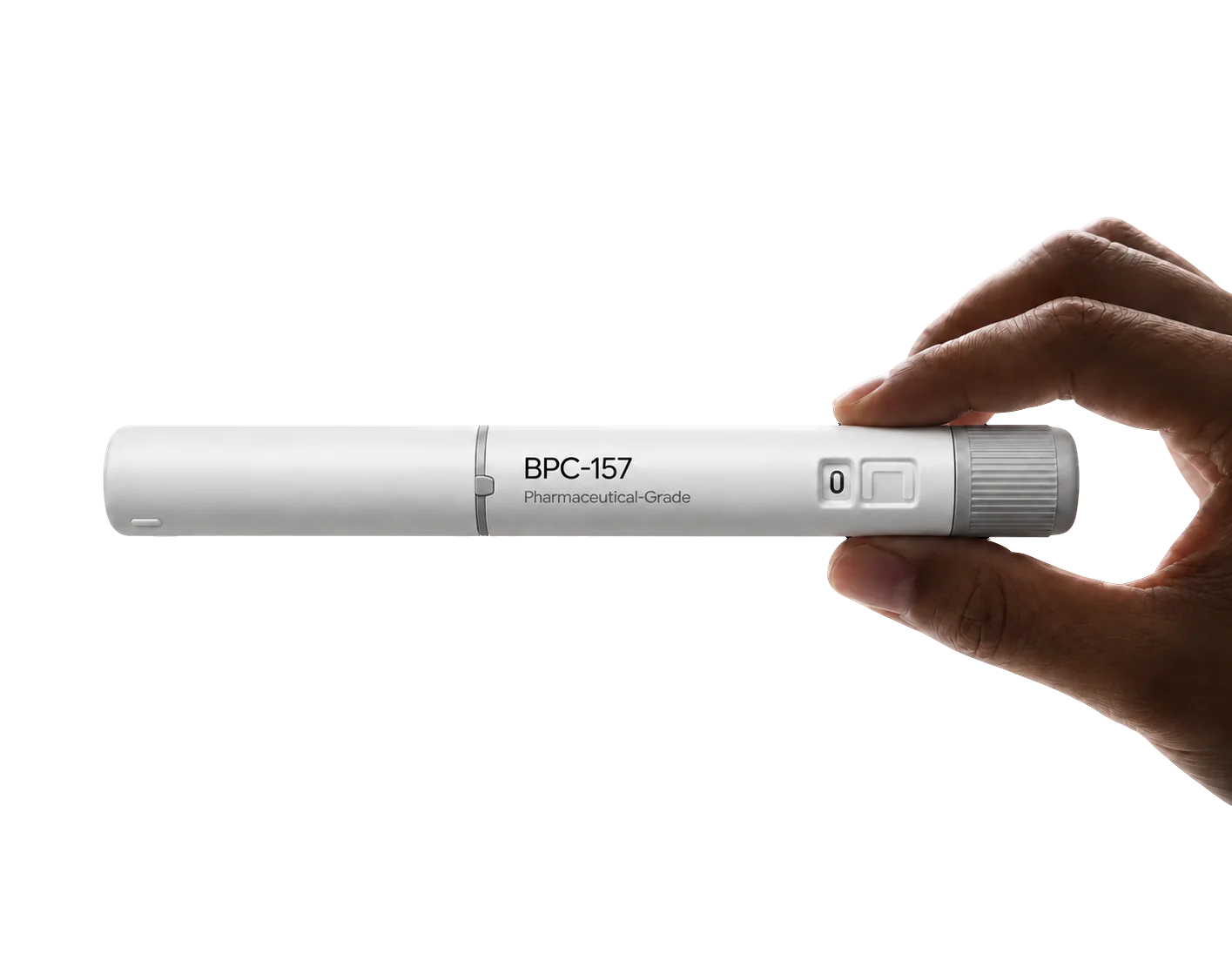
Peptide care · Pen
Early human reports describe improvements in specific pain and bladder conditions. The preparation and treatment site matter.
Suitability reviewed by a UAE-licensed physician
Confirm the dispensing pharmacy and preparation before treatment
Completing an assessment does not guarantee a prescription
Formats reflect the supplied catalog, not a prescription or confirmation of availability. Health topics describe scientific interest, not approved indications. Read the specific studies and preparation limits.
The role of this peptide
The link to recovery comes from small clinical reports and tissue-healing biology. Digestive and skin interests are supported mainly by preclinical work, not proven benefits of the listed formats.
A small knee-pain report described improvement after injections into the joint. Without a control group, it cannot show whether BPC-157 caused that improvement.
Read the publication
Animal and cell experiments found effects on tendon healing. They provide a reason to investigate, not proof that a pen, vial or capsule helps a human injury recover.
Read the publication
Experiments in rats explored skin wounds and colon repair. Human digestive and skin benefits remain unestablished for the listed preparations.
Read the publicationSafety & suitability
Human safety evidence is limited. FDA identifies concerns about immunogenicity, peptide impurities and insufficient safety information for BPC-157.
Suitability depends on the specific preparation, intended use and clinical assessment. Product authorization must be verified separately from facility licensing.
The evidence
Small human reports describe symptom improvements, but a reliable treatment benefit is still uncertain. Those reports did not test the pens or capsules shown here.
16 patients contacted · Injection into the knee
No control group; outcomes were self-reported by telephone. This was not a trial of a pen or capsule.
12 women with interstitial cystitis · Local bladder injections
A small, uncontrolled study in a specific bladder condition cannot demonstrate general digestive or recovery benefits.
Rat models of skin wounds and surgically joined colon tissue · Experimental administration in rats
These were animal wound models. The findings do not establish healing of human skin or digestive conditions after using BPC-157.
Rats with surgically injured tendons; cultured tendon cells · Experimental rat injections and laboratory exposure
Rat injury models and cell experiments do not establish recovery benefits or a safe injection protocol in people.
The human studies above used injections into the knee or bladder tissue. They do not establish the same result for a subcutaneous pen, vial or oral capsule.
Reviewed September 15, 2026. Selected publications, not a systematic review. Findings do not establish product authorization.
Our review approachFor your consultation
Three questions to help you discuss BPC-157 Pen. Your clinician decides which preparation, checks and follow-up are relevant.
The preparation
What is the exact ingredient, formulation and strength, and how would it be used?
Your assessment
Which checks fit my symptoms and health history before considering this preparation?
Your follow-up
What symptoms and changes in daily function should I track, and when should I contact the care team?
These questions are not a dosing schedule or a required test panel. Your clinician individualizes the plan.
A peptide name is only the beginning. The preparation, clinical need and available evidence all matter to the decision.

Medical Director & Physician, DarDoc

Physician, DarDoc
Discuss the symptoms or diagnosis behind your interest in a peptide, alongside current medicines and previous treatment.
Consider the evidence for its route and intended use, its regulatory status, and established treatment alternatives.
Discuss potential benefits, uncertainties and risks. A prescription is considered only when clinically appropriate and permitted.
If treatment is prescribed, agree on monitoring, side effects to report and when to reassess the plan.
SCOPE credentials shown relate to obesity medicine, not peptide-specific certification. The treating physician is confirmed at booking.
A few things to know
Your physician reviews your symptoms, history, current medicines and goals. The discussion should include the specific evidence, risks, alternatives and a follow-up plan before any treatment decision.
Human safety evidence is limited. FDA identifies concerns about immunogenicity, peptide impurities and insufficient safety information for BPC-157.
Prescription treatment is considered only after clinical assessment. Browsing a format does not select a dose, determine eligibility or guarantee a prescription.
Continue exploring
Explore other products discussed in these health topics, with the evidence for each.
 DarDoc peptides
Recovery · Skin & hair · Digestive health
500 mcg Capsule · 30 Capsules
Early human reports describe improvements in specific pain and bladder conditions. The preparation and treatment site matter.
 DarDoc peptides
Digestive health · Immune health
500 mcg · 30 Capsules
Laboratory work explores how this short peptide interacts with intestinal inflammatory pathways.
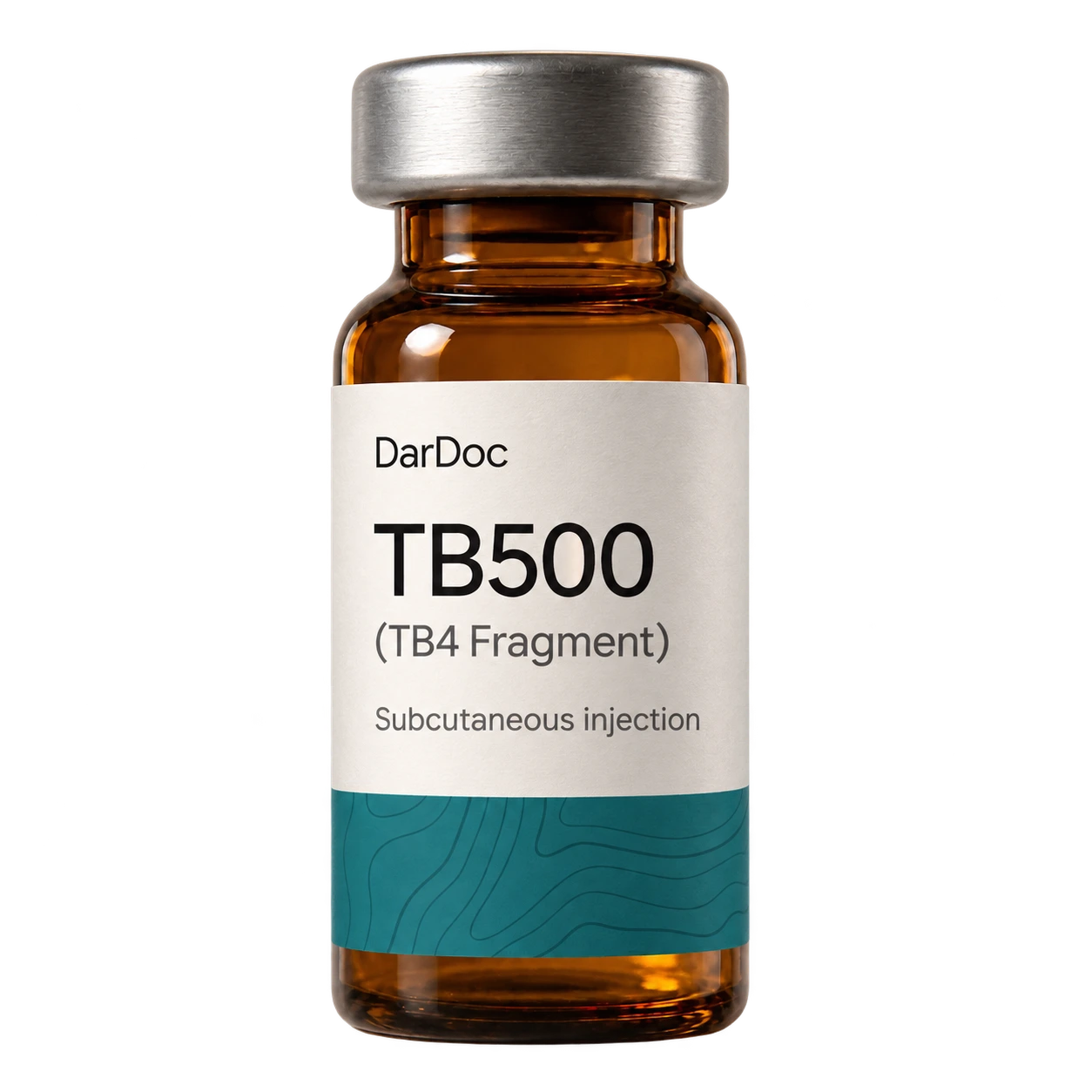 DarDoc peptides
Recovery
Research on the fragment includes chemical identification, metabolism and cell experiments. Related unacetylated-fragment studies explore tissue repair, but these sources do not establish a treatment benefit in people.
Bring your questions
Want to understand where BPC-157 Pen fits? Discuss the evidence, your health history and the options with DarDoc.
DarDoc's pricing covers a range of services including lab tests, home healthcare visits, IV therapy, wellness programmes, weight management, supplements, and other wellness services, provided through DarDoc and its licensed partners across the UAE. Pricing may vary by service type, emirate, provider, and time of booking. Subscription plans are billed on a recurring basis and grant access to a defined set of services at a bundled rate; pay-per-service options are charged at the time of booking confirmation. A full itemisation of all fees applicable to your selected service or plan is available on request at any time. Please note that some services, add-ons, or follow-up consultations may require additional payment not included in your selected plan or membership tier.
