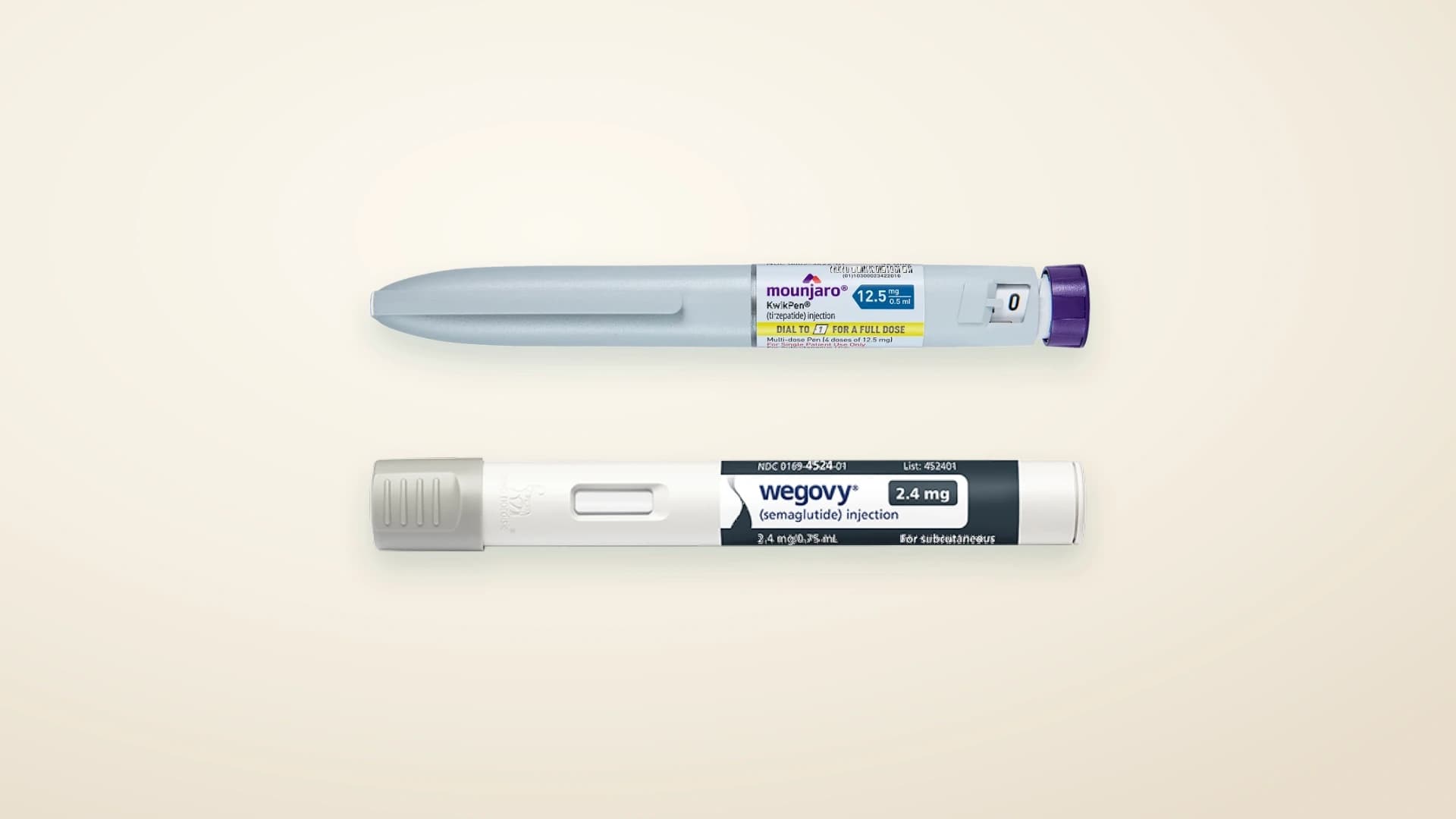
Wegovy pill or Wegovy injection? How a UAE physician thinks about the choice
A clinically honest look at the two delivery systems for the same molecule, the patients each one suits, and how a thoughtful UAE physician walks through the decision.
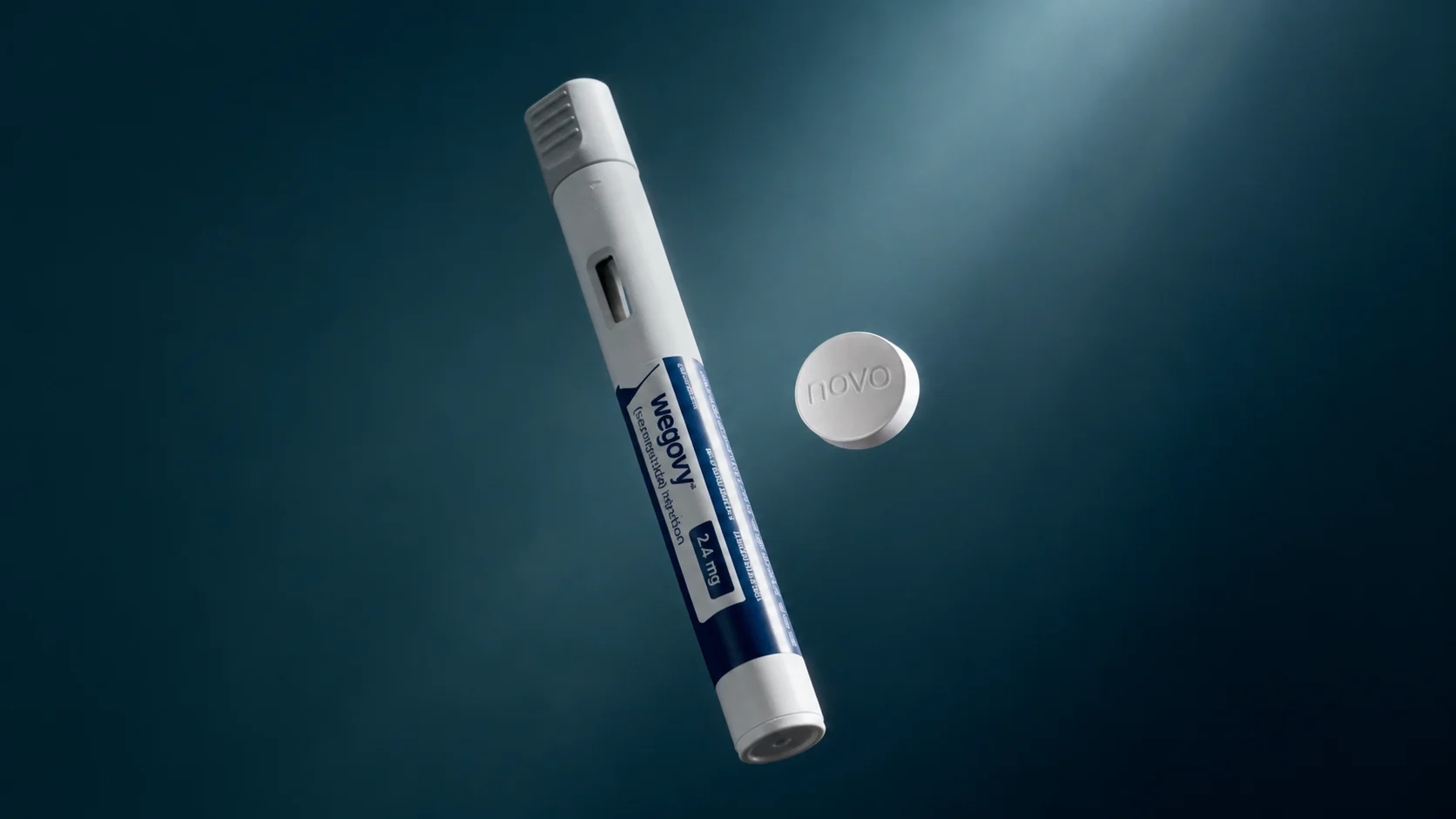
A 38-year-old marketing director sits across from a DHA-licensed obesity physician in a Dubai clinic on a Monday morning. She has been on the injectable Wegovy for eleven months. She started at a BMI of 34, has lost 18 kg, and is now within three kilos of her goal. Her injection routine, by her description, is "Sunday morning, second coffee, done." She has heard the news. The oral Wegovy has just launched through MOHAP-licensed pharmacies. Her question is direct: should she switch?
A 29-year-old engineer arrives that same week at a clinic in Business Bay. He has a BMI of 31, has never started a GLP-1 because he will not inject himself, and has spent two years cycling through dietary apps, personal trainers, and a brief unsuccessful run with a compounded peptide his cousin recommended. He has the same news. His question is also direct: should he start?
These are different patients with different questions. Both deserve a clinically honest answer. This piece is not an argument for one delivery system over the other. The injectable Wegovy is a serious medication that has produced meaningful weight loss for a large number of UAE patients, and continues to. The oral Wegovy is a new and welcome option that expands access for patients who would not have started otherwise. Both are real. Both are clinically appropriate for the right patient. The question is which patient gets which, and on what evidence.
Two delivery systems, one molecule, two different patient experiences
Before going further, the central fact that the rest of this article rests on: the injectable Wegovy and the oral Wegovy contain the same active molecule, semaglutide, acting on the same GLP-1 receptor, in the same downstream biology of appetite, satiety, and gastric emptying.
What differs is the delivery system, the dose, and the daily and weekly experience of taking the medication. The injectable is a once-weekly subcutaneous injection at a maintenance dose of 2.4 mg. The oral is a once-daily pill at a maintenance dose of 25 mg, taken on an empty stomach with up to 120 ml of plain water, followed by a thirty-minute window of no food, no other drink, and no other oral medication. The titration schedules for both are roughly sixteen weeks. The mean weight loss on the primary endpoint of the OASIS 4 trial (oral) and the STEP 1 trial (injection) is broadly comparable, in the low double digits over a year.
The clinical decision between the two is not about which one is better in the abstract. It is about which one fits the patient.
The case for the injection
The injectable Wegovy has been the GLP-1 weight-loss workhorse in the UAE since 2023. The reasons it remains the default for many patients are practical.
Weekly dosing is simpler to integrate into a life. Sunday morning, one minute, done. There is no fasting window, no morning-routine constraint, no need to coordinate with thyroid medication or coffee or the time the kids need to leave for school.
Pharmacokinetics are flatter. A subcutaneous depot of semaglutide releases over the week with a comparatively flat steady-state level. For some patients, the daily peak-and-trough of an oral dose feels less tolerable; the weekly steady state feels easier.
Adherence is easier to maintain across travel. A patient who is moving across time zones for work three or four times a month can forget what day of the week it is. They are less likely to forget that they took, or did not take, this morning's pill in the last hour. But for some patients, the opposite is true. Knowing this difference about your own life is half the prescription.
The injection is the molecule the longer-term data has been collected on. The SELECT cardiovascular outcomes trial and the longer-tail STEP extension data are based on the injectable formulation. The oral version is presumed to share the class effects, but the longest-tail safety data sits with the injection. For some clinicians and some patients, that matters.
There is no clinical reason to switch a patient who is doing well. If the injection is working, the side effects are tolerated, and the patient is responsive, the right answer to "should I switch to the pill?" is usually "not unless there is a specific reason to."
The case for the pill
The oral Wegovy is a genuine clinical advance and unlocks a population that the injection was never going to reach.
It removes the needle as a barrier. The number of UAE patients who have wanted to start a GLP-1 for two or three years and have not, because they will not self-inject, is substantial. We see them in our consultations weekly. For these patients, the pill is not a marginal upgrade. It is the difference between starting treatment and not starting treatment.
It is room-temperature stable. No refrigeration, no cold-chain logistics during long travel. For the UAE-based executive whose calendar runs through DXB and AUH and three transit airports per month, this is a real practical advantage.
The daily dosing reframes the medication psychologically for some patients. A daily pill sits in the same mental category as a daily statin or a thyroid tablet: a chronic medication for a chronic condition, taken every morning, no event. For some patients, this framing is materially more comfortable than a weekly injection, which can feel like an event each time.
It avoids injection-site issues. Lipohypertrophy, technique problems, intermittent injection-site reactions, and the small but real subset of patients who develop a phobia of needles after months of self-injection are all non-issues with the oral.
It expands the conversation in the consultation room. Some patients have been told for years that the only effective pharmacological route for obesity is an injection. The pill, for those patients, changes the conversation about what is possible.
Speak to a DarDoc physician about the right GLP-1 route for you.
Patients we typically start on the injection
In our weight-loss practice across Dubai and Abu Dhabi, we typically start the following patient profiles on the injection.
Patients who are comfortable with self-injection and whose mornings are tightly scheduled. The thirty-minute fasting window for the oral is harder for them than the one-minute weekly subcutaneous dose.
Patients whose adherence pattern is "remember it weekly" rather than "remember it daily." A surprisingly large number of patients self-report better adherence to a weekly than a daily medication.
Patients with a complicated polypharmacy schedule, where adding a thirty-minute morning fasting window collides with an existing levothyroxine, omeprazole, or bisphosphonate routine.
Patients with significant upper-GI symptoms (chronic reflux, gastroparesis, eosinophilic oesophagitis) where an oral medication with a fasting window will be less well tolerated.
Patients in whom we want the smoothest pharmacokinetic profile available, especially in the first months while titrating.
Patients we typically start on the pill
The pill is typically a better fit for the following profiles.
Patients who are needle-averse, including patients with active phobia, recent vasovagal history, or a strong preference against self-injection regardless of why.
Patients who travel internationally on short cycles and find cold-chain logistics for the injection pen a recurring nuisance.
Patients who have stable mornings, no competing fasting-window medications, and an established habit of taking something every morning (a multivitamin, a coffee ritual, a prayer routine).
Patients who psychologically prefer a daily chronic-medication framing to a weekly event-medication framing.
Patients who have tried the injection and discontinued for reasons that did not relate to the molecule itself (technique, injection-site reactions, the weekly logistics).
These are starting positions, not rules. The full clinical decision involves a longer conversation about medical history, comorbidities, current medications, lifestyle, travel pattern, weight-loss goal, and previous treatment history. The physician's job is to make a recommendation; the patient's job is to know enough about themselves to push back where the recommendation does not fit.
The switching question
The marketing director from the opening paragraph asked whether she should switch from the injection to the pill. She is eleven months in, 18 kg down, three kilos from her goal, and tolerating the injection well.
The clinically honest answer for her is: probably not, at least not right now.
The reasons are simple. She is in a stable response phase on a regimen that is working. The switching decision introduces variables: a new dosing pattern, a new morning routine, a new GI side-effect window during oral titration, and a different pharmacokinetic profile. None of those variables have a clear upside in her current situation, and the downside risk of disrupting a working regimen at this stage is non-trivial.
The right time to discuss switching is when there is a specific clinical or lifestyle reason. Examples we have seen in the first month of the launch:
A patient who is moving overseas to a region where injection-pen cold-chain logistics will be substantially harder than what she has now.
A patient whose injection-site reactions have become persistent and bothersome.
A patient who has reached maintenance on the injection and wants to step down the medication management, where a daily oral may be psychologically easier to taper around.
A patient whose insurance coverage shifts in a way that makes the pill meaningfully more accessible than the injection.
In the absence of a specific reason, switching is optional, and patients who are doing well rarely need to. "Both work" is a more useful starting frame than "the new one is better."
The needle-averse patient who never started
The engineer from the opening, BMI 31, two unsuccessful years of trying to lose weight on his own, refusing to inject, is the patient for whom the pill is most transformative. Without the oral option, his clinical pathway runs through more dietary apps, more personal trainers, possibly a second attempt at a peptide of dubious provenance, and a steady accumulation of cardiovascular and metabolic risk over years.
With the oral, his pathway runs through a structured medical consultation, a documented baseline, a titration schedule, a four-month review, and a year-one outcome that, on the OASIS 4 evidence, sits in the same range as the injection. The pill is not a marginal improvement in his case. It is the difference between effective treatment and no treatment.
This is the population for whom the pill genuinely expands the addressable market for GLP-1 therapy. They are not patients who would otherwise be on the injection. They are patients who would otherwise be on nothing.
Who shouldn't be on either
The list of contraindications to a GLP-1 does not change with the delivery system. Patients who should not be on the injectable Wegovy should also not be on the oral Wegovy. The shared list, in summary:
Patients with a personal or family history of medullary thyroid carcinoma or multiple endocrine neoplasia type 2.
Patients with a history of pancreatitis.
Patients who are pregnant, planning to conceive within the next two months, or breastfeeding.
Patients with severe gastroparesis or significant gastrointestinal motility disorders.
Patients with active eating disorders, particularly those with restrictive or purging patterns, where any appetite-suppressing medication can deepen rather than resolve the underlying problem.
Patients whose primary issue is body-image distortion rather than excess adipose tissue.
Patients with severe gallbladder disease, or those who have had complicated gallstone histories in the recent past.
The oral has a few additional considerations specific to the delivery system: patients with severe oesophageal motility issues, patients on multiple morning fasting-window medications that already collide, and patients whose adherence pattern strongly disfavours daily dosing.
A physician's job here is to be honest about contraindications, not creative around them. The grey-market clinics that prescribe GLP-1s without a documented baseline, without a contraindication review, and without a follow-up plan are not running medicine. They are running a price list.
Book a Free consultation with DarDoc for evidence-led care
The DHA, DoH, and MOHAP regulatory frame
Both delivery systems are prescription-only medications regulated by MOHAP at the federal level, with the DHA and DoH governing the practitioners who prescribe them in Dubai and Abu Dhabi respectively. The licensing pathway for the prescribing physician, the dispensing pharmacy, and the supply chain are the same for both.
What this means in practice for the patient:
A legitimate prescription for either the injection or the pill is issued by a DHA-, DoH-, or MOHAP-licensed clinician after a documented clinical assessment.
A legitimate product is dispensed by a licensed UAE pharmacy in original Novo Nordisk packaging.
Any pathway that bypasses either the licensed clinician or the licensed pharmacy is outside the regulatory frame, regardless of how legitimate the source appears.
The follow-up review schedule (four-month, eight-month, twelve-month) is part of the clinical standard. A clinic that hands over a prescription and disappears is not running obesity medicine.
The DarDoc UAE launch partnership with Novo Nordisk on the oral Wegovy operates entirely within this frame. The pill reaches our patients the same way the injection does: through a licensed physician's prescription, dispensed by a licensed pharmacy, with a documented follow-up schedule.
Why this matters in the UAE specifically
The UAE patient profile shapes the decision between the two delivery systems in ways that are different from the average European or American patient.
International travel is more frequent. Cold-chain logistics during travel matter more here than in markets where most patients drive five miles to a local clinic for the year.
The mornings are differently structured. For patients observing prayer-time routines, a thirty-minute morning water-only fasting window collides with established patterns in a way it does not for the average trial participant.
Ramadan is a real clinical consideration. The oral dosing requirements are not easily reconcilable with the Ramadan fasting structure without specific physician guidance. The injectable, by contrast, can usually continue with a minor adjustment in dosing day. For Muslim patients, this is worth discussing before starting either route.
And the consultative culture matters. UAE patients, on average, expect a longer, more detailed consultation than the global average. The right delivery-system decision is the one that emerges from that consultation, not the one assigned by default.
The bottom line
Both the injectable Wegovy and the oral Wegovy are real, regulated, evidence-supported options for medically supervised weight loss in the UAE in 2026. They contain the same molecule, target the same biology, and produce broadly comparable mean weight loss on the available Phase III evidence. They differ in delivery, dosing schedule, daily and weekly logistics, and the patient populations they best suit.
The pill is not an upgrade to the injection. The injection is not a relic to be replaced. They are two routes into the same therapy, and the correct one for a given patient depends on the patient, not on the press cycle.
If you are thinking about a GLP-1 for a specific weight-loss goal, the first conversation is not about which one to choose. It is about whether a GLP-1 is the right tool for your situation in the first place, whether your medical history clears the contraindications, and what your morning and weekly routines actually look like in the cold light of an honest review. Those conversations belong with a DHA-, DoH-, or MOHAP-licensed obesity physician who has time to walk through both options properly.
This article is educational. It is not medical advice for your specific situation.