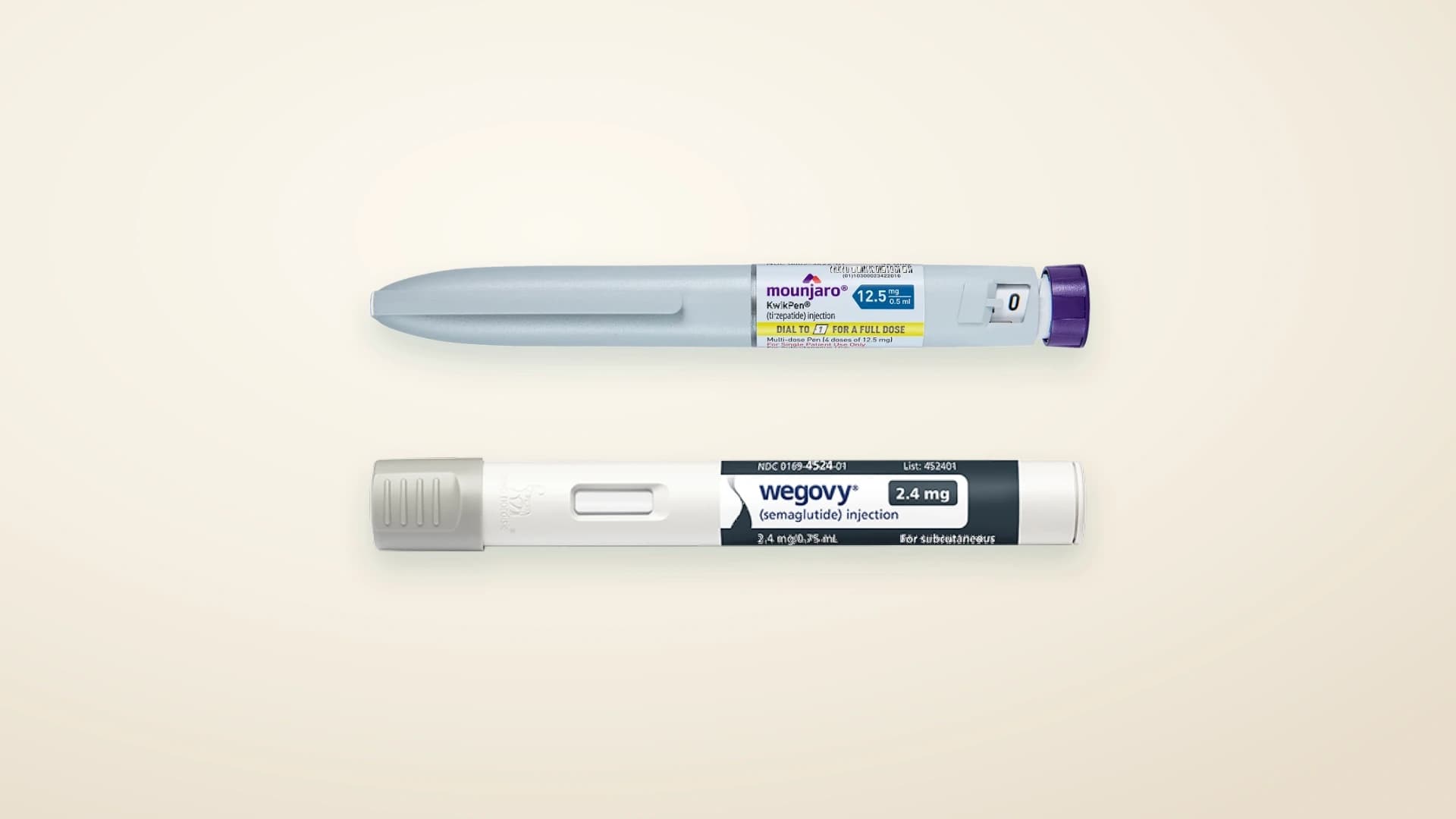
Can you take Mounjaro while breastfeeding?
Mounjaro while breastfeeding needs an individual prescribing review. Understand milk-transfer evidence, infant safety limits, and what to ask your doctor.

Do not start Mounjaro while breastfeeding without an individual prescribing review: human milk-transfer data are reassuring, but they do not establish safety for a breastfed baby. If you need treatment for diabetes, your clinician should weigh that benefit against the remaining uncertainty rather than leave your blood glucose untreated.
TL;DR- Mounjaro while breastfeeding requires an individual review; low tirzepatide transfer into breast milk does not establish infant safety.
- The Mounjaro prescribing information describes a single-dose milk study, not long-term outcomes in breastfed babies.
- Postpartum weight loss and diabetes treatment require different decisions; do not stop essential diabetes treatment without a replacement plan.
- An accidental dose is a reason to contact your prescriber, not automatically to stop breastfeeding.
Can you take Mounjaro while breastfeeding?
Mounjaro is not a medicine to self-start during breastfeeding. A prescriber needs to consider why you need tirzepatide, your baby's age and health, your feeding pattern, and the limits of the lactation evidence.
The distinction in 2026 is between low measured transfer into milk و proven safety during ongoing treatment. Those are different findings. The first does not establish the second.
For the broader recovery context, see the guide to GLP-1 treatment for postpartum mothers في الإمارات.
What does the human milk study actually show?
The Mounjaro US Prescribing Information, section 8.2, describes a lactation study involving 11 participants given a single 5 mg dose of tirzepatide. The cumulative amount detected in breast milk was less than 0.02% of the maternal administered dose.
Those findings support low transfer under the conditions studied. They do not establish what happens to a baby's growth, feeding, or development during repeated maternal treatment.
| Evidence or question | What it tells you | What it does not establish |
|---|---|---|
| Single 5 mg dose in 11 participants | Direct evidence about milk transfer after one dose | Exposure throughout repeated treatment |
| Less than 0.02% of the maternal dose detected in milk | The measured amount entering milk was small | The amount absorbed into an infant's bloodstream |
| No established infant-outcome evidence in that study | سلامة A reason to distinguish exposure from clinical | That harm occurs, or that harm is impossible |
| No established effect on milk production | Milk supply needs separate attention | That treatment preserves or reduces supply |
The percentage is not a measured infant blood level. It is also not a guarantee about every dose, feeding pattern, or baby.
لماذا يهم هذا؟
Breastfeeding decisions involve two patients: you and your baby. A medicine decision that ignores your diabetes is incomplete; a decision that ignores infant exposure is incomplete too.
Mounjaro contains tirzepatide, which acts on GIP and GLP-1 receptors. Its appetite and digestive effects also matter during postpartum recovery, when eating adequately and maintaining hydration support your own health.
For a 2026 consultation, ask your clinician to check the current UAE product information alongside specialist lactation references. A US milk-transfer finding is useful evidence, but it does not replace the locally applicable prescribing information or an individual assessment.
If your main goal is postpartum weight loss
Do not treat breastfeeding as a deadline for restarting weight-loss injections. When weight loss is the main goal rather than treatment of a pressing metabolic condition, discuss whether medication can wait until breastfeeding has ended.
The benefit of waiting is that it avoids exposing your baby during a period with incomplete safety evidence. The limitation is that it postpones medication-based weight management; you still deserve support with nutrition, recovery, activity, and any medical contributors to weight concerns.
You do not need to dismiss weight concerns to make a cautious decision. Ask for a plan that separates what needs treatment now from what can be reviewed later.
Avoid replacing Mounjaro with an unregulated slimming product, peptide, or supplement. An alternative is not safer simply because it is sold without a prescription or described as natural.
If you need treatment for diabetes
Do not stop diabetes treatment without an agreed replacement plan. If you already use Mounjaro, contact your prescribing clinician before changing treatment or taking the next scheduled dose.
The review should cover your glucose readings, current medicines, previous treatment response, and breastfeeding circumstances. Your clinician can consider treatments with more established breastfeeding experience where appropriate.
The benefit of an active diabetes plan is continued glucose management. Its limitation is that changing treatment requires follow-up: a replacement is not automatically equivalent for your glucose control, side effects, or day-to-day routine.
A prescription that suited you before pregnancy is not automatically the right postpartum prescription. Equally, breastfeeding is not a reason to leave clinically significant hyperglycaemia untreated.
How the treatment pathways differ
| Pathway | الأنسب لـ | الميزة الأساسية | الحد الأساسي |
|---|---|---|---|
| Defer weight-loss medication | Someone whose treatment can safely wait | Avoids medication exposure through milk | Delays medication-based weight management |
| Review diabetes treatment now | Someone who needs ongoing glucose control | Addresses a current medical need | Requires an individual medicine and monitoring plan |
| Review an accidental exposure | Someone who has already injected a dose | Allows advice based on the actual exposure | Cannot undo the dose or provide certainty from limited evidence |
These are consultation pathways, not instructions to choose a medicine yourself. In 2026, the treatment indication remains central: weight management alone and necessary diabetes care do not carry the same urgency.
Why advice about Mounjaro and breastfeeding varies
Different recommendations do not necessarily mean someone has ignored the evidence. They often reflect different clinical circumstances or different interpretations of limited lactation data.
- Reason for treatment: Managing diabetes creates a different benefit-risk discussion from starting treatment solely for weight loss.
- Baby's age and health: A newborn or premature infant needs particular caution because medicine handling differs from that of an older, healthy baby.
- Feeding pattern: Exclusive breastfeeding and occasional breastfeeding create different opportunities for exposure, although neither establishes safety.
- Treatment history: A single accidental injection is a different question from starting or continuing repeated doses.
- Your food and fluid intake: Nausea, vomiting, or reduced appetite can interfere with adequate intake and need clinical attention.
- Evidence and local guidance: Milk-transfer findings, infant-outcome evidence, and the applicable product information answer different parts of the decision.
Do not use someone else's feeding schedule or prescription as your clearance. Your review should end with a documented plan, not just a general reassurance.
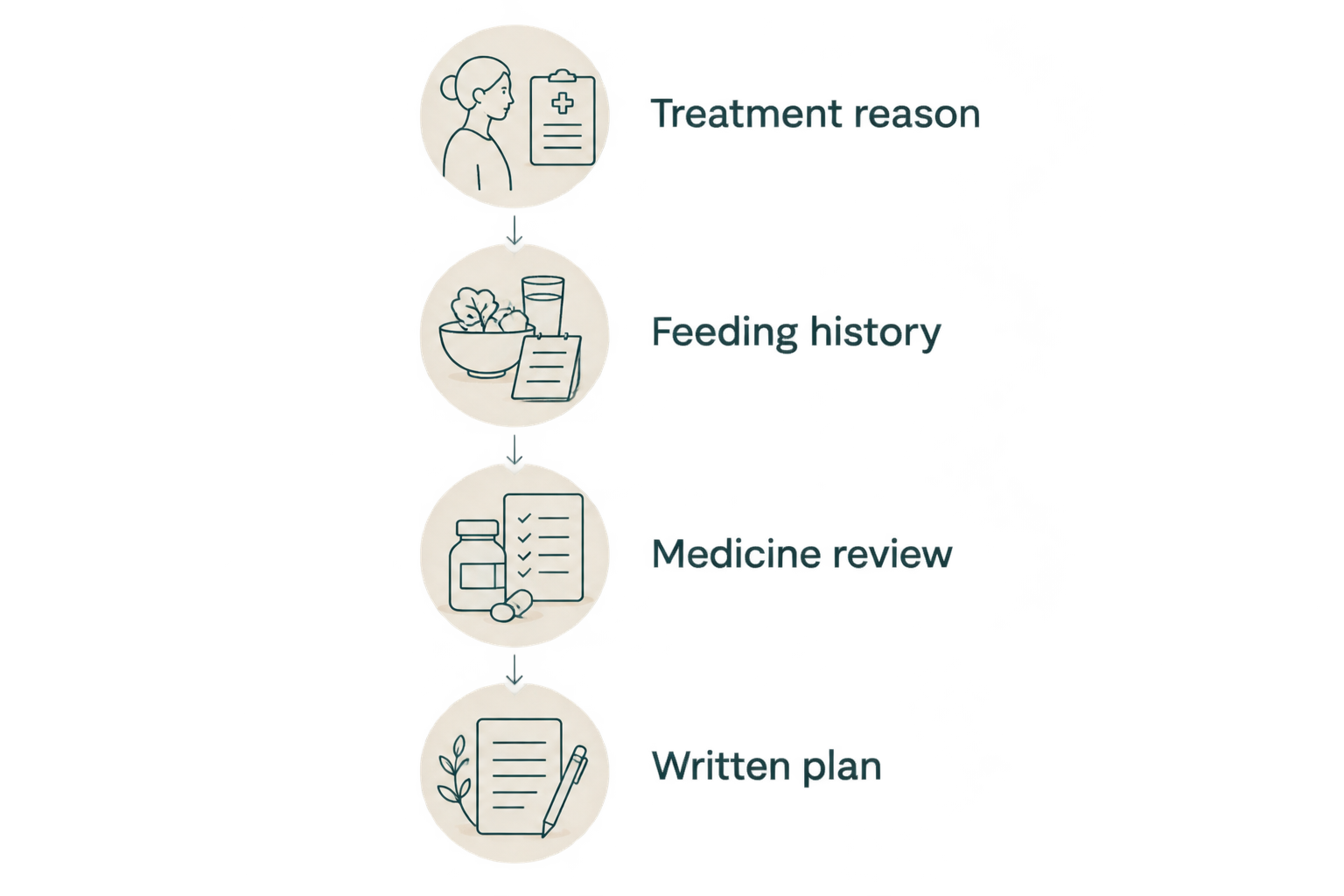
What should you tell your prescriber before a decision?
Prepare the details before your appointment. A clear account is more useful than asking whether the medicine is simply safe or unsafe.
- Treatment reason: فحص Explain whether the goal is diabetes control, weight management, or both. Bring recent glucose readings and relevant results if you have them.
- Feeding history: Give your baby's age, whether your baby was premature, and whether feeding is exclusive, mixed, or occasional. Mention feeding or growth concerns.
- Medicine review: List all prescription medicines, supplements, and weight-loss products. If you have already used Mounjaro, record the dose and injection date.
- Written plan: Ask what to do about the next dose, whether treatment should change, what monitoring is needed, and when the decision will be reviewed.
The written plan should also explain whom to contact if you develop side effects or your baby's feeding changes. Do not leave with an instruction to monitor unless you know what you are monitoring for.
For UAE families seeking home and online healthcare, Dardoc is a relevant option for discussing postpartum care needs. Dardoc offers GLP-1 weight-loss treatment and mother/newborn care, but those services do not establish that tirzepatide is appropriate during breastfeeding.
Ask Dardoc whether the consultation can address your specific breastfeeding question and coordinate with your diabetes or paediatric clinician where needed. Dardoc's GLP-1 treatment offering is not a substitute for an individual breastfeeding prescribing decision.
Ask about a breastfeeding medication review
Explain your feeding situation and treatment needs before making a medication change.
Contact the teamWhat if I already took Mounjaro while breastfeeding?
An accidental dose does not, by itself, establish that your baby has been harmed. Contact your prescriber or a pharmacist with lactation expertise promptly, and give the dose, injection date, baby's age, and feeding pattern.
Do not automatically stop breastfeeding, discard milk, or repeat the injection without advice. If Mounjaro is part of your diabetes treatment, request a plan for glucose management while the exposure is reviewed.
Seek prompt paediatric assessment if your baby develops poor feeding, unusual sleepiness, repeated vomiting, or signs of dehydration. These symptoms do not prove a medicine effect, but they require assessment regardless of the cause.
Can I pump and dump after a Mounjaro injection?
Pumping and discarding milk does not remove Mounjaro from your bloodstream. There is no established brief pumping schedule that makes ongoing tirzepatide treatment proven safe during breastfeeding.
If a clinician recommends interrupting breastfeeding, ask for an individual feeding plan and advice on maintaining milk production. Do not infer a safe restart time from a social-media post or the timing of your next injection.
When can I restart Mounjaro after breastfeeding ends?
There is no universal postpartum restart date. Once breastfeeding has ended, your prescriber still needs to review the indication, your health, current medicines, and any treatment gap before deciding how to restart.
Do not resume a previous dose on your own. A prior prescription does not establish that the same dose remains appropriate after pregnancy, delivery, and time away from treatment.
What should you watch for during a treatment review?
Your clinician should distinguish routine follow-up from symptoms that need urgent care. Do not wait for the next appointment if you or your baby becomes unwell.
For you, persistent vomiting, inability to keep fluids down, or severe persistent abdominal pain needs prompt medical assessment. If you have diabetes, follow your agreed sick-day and glucose-monitoring instructions rather than improvising medication changes.
For your baby, watch feeding, alertness, and wet nappies against the baby's usual pattern. Arrange assessment for a meaningful change; do not assume it is caused by Mounjaro or dismiss it because milk transfer is low.
For a 2026 treatment plan, record the follow-up arrangements as clearly as the prescribing decision. Knowing who will review symptoms or glucose readings is part of safe care.
أسئلة شائعة
Is Mounjaro safe while breastfeeding in 2026?
Mounjaro's safety during breastfeeding is not established by the available milk-transfer study. Low measured transfer is reassuring, but an individual prescribing review must consider your treatment needs and your baby's circumstances.
Does Mounjaro pass into breast milk?
Small amounts of tirzepatide were detected in a human milk study described in the Mounjaro prescribing information. After a single 5 mg dose in 11 participants, the cumulative amount detected was less than 0.02% of the maternal administered dose.
Can I take a lower Mounjaro dose to make breastfeeding safe?
A lower Mounjaro dose does not establish breastfeeding safety. Do not choose or reduce a dose yourself as a substitute for a prescribing review.
Should I stop breastfeeding if I accidentally took Mounjaro?
Do not automatically stop breastfeeding after an accidental Mounjaro dose. Contact your prescriber or a pharmacist with lactation expertise for advice based on the dose, timing, and your baby's age and health.
Will Mounjaro reduce my breast milk supply?
The effect of tirzepatide on human milk production is not established. Reduced appetite, vomiting, or difficulty maintaining food and fluid intake deserves assessment, especially if feeding or milk supply is already a concern.
Is mixed feeding enough to make Mounjaro safe?
Mixed feeding does not establish that Mounjaro is safe for your baby. Feeding frequency changes the exposure discussion, but it does not replace evidence about infant outcomes.
What if I need Mounjaro for diabetes rather than weight loss?
Necessary diabetes treatment requires an active management plan, not an unsupported medication stop. Ask your clinician to review the benefits, lactation evidence, and suitable treatment alternatives before changing your prescription.
نقطة أخيرة
The most useful question is not just whether tirzepatide enters milk. It is whether the expected benefit justifies the remaining uncertainty for you and your baby. Low milk transfer helps answer that question; it does not answer it alone.
Bring the actual pen packaging, your injection history, and your baby's feeding details to the review. If you contact Dardoc about GLP-1 treatment, state that you are breastfeeding before any treatment decision is made.