Weight loss research & insights

Weight loss. .Better understood.

We explore the science of weight management.
From clinical studies to the people in our care.

Let’s look closer
Illustrative portrait in natural daylight
Illustration of cellular signalling
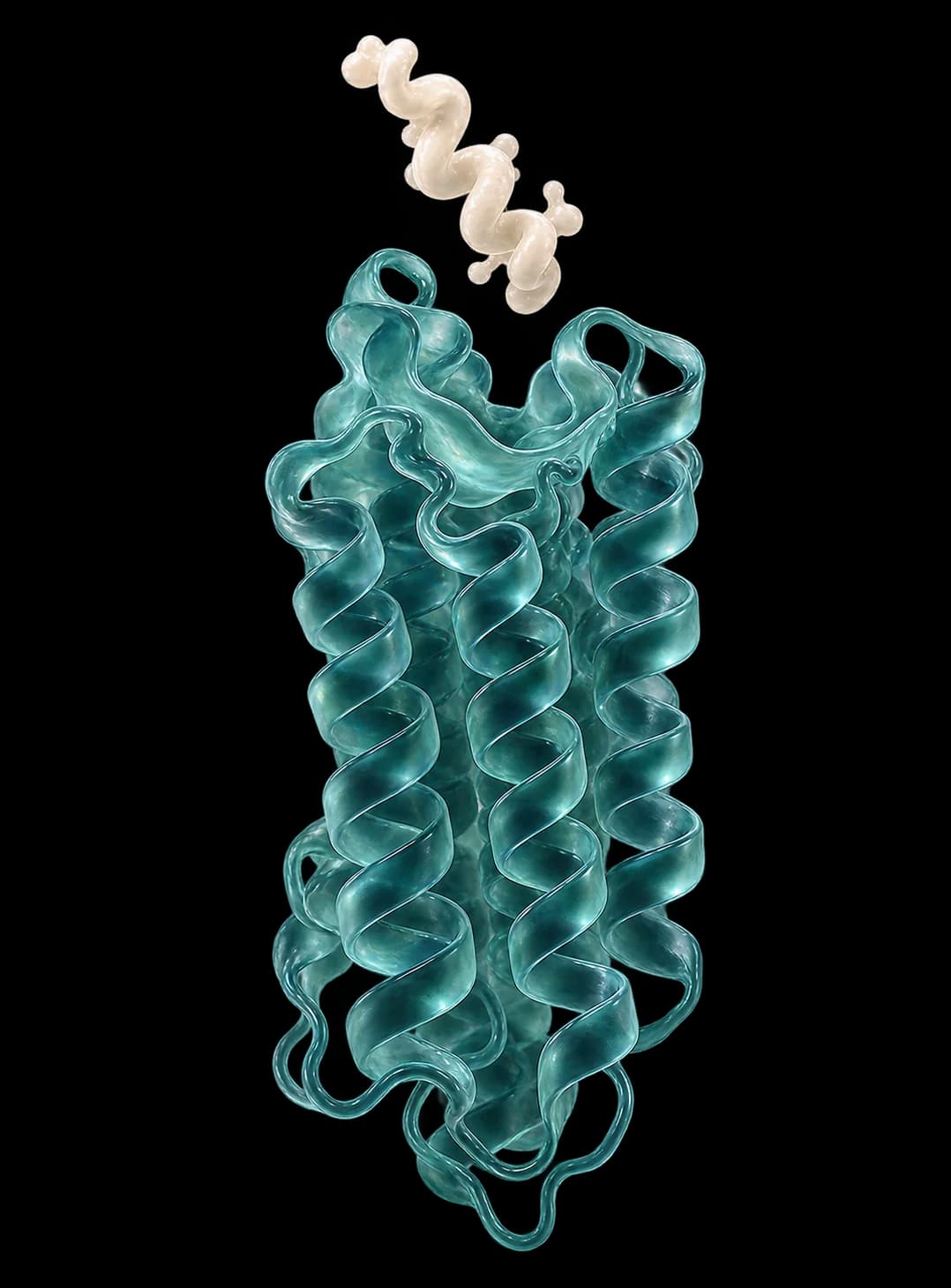
Illustration of a receptor and signalling molecule
Illustration of the brain
01 / The biology of weight

It starts with your biology.

Appetite is shaped by signals between your gut and brain. Understanding those signals helps us understand weight management.

02 / A closer look

Small signals. A complex system.

After eating, your gut releases GLP-1, a hormone involved in appetite regulation. Its signal reaches receptors in the body.

03 / The science of GLP-1

A signal treatment can work with.

Semaglutide mimics GLP-1 and acts on its receptors. This is one way prescription treatment can support appetite regulation.

04 / From biology to care

Understanding hunger. Supporting you.

Semaglutide acts on brain regions involved in appetite, helping reduce hunger and food intake. Your physician assesses its benefits and risks for you.

Explore the research
About this explanation

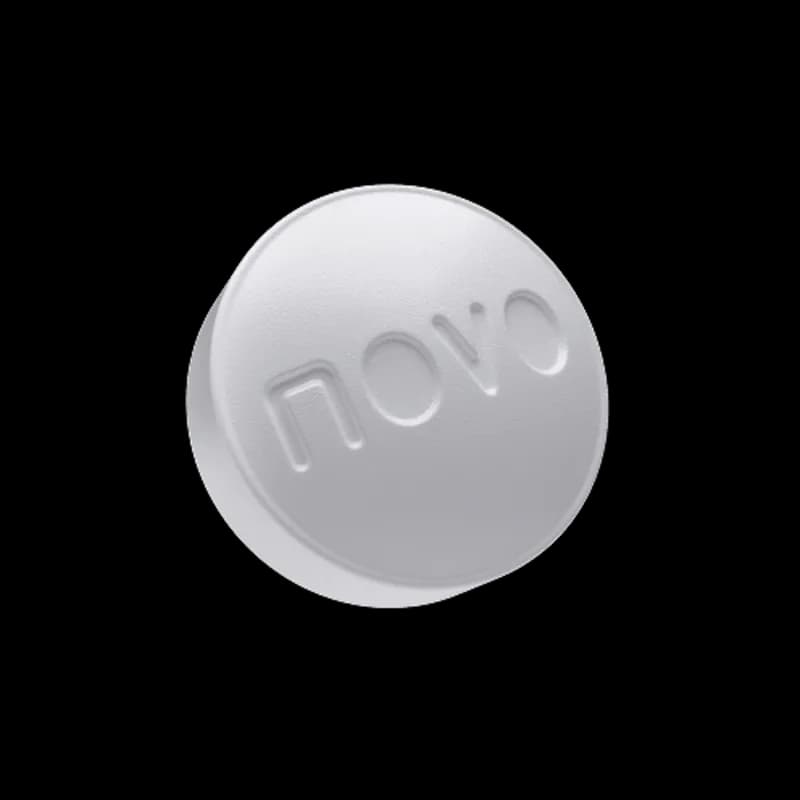
Our explanation focuses on injectable semaglutide. Other medicines have different mechanisms. The imagery is illustrative and does not show an exact molecular structure; the portrait is AI-generated and does not depict a patient. Read Novo Nordisk’s mechanism explanation.

Published clinical research

The research.
The bigger picture.

We bring you the findings, the study population and the details that matter. So you can understand the evidence behind treatment.

Weight managementSTEP 1 · 2021

What changed
in STEP 1.

Mean weight reduction after 68 weeks in adults with overweight or obesity, without diabetes. Both groups received lifestyle intervention.

Published clinical evidence / STEP 1

Once-weekly semaglutide in adults with overweight or obesity

The STEP 1 trial studied weight change with weekly injectable semaglutide plus lifestyle support, compared with placebo plus the same support.

1,961 adults68 weeksRandomised · double-blind · placebo-controlled

Who was studied?

Adults without diabetes, with a BMI of at least 30, or at least 27 with a weight-related condition. Participants received weekly semaglutide 2.4 mg or placebo, alongside lifestyle intervention.

What was observed?

At week 68, mean body-weight change was −14.9% with semaglutide and −2.4% with placebo. These are trial averages, with lifestyle intervention in both groups.

How we use this evidence

We consider the study population, treatment protocol and safety findings alongside your medical history. A published trial cannot predict your individual response. Prescription treatment requires a physician’s assessment.

Read the original paper New England Journal of Medicine · 2021 · opens in a new tab
1,961 adultsWeekly semaglutide 2.4 mgNew England Journal of Medicine
SELECT / 2023

Looking beyond
the scale.

17,604

adults studied for cardiovascular outcomes.

Age 45+ · established cardiovascular disease · overweight or obesity · without diabetes
Published clinical evidence / SELECT

Semaglutide and cardiovascular outcomes in obesity without diabetes

SELECT studied cardiovascular events in adults aged 45 or older with established cardiovascular disease and overweight or obesity, without diabetes.

17,604 adults39.8-month mean follow-upRandomised · double-blind · placebo-controlled

Who was studied?

Adults aged 45 or older with established cardiovascular disease, a BMI of at least 27 and no history of diabetes. The trial compared weekly semaglutide 2.4 mg with placebo.

What was measured?

The primary outcome was the first occurrence of cardiovascular death, nonfatal heart attack or nonfatal stroke. This population is distinct from the broader population seeking weight management.

How we use this evidence

We consider the study population, treatment protocol and safety findings alongside your medical history. A published trial cannot predict your individual response. Prescription treatment requires a physician’s assessment.

Read the original paper New England Journal of Medicine · 2023 · opens in a new tab
Read the methods

Behind every result,
a clinical question.

Weight change

The STEP 1 randomized trial

Population
1,961 adults without diabetes; BMI ≥30, or ≥27 with a weight-related condition.
Methods
Double-blind, 2:1 randomization; subcutaneous semaglutide 2.4 mg weekly versus placebo, both with lifestyle intervention.
Finding
Mean weight change: −14.9% versus −2.4%. Estimated difference: −12.4 percentage points (95% CI −13.4 to −11.5; P<0.001).
Read the original paper
Cardiovascular outcomes

The SELECT cardiovascular outcomes trial

Population
17,604 adults aged ≥45 with established cardiovascular disease and overweight or obesity, without diabetes.
Methods
Semaglutide 2.4 mg weekly versus placebo; mean follow-up 39.8 months.
Finding
Primary cardiovascular events: 6.5% versus 8.0%; hazard ratio 0.80 (95% CI 0.72–0.90). Permanent discontinuation due to adverse events: 16.6% versus 8.2%.
Read the original paper
Longer-term follow-up

What happens after treatment withdrawal?

Population
Exploratory STEP 1 extension, 327 participants.
Methods
The exploratory STEP 1 extension followed 327 participants. After semaglutide and structured lifestyle intervention were withdrawn at week 68, the semaglutide group regained 11.6 percentage points by week 120, following a 17.3% mean loss in that subset. Net loss from baseline was 5.6%. The subset differs from the full trial analysis, and the extension was observational.
Finding
Short-term follow-up cannot establish maintenance. Later weight, treatment status and metabolic measurements are needed to describe durability.
Read the original paper

These are published trial findings, not DarDoc programme outcomes. Results depend on the population and protocol studied. Individual results vary; benefits and risks require a physician’s assessment.

Dr. Sami Mohammed Yesuf, Medical Director and Physician at DarDoc

Dr. Sami Mohammed Yesuf

Medical Director & Physician, DarDoc
Our approach

Research guides us.
Your story matters.

Our physicians bring the evidence into a conversation about you—your medical history, your goals and how you’re feeling.

01We understand your starting point.+

We review your health history and discuss your questions before assessing treatment suitability.

02We build a plan with you.+

We discuss treatment options, potential benefits and risks, nutrition and physical activity.

03We keep the conversation going.+

Follow-up gives you space to discuss your response, ask questions and review your plan with your physician.

Research in practice

A personal journey,
a closer look.

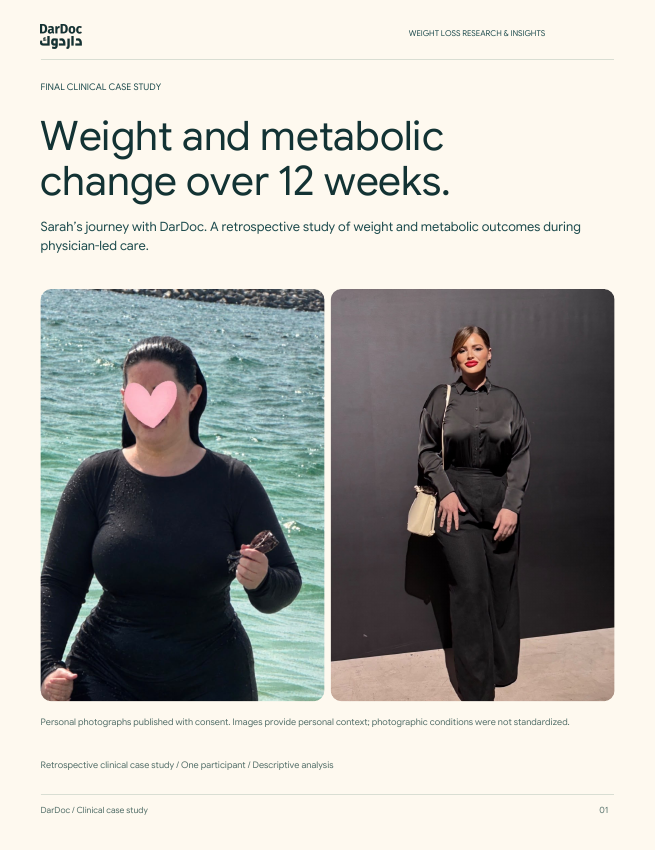
Explore a patient’s experience of weight management with DarDoc, including her weight record and laboratory results.

Sarah, personal photographHer journey
Earlier personal photographStarting point
Clinical case study

Sarah’s story.
12 weeks
with DarDoc.

10 kgreported weight loss
3.3 → 0.9HOMA-IR · Weeks 2–12

Dr. Sami · Wegovy (semaglutide) injections · Treatment ongoing

HbA1c 5.5% · normal rangeRead the clinical report One individual’s experience. Results vary.
Case study report cover
Read the full report

Sarah: weight and metabolic change

PDF · 14 pages · Clinical case study

Care starts with understanding

Your questions.
Our expertise.

Let’s talk about what the science means for you.

Explore weight management