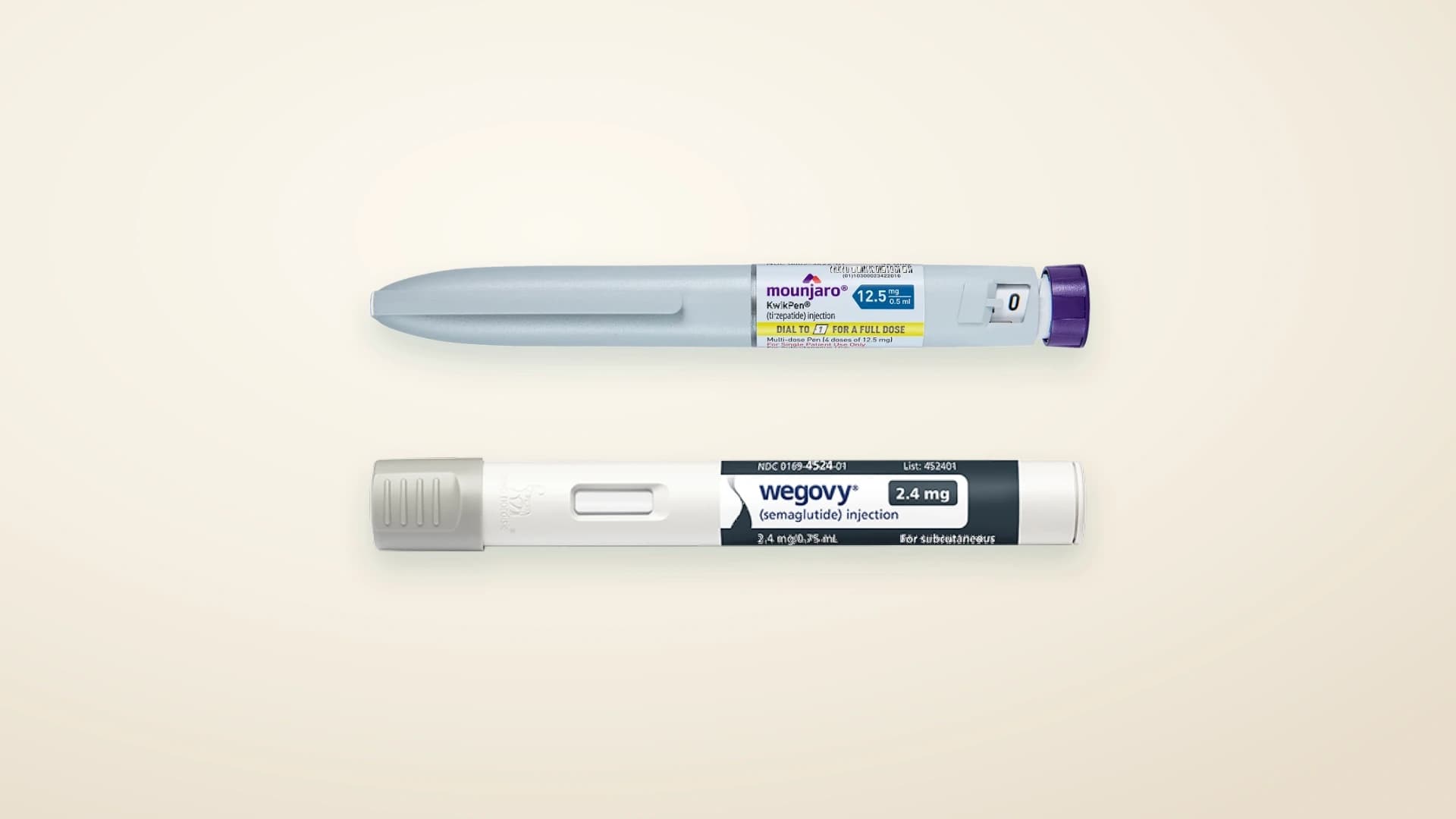
Is peptide therapy legal in the UAE?
Is peptide therapy legal in the UAE? Some medicines are lawful, not every peptide. Check product authorisation, prescriptions and provider licences.

Peptide-based medicines can be used legally in the UAE, but “peptide therapy” is not a blanket approval for every substance sold under that label. In 2026, the answer depends on the exact medicine, its authorised supply route, the prescribing decision and the licensed healthcare setting. A prescription or clinic advertisement alone does not establish that a particular product is authorised for your treatment.
TL;DR- Is peptide therapy legal in the UAE? Some peptide medicines are legal; each proposed product needs separate verification.
- The Emirates Drug Establishment handles medicine regulation; DHA and DoH oversee healthcare practice within their jurisdictions.
- A clinician’s licence does not establish a peptide product’s registration or authorisation.
- Research-only products are not a substitute for medicines authorised for human treatment.
لماذا يهم هذا؟
The word peptide describes a type of molecule, not a regulatory permission. Established prescription medicines and experimental compounds can both fall under that description, despite having very different evidence and regulatory status.
دار دوك home healthcare is for families in Dubai and Abu Dhabi; peptide legality still requires product-specific verification. Convenience changes where care happens, not the need to check what is being prescribed and supplied.
Before you consent, separate three questions: is the product authorised, is the proposed treatment clinically appropriate, and is the provider licensed to deliver it? A reassuring answer to one does not settle the others.
Is peptide therapy legal in the UAE?
Some peptide-based treatments are lawful, but there is no single legal status covering everything marketed as peptide therapy. The relevant unit is the specific product and its proposed use, not the category name on a treatment menu.
For a 2026 decision, distinguish these situations:
| Proposed treatment | What supports considering it | Limitation or concern | Best suited to |
|---|---|---|---|
| Registered prescription medicine used within its approved indication | An identifiable product and approved prescribing information | Registration does not establish suitability for every patient | Patients with a matching diagnosis after assessment |
| Registered medicine proposed for off-label use | An identifiable medicine with an established regulatory record | The proposed use needs separate clinical justification and applicable-rule checks | Patients whose clinician can explain the rationale and uncertainties |
| Unregistered product proposed through a special access route | A potentially identifiable regulatory pathway | The applicable permission must be established; a prescription alone is insufficient | Cases assessed through the relevant authorised process |
| Product labelled for research use only | A stated non-clinical research purpose | The label does not establish authorisation for human treatment | Research settings, not routine patient self-treatment |
The Emirates Drug Establishment is the federal authority responsible for regulating medical products. The Dubai Health Authority, or DHA, and Abu Dhabi’s Department of Health, or DoH, have distinct roles in regulating healthcare professionals and facilities within their jurisdictions.
Product regulation and professional licensing are separate checks. Ask about both, even when the person recommending treatment is a licensed doctor.
Registered peptide medicines: check the exact product
For a registered medicine, ask for the trade name, active ingredient, manufacturer, formulation and approved product information. Check the actual product being supplied, rather than relying only on the ingredient name.
This distinction matters because a familiar ingredient does not authenticate an unfamiliar vial. The packaging, supplier and dispensing record should correspond to the medicine your clinician prescribed.
Ask the clinician to explain the approved indication and whether your proposed treatment falls within it. You should also understand the expected benefit, relevant contraindications, monitoring and circumstances that would lead to stopping treatment.
Registration is a starting point, not a personal recommendation. A medicine can be appropriately regulated and still be unsuitable for your medical history, current medicines or treatment goal.
Off-label treatment: separate permission from evidence
Off-label prescribing means using a registered medicine outside its approved prescribing information, such as for a different indication. It is not the same thing as using an unregistered product.
Do not assume that off-label use is automatically permitted or automatically prohibited in every circumstance. Ask the prescriber to explain the applicable professional requirements and the clinical basis for the recommendation.
Your consent discussion should identify what is established, what remains uncertain and what alternatives exist. A biological explanation about receptors or hormones is not a substitute for evidence that the proposed treatment helps patients with your condition.
Ask for evidence about your treatment goal, not just the molecule. Evidence for one disease, route of administration or patient group does not automatically support a different use.
Unregistered and research-only products: do not assume permission
An unregistered medicine requires a different regulatory assessment from a registered product. If a provider proposes a special access or import pathway, ask which pathway applies and what documentation supports its use in your case.
Do not treat the phrase doctor prescribed as the complete answer. The prescription, procurement route and any required authorisation address different parts of the process.
A research-only label is another important distinction. It does not establish that the product is authorised for administration to patients, and a supplier’s purity certificate does not establish clinical approval.
Do not self-inject a research-only product or ask a nurse to administer it simply because you purchased it. An injection appointment cannot resolve questions about product identity, lawful supply, sterility or clinical suitability.
Why the legal answer varies
For UAE peptide treatment decisions in 2026, these factors explain why two offers with similar marketing can require different answers:
- Exact product: The active ingredient alone does not identify the manufacturer, formulation or regulatory record.
- Proposed indication: An approved use and an off-label proposal require different explanations.
- Supply route: Local dispensing, personal import and special access are not interchangeable processes.
- Professional scope: A professional’s licence must be relevant to the care being provided.
- مكان العلاج: Clinic-based care and home administration require appropriate arrangements for the service delivered.
- Clinical evidence: Legal access does not establish that a treatment delivers the advertised benefit.
These checks should produce identifiable answers. Statements such as widely used, international protocol أو بمعايير المستشفيات do not tell you which product is authorised or which clinician takes responsibility for treatment.
فحص A provider should be able to explain the proposed care without relying onimonials. If the product cannot be clearly identified, pause before consenting.
How do you check a peptide treatment before booking?
Use this sequence before agreeing to a course of treatment. Keep the responses with your prescription and medical records so another clinician can understand exactly what was proposed.
- Product identity. Request the medicine’s full name, active ingredient, manufacturer and formulation. Ask whether the product is registered or proposed through another authorised route.
- Regulatory status. Check the relevant official product records or ask the Emirates Drug Establishment about the appropriate verification route. Do not substitute a foreign approval for confirmation of UAE requirements.
- Provider licence. Verify the treating clinician and facility through the relevant health authority. In Dubai, start with DHA; in Abu Dhabi, start with DoH.
- Clinical rationale. Ask what diagnosis or treatment objective supports prescribing, what evidence applies and what alternatives are reasonable.
- Follow-up plan. Confirm who reviews your response, handles adverse effects and decides whether treatment should continue.
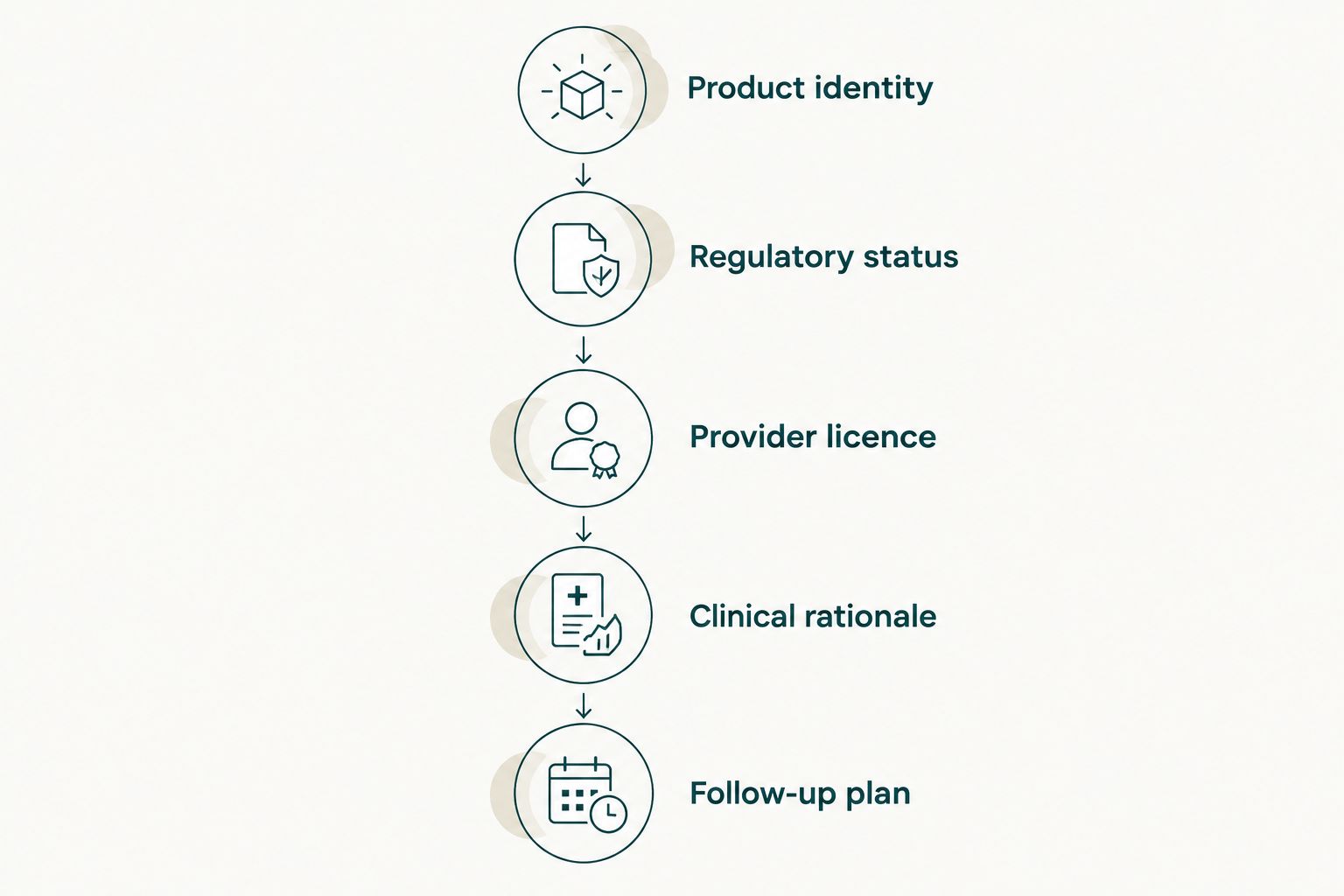
A useful consultation ends with a written plan, not simply an injection booking. You should know the medicine’s identity, the intended outcome and the person responsible for follow-up.
When comparing providers, use the same questions consistently. A guide to peptide therapy clinics in Dubai can help structure your shortlist, but a listing or recommendation does not establish a specific product’s regulatory status.
Does a DHA or DoH licence mean every peptide is approved?
No. A DHA or DoH licence concerns the professional or facility; it does not establish approval for every product offered. Verify the medicine separately through the relevant regulatory route.
Ask whose licence covers the consultation, prescribing and administration. If different organisations perform those tasks, clarify who holds the treatment record and manages complications.
Can you bring peptide medication into the UAE?
Personal import requires its own checks; a foreign prescription is not a complete answer. Before travelling in 2026, confirm the current UAE requirements for the exact medicine, including whether prior permission or supporting documents are required.
Keep the medicine identifiable and retain your prescription and medical documentation. Do not assume that a product accepted in another country has the same status in the UAE.
Can a nurse administer peptide therapy at home?
Home administration requires a valid clinical plan, an appropriate product and a provider authorised to deliver the care. A nurse’s involvement does not resolve an uncertain supply route or turn a research product into an authorised medicine.
Before a home visit, clarify the prescription, storage instructions, administration requirements and escalation plan. Do not ask a visiting clinician to inject an unidentified or self-sourced vial.
Where Dardoc fits
فحص Dardoc provides home and online healthcare in the UAE, including nursing, bloods and GLP-1 weight-loss treatment. Those services are relevant when you need medical assessment or ongoing care, but they do not establish that a separate peptide proposal is authorised or suitable.
The benefit of home care is receiving appropriate services without attending a facility. Its limitation is equally important: a home visit cannot replace product verification, prescribing assessment or care that requires a different clinical setting.
If your goal is weight management, discuss that goal directly rather than requesting an unspecified peptide programme. If your concern is recovery, fatigue or an injury, start with an assessment of the underlying problem rather than selecting a compound from a treatment menu.
أسئلة شائعة
Is all peptide therapy legal in the UAE in 2026?
No. Some peptide-based medicines can be used lawfully, but the category name does not establish the status of a particular product. Verify the medicine, supply route, prescribing decision and provider separately.
Does a doctor’s prescription make any peptide legal?
No. A prescription alone does not establish a product’s registration, import permission or authorised supply route. Ask how the specific medicine is being lawfully obtained and supplied.
Does approval in another country mean a peptide is approved in the UAE?
No. Foreign approval does not establish UAE authorisation. Check the exact product against the applicable UAE regulatory requirements before treatment or import.
Can I inject a peptide labelled for research use only?
Do not self-inject a research-only product. A research label or purity certificate does not establish authorisation for human treatment, clinical suitability or the safety of your proposed injection.
Is off-label prescribing the same as using an unregistered peptide?
No. Off-label prescribing concerns a registered medicine used outside its approved prescribing information; an unregistered product raises a separate regulatory question. Ask your prescriber to explain the applicable requirements and evidence.
Can I book a home nurse for a peptide I bought online?
Do not assume a home nurse can administer a product you bought online. The provider must assess the prescription, product identity, supply route and whether administration is appropriate within the service’s scope.
Can Dardoc’s home healthcare services replace a peptide regulatory check?
No. Home healthcare services do not replace verification of a specific medicine’s regulatory status. Ask the treating clinician to explain the product, prescribing rationale and authorised supply route before consenting.
نقطة أخيرة
Ask to see the actual product details before agreeing to the treatment plan. An ingredient name on a brochure is not enough to identify what will be administered.
For any proposed treatment in 2026, keep a copy of the prescription, dispensing information and follow-up instructions. If a different clinician later needs to assess a reaction or review your care, those records are more useful than the programme’s marketing name.