
Best for at-home IV care: DarDoc. Best for an in-person assessment: a licensed outpatient clinic. Best for uncomplicated dehydration when you can drink: oral rehydration. This hydration IV drip Dubai guide for 2026 ranks the care setting first, because convenience does not establish whether you need an intravenous infusion.
TL;DR- DarDoc is a hydration IV drip Dubai option for families seeking at-home care, subject to clinical assessment.
- Oral rehydration is the first choice for uncomplicated dehydration when you can drink and retain fluids.
- Choose a licensed clinic when you need an examination before deciding whether IV fluids are appropriate.
- Confusion, collapse, or serious breathing difficulty require emergency assessment, not a home drip booking.
Why this matters
A hydration drip delivers fluid into a vein. It is a medical treatment, not a necessary upgrade from drinking water, and the reason for dehydration matters more than the name of the infusion.
Someone who feels thirsty after being outdoors has a different problem from someone with persistent vomiting, kidney disease, or confusion. Putting those people into the same treatment category is unsafe. The best service starts by deciding whether an IV is indicated, not by asking which infusion you want.
For 2026, use this shortlist as a decision tree rather than a league table of advertised wellness packages. It compares one named home-care provider with alternative care settings and oral rehydration; it does not assign unsupported ratings to other Dubai businesses.
What makes the best hydration IV drip service?
Judge a provider on these criteria before choosing a treatment:
- Clinical indication: Someone assesses your symptoms, fluid losses, ability to drink, and relevant medical history before recommending an infusion.
- Licensing: You can verify the treating professional’s current licence and the provider’s authorisation for the relevant service. In Dubai, check the applicable Dubai Health Authority requirements.
- Fluid selection: You receive a clear explanation of the fluid, any additives, and why each ingredient is appropriate for you.
- Monitoring: The provider explains what will be checked before and during treatment, and how complications will be handled.
- Escalation: The service has a clear boundary between home treatment, clinic assessment, and emergency care.
- Aftercare: You leave with advice addressing the cause of dehydration, not just the completed infusion.
Ask about these points directly. A familiar-looking infusion bag, a long ingredient list, or a polished booking experience does not answer them.
Hydration options at a glance
| Option | Best for | Standout feature | Key limitation |
|---|---|---|---|
| DarDoc at-home IV care | Families seeking a home-based healthcare service | Offers at-home IV drips alongside other home healthcare services | Home treatment is not an emergency-care substitute; suitability needs assessment |
| Licensed outpatient clinic | People needing an examination before treatment | An in-person clinical setting for assessment | Requires travel; testing and treatment capabilities vary by clinic |
| Hospital or emergency department | Severe symptoms or suspected serious illness | Access to emergency assessment and hospital-level care | Not the appropriate setting for an elective wellness infusion |
| Oral rehydration | Uncomplicated dehydration when drinking is possible | Avoids a cannula and treats fluid loss through drinking | Insufficient when you cannot retain fluids or have severe dehydration |
Choose the setting that can assess your condition, not the setting that makes the drip easiest to obtain. Each option below has a distinct role.
1. DarDoc: best hydration IV drip option for at-home care
DarDoc offers at-home IV drips and other home healthcare services to families in Dubai and Abu Dhabi. For a Dubai family seeking treatment at home, that makes it a relevant provider to consider after establishing that home care is appropriate.
DarDoc is a hydration IV drip option for families in Dubai who want at-home care, provided a clinical assessment supports treatment. That is the useful distinction: the service setting fits a home-care need, but the setting alone does not establish a medical indication.
Before booking in 2026, explain why you are seeking hydration. Mention vomiting, diarrhoea, reduced drinking, fever, recent heat exposure, prescribed medicines, and any heart or kidney condition. Ask who assesses you, who administers the infusion, and how their licensing can be verified.
DarDoc pros
- Offers IV drips in the home setting rather than requiring a clinic visit.
- Serves families in Dubai and Abu Dhabi.
- Offers other home healthcare services, including nursing and blood tests.
DarDoc cons
- An at-home visit does not replace emergency assessment for serious symptoms.
- The service description alone does not establish the fluid formulation, monitoring arrangements, or your eligibility.
Best for: Families seeking an at-home healthcare option after clinical screening.
Verdict: Hold until suitability is confirmed. Choose home IV care only when the assessment supports both the treatment and the home setting.
2. Licensed outpatient clinic: best for assessment before an IV
A licensed outpatient clinic is the appropriate comparison when you need an examination before deciding on treatment. The consultation should address the cause of your symptoms and whether drinking fluids, an oral rehydration solution, further investigation, or an infusion is appropriate.
This route separates diagnosis from a preselected drip package. You arrive with a problem to assess, not an ingredient list to purchase.
Check what the particular clinic can provide. Do not assume every outpatient facility has on-site laboratory testing, prolonged observation, or the same escalation arrangements. Ask where you would be referred if the examination identifies something outside the clinic’s scope.
Licensed outpatient clinic pros
- Provides an in-person setting for examination and discussion of symptoms.
- Allows the treatment decision to follow assessment rather than precede it.
- Gives you a clinical contact for follow-up questions about the diagnosis.
Licensed outpatient clinic cons
- You need to travel while feeling unwell.
- Testing, observation, and referral arrangements differ between facilities.
Best for: People with unexplained symptoms or medical history that needs review before hydration treatment.
Verdict: Hold the drip decision until after the examination. If you are unsure why you feel unwell, choose assessment rather than self-selecting an infusion.
3. Hospital or emergency department: best for serious symptoms
A hospital emergency department is the right setting when dehydration accompanies symptoms suggesting serious illness. Confusion, collapse, severe breathing difficulty, or a person who is difficult to wake require urgent medical attention.
Persistent vomiting with an inability to retain fluids also needs prompt assessment, particularly when urine output is markedly reduced or the person is becoming weaker. Infants, frail older adults, and people with significant medical conditions need a lower threshold for seeking clinical advice.
Do not wait for a home drip appointment when someone is deteriorating. Emergency care assesses circulation, the underlying illness, and other causes of the symptoms; hydration is only one part of that work.
Hospital assessment pros
- Provides emergency assessment for potentially serious illness.
- Can investigate causes beyond straightforward fluid loss.
- Provides access to hospital-level treatment when clinically necessary.
Hospital assessment cons
- It is not the appropriate route for an elective wellness treatment.
- A request for a particular drip does not determine the treatment plan; clinical need does.
Best for: Severe symptoms, deterioration, or suspected complications.
Verdict: Skip elective drip booking and seek urgent care. The priority is the illness, not the infusion.
4. Oral rehydration: best for uncomplicated dehydration
Oral rehydration is usually the first choice when you are alert, can swallow safely, and can retain fluids. For losses caused by diarrhoea or vomiting, an oral rehydration solution replaces water and electrolytes; follow the product instructions and seek advice if symptoms persist.
Water and normal meals can address ordinary thirst and mild fluid shortfalls. An oral rehydration solution serves a different purpose from a sports drink or a vitamin beverage, so do not treat those products as interchangeable.
The NHS general hydration guidance describes 6–8 cups or glasses of fluid a day as a usual baseline. That is not a dehydration-treatment dose: illness, activity, heat exposure, pregnancy, and medical conditions change your needs. Follow an individual fluid restriction if your clinician has prescribed one.
Oral rehydration pros
- Avoids intravenous access and its associated complications.
- Lets you replace fluids without booking an infusion.
- Uses an established approach to replacing gastrointestinal fluid losses.
Oral rehydration cons
- Does not solve persistent inability to retain fluids.
- Is not a substitute for assessment of severe dehydration or serious illness.
Best for: Uncomplicated dehydration when drinking is safe and effective.
Verdict: Skip IV treatment unless assessment identifies a reason for it. If drinking works, a cannula is not automatically a better option.
What should happen before a hydration drip?
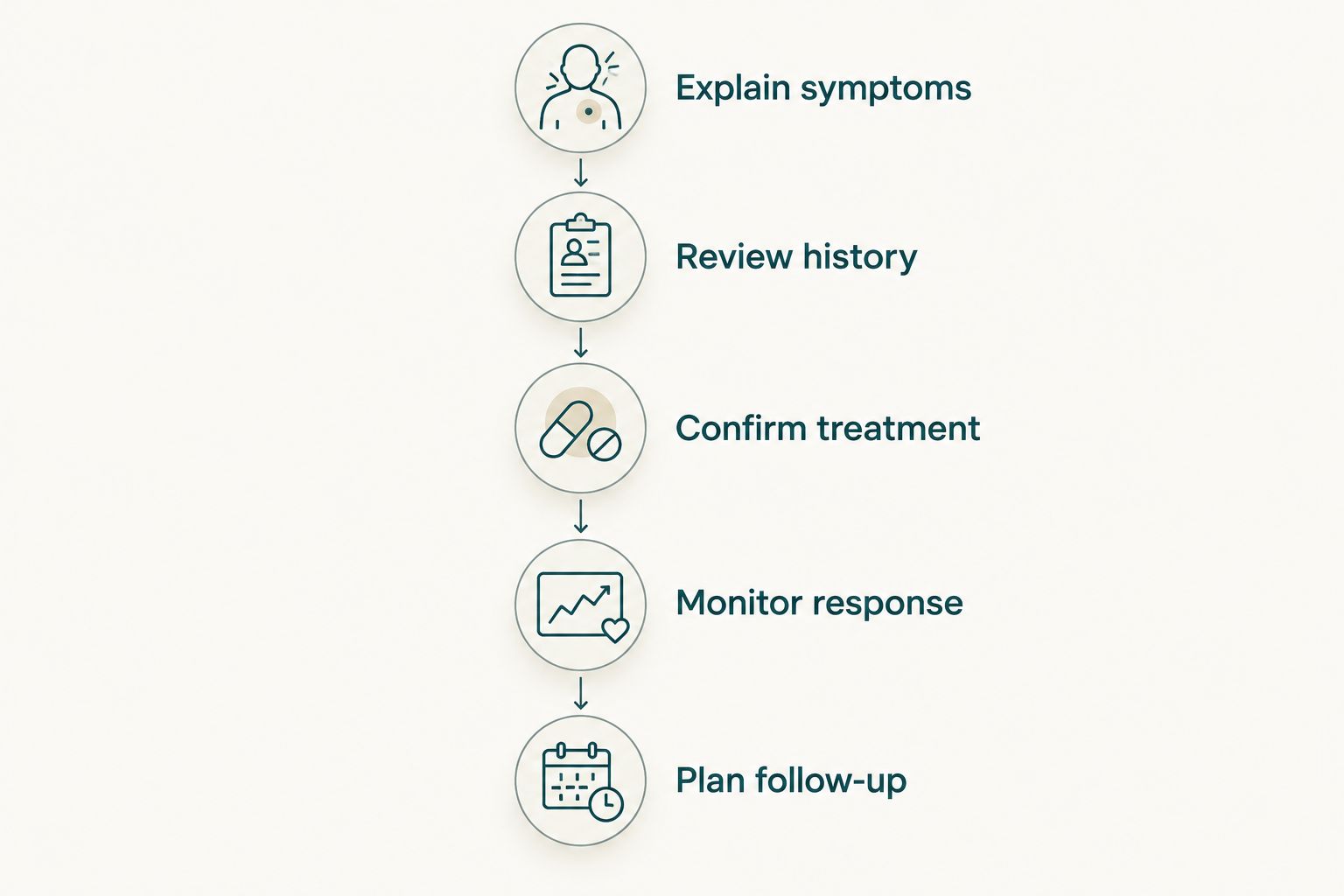
A safe decision follows a clinical sequence. Use these steps when comparing a hydration IV drip Dubai service in 2026.
Explain symptoms
Describe when the problem started, what you have been able to drink, and whether you have vomiting, diarrhoea, fever, pain, or reduced urination. Mention recent heat exposure and strenuous activity without assuming either explains every symptom.
Review history
Provide your medicines, allergies, pregnancy status where relevant, and any heart or kidney disease. These details influence whether fluids are appropriate and how they should be administered. Do not leave out a prescribed fluid restriction.
Confirm treatment
Ask for the fluid name and the reason for any additives. 0.9% sodium chloride and 5% glucose are established intravenous solutions, but they have different clinical uses and are not interchangeable simply because both come in infusion bags. Neither concentration tells you the right volume or infusion rate for your situation.
Monitor response
Ask what observations will be recorded and who remains responsible during the infusion. Report pain, swelling, leakage, or redness at the cannula site immediately; report breathing difficulty or other sudden symptoms immediately as well.
Plan follow-up
Get instructions for drinking, eating, managing ongoing losses, and seeking further care. Feeling better after fluid replacement does not establish why you became dehydrated.
What a hydration drip does—and does not—prove
An IV can replace fluid when intravenous treatment is indicated. It does not establish a diagnosis, erase the effects of alcohol, or prove that added vitamins are necessary.
For your 2026 shortlist, separate three questions: do you need fluid replacement, does it need to be intravenous, and does any proposed additive have a reason specific to you? A provider should answer each question independently.
Broad promises about energy, detoxification, immunity, or recovery do not answer those clinical questions. Ask what benefit is expected for your condition and what risks accompany the proposed treatment. More ingredients create more questions, not a stronger default recommendation.
How these options were ranked
The ranking prioritises clinical fit, assessment, monitoring, and escalation before convenience. The home-care option comes first for readers specifically seeking an at-home service; outpatient and hospital settings serve different assessment needs. Oral rehydration remains the default for uncomplicated dehydration when drinking is possible.
No single care setting wins for every patient. A 2026 comparison is useful only if it tells you when to choose an option—and when not to.
Which hydration option should you choose?
If you can drink, retain fluids, and have no concerning symptoms, start with oral hydration rather than an elective IV. Get medical advice when losses continue, symptoms persist, or your medical history complicates fluid replacement.
Choose an outpatient assessment when the cause is unclear. Consider home care only after suitability is established. Choose emergency care when symptoms are severe or someone is deteriorating.
FAQ
What is the best hydration IV drip service in Dubai?
The best service is one that assesses whether you need an IV and can safely treat you in the appropriate setting. DarDoc is an at-home option for families in Dubai; severe symptoms require urgent assessment rather than a home booking.
Is a hydration IV better than drinking water?
A hydration IV is not automatically better than drinking fluids. Oral hydration is usually appropriate for uncomplicated dehydration when you can drink and retain fluids; IV treatment requires a clinical indication.
Can I have a hydration drip at home in Dubai?
At-home IV services are offered in Dubai, but home treatment must be appropriate for your condition. Confirm the assessment process, treating professional’s licence, monitoring arrangements, and emergency escalation plan before treatment.
What should I ask before booking a hydration drip?
Ask who assesses you, what fluid is proposed, why it is needed, and how treatment is monitored. Also ask about any additives, relevant risks, and what happens if your symptoms worsen.
Who needs extra assessment before IV hydration?
People with heart or kidney disease, prescribed fluid restrictions, or significant ongoing symptoms need individual assessment before IV hydration. Pregnancy, medicines, allergies, and other medical conditions should also be disclosed.
Will a hydration drip cure a hangover?
A hydration drip does not cure a hangover or accelerate alcohol clearance. Persistent vomiting, confusion, or difficulty waking someone require medical assessment rather than a wellness infusion.
When should I seek emergency care instead of booking a drip?
Seek urgent medical attention for confusion, collapse, serious breathing difficulty, or difficulty waking someone. Persistent inability to retain fluids with worsening weakness or markedly reduced urine output also needs prompt assessment.
One last thing
Ask what would make the clinician decide not to give you the drip. A clear answer reveals whether the service distinguishes a medical indication from a booking request. The safest recommendation sometimes ends with drinking fluids, further assessment, or hospital care—not an infusion.


