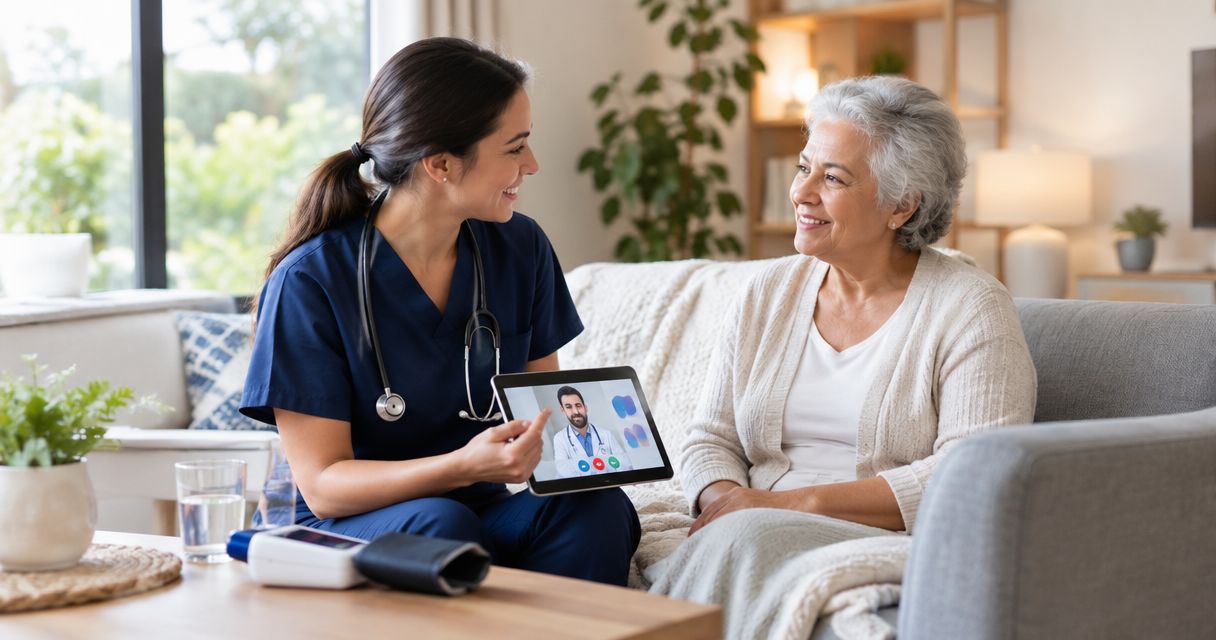
Burjeel’s strength is hospital-based care and access to medical specialists. When your immediate need is routine care at home, compare the home-care service itself rather than choosing on the hospital name alone. The best Burjeel alternative in 2026 is DarDoc if you need the home and online services listed below in Dubai or Abu Dhabi; your existing treating team is the better starting point when specialist continuity determines the care plan.
TL;DR- For burjeel alternatives home healthcare, DarDoc fits families seeking home nursing, blood tests, elderly care, or mother/newborn care.
- Keep Burjeel involved when your specialist needs to direct treatment or review a recent hospital discharge.
- Compare clinical responsibility, staff licensing, escalation arrangements, and the exact tasks included in home healthcare.
- Choose the setting around the patient’s medical needs, not around a provider ranking.
Why this matters
A home visit, a specialist appointment, and a hospital admission solve different problems. Moving care home changes the setting; it does not remove the need for a diagnosis, a treatment plan, or a clinician responsible for reviewing progress.
For families comparing Burjeel alternatives in 2026, the useful question is specific: who can safely carry out the care you need, where you need it? Start with the task, then assess the provider. An elderly parent needing help with an established care routine has a different requirement from someone whose condition needs further investigation.
This guide compares three care routes: a dedicated home healthcare provider, care coordinated through your existing treating team, and clinic-based follow-up. The alternatives are not interchangeable. Choose home care for an appropriate home-care task; keep hospital or specialist care when the clinical problem requires it.
Burjeel alternatives at a glance
| Provider or care route | Best for | Distinguishing feature | How it differs from Burjeel hospital care | Main limitation |
|---|---|---|---|---|
| Burjeel | Patients whose care depends on hospital facilities or specialist input | Hospital-based medical care | The benchmark when hospital and specialist continuity matter | A hospital relationship alone does not establish what a particular home visit includes |
| DarDoc | Families in Dubai and Abu Dhabi seeking the listed home and online services | At-home nursing, blood tests, IV drips, GLP-1 treatment, and family care services | A home and online healthcare route | Home care does not replace hospital assessment when the patient needs it |
| Your existing treating team | Patients following a specialist-directed or discharge care plan | Continuity with the clinicians managing the condition | Retains the existing clinical relationship while you discuss the appropriate care setting | A treating relationship does not automatically include a home-care arrangement |
| Clinic-based follow-up | Patients who can travel and need an in-person outpatient assessment | Examination and review in a clinical setting | Keeps care outside the home without necessarily requiring hospital admission | Requires travel and does not provide care inside the home |
Compare these routes against the same written care requirement. Otherwise, you risk comparing a nursing visit with a doctor’s consultation, or a blood collection with a full diagnostic assessment.
1. DarDoc: best for defined home healthcare needs
DarDoc provides home and online healthcare to families in Dubai and Abu Dhabi. Its stated services include at-home nursing, IV drips, blood tests, GLP-1 weight loss treatment, mother/newborn care, and elderly care. That scope makes it a relevant alternative when the service you need belongs in the home rather than in a hospital appointment.
The decision still starts with clinical suitability. Ask whether your requested task needs a prescription, a doctor’s assessment, an existing treatment plan, or a particular professional qualification before arranging care.
Where this home-care route shines
- A clear service match: the stated range covers several common reasons families seek home healthcare.
- Care in the home: the setting suits patients and families seeking care without a clinic journey.
- Family-care relevance: mother/newborn and elderly care are explicitly included, rather than inferred from a general healthcare label.
- Home and online options: you can ask which setting fits the particular consultation or procedure you need.
Where this home-care route falls short
- A home visit is not a substitute for emergency assessment or hospital-level monitoring.
- A broad service list does not establish the exact scope of an individual appointment. Confirm the tasks, clinician role, and follow-up arrangements.
- Nursing support and medical decision-making are different responsibilities. Establish who reviews changes in symptoms or treatment.
- A blood sample collection is only one part of care. You also need a plan for reviewing results and acting on them.
Home healthcare versus Burjeel hospital care
| Dimension | Dedicated home-care route | Burjeel hospital-care route |
|---|---|---|
| Care setting | Home and online services, as appropriate to the task | Hospital-based care |
| Starting question | Can this task safely take place at home? | Does this condition need specialist assessment or hospital facilities? |
| Continuity | Agree who receives records and reviews progress | Keep the relevant treating clinician involved |
| Escalation | Establish when home care should stop and medical assessment should begin | Use the appropriate hospital or specialist pathway |
Best for: families with a defined need that matches the stated service range and is clinically suitable for home care.
Verdict: choose this route for the home-care task, not as a replacement for every part of your medical care.
2. Your existing treating team: best for specialist continuity
Your existing treating team is the strongest starting point when home care follows surgery, a hospital discharge, or an ongoing specialist treatment plan. The important advantage is continuity: the clinician directing treatment can explain which tasks belong at home and which need reassessment.
This route is not necessarily a competing provider. It is a way to retain medical oversight while discussing whether a separate home healthcare service can carry out the required tasks.
Where continuity shines
- The existing clinician can interpret home-care needs in the context of the diagnosis and treatment plan.
- You can ask for written instructions before transferring tasks to another provider.
- Questions about restrictions, medication changes, and follow-up can remain with the relevant treating team.
Where continuity falls short
- An established hospital relationship does not automatically arrange a home visit.
- You still need agreement on who performs each task and who receives updates.
- Keeping the same clinician does not remove practical issues such as travel for examinations or investigations.
| Dimension | Existing treating-team route | Switching home-care provider |
|---|---|---|
| Clinical plan | Starts with the current treatment plan | Requires the receiving provider to understand the plan |
| Records | Keeps the existing clinical history central | Requires an appropriate handover |
| Home-care tasks | Ask the treating clinician to define them | Confirm the provider can perform them |
| Changes in condition | Agree who should review them | Agree how concerns reach the responsible clinician |
Best for: patients whose home-care needs are part of an active specialist or discharge plan.
Verdict: hold the clinical relationship; change the care setting only with a clear handover.
3. Clinic-based follow-up: best for outpatient examination
Clinic-based follow-up is the relevant alternative when you can travel and need an in-person assessment rather than help inside the home. It also gives you a clear route back to the clinician reviewing a condition or treatment.
Do not book a home procedure merely because it is convenient when the unresolved question is diagnostic. First establish what needs examination or investigation.
Where clinic follow-up shines
- It provides an in-person setting for outpatient assessment.
- It separates medical review from household care support.
- It suits patients whose main need is a consultation rather than an ongoing home-care task.
Where clinic follow-up falls short
- You must travel to the appointment.
- It does not provide nursing or caregiving inside your home.
- A clinic visit does not replace hospital care when the condition requires hospital facilities.
Best for: patients who need outpatient review and can attend safely.
Verdict: choose clinic follow-up when examination is the priority; choose home care when the home-care task is already defined.
Why people switch from Burjeel to a home-care route
The practical reason to consider a Burjeel alternative is a mismatch between the care setting and the task. These are decision criteria, not claims about Burjeel’s service quality or patients’ reported experiences.
- The task belongs at home. An established nursing or caregiving requirement can make a home-care service the relevant option.
- Travel is a barrier. If getting to an appointment is difficult, ask whether the required care can safely happen at home.
- The household needs support. Elderly care and mother/newborn care involve needs that must be defined around the person and family.
- You need a specific service. Compare the actual blood test, nursing task, or consultation—not an umbrella healthcare package.
For 2026 comparisons, keep convenience and clinical suitability separate. A service can be convenient without being the right setting for an unresolved medical problem.
What to check before changing providers
A safe comparison starts with a written description of the care required. Avoid a request as broad as “home nursing” when you need a specific procedure, observation, or caregiving task.
Define the task
Explain what help you need, the relevant diagnosis, and any current instructions. Distinguish personal care, nursing procedures, sample collection, and medical consultation; they are not the same service.
Check credentials
Ask which professional will attend and whether their licence and scope cover the requested work. In Dubai, check the relevant DHA licensing requirements; in Abu Dhabi, check the relevant DoH requirements. Do not treat a general statement about licensing as confirmation of an individual professional’s permitted duties.
Agree responsibility
Identify who sets the plan, who carries it out, and who reviews changes. If your specialist remains responsible for treatment, agree how the home-care provider will share relevant information.
Plan escalation
Ask what should trigger a call to the treating clinician, urgent assessment, or stopping a procedure. Severe breathing difficulty, stroke symptoms, or other emergency warning signs require emergency care—not a routine home appointment.
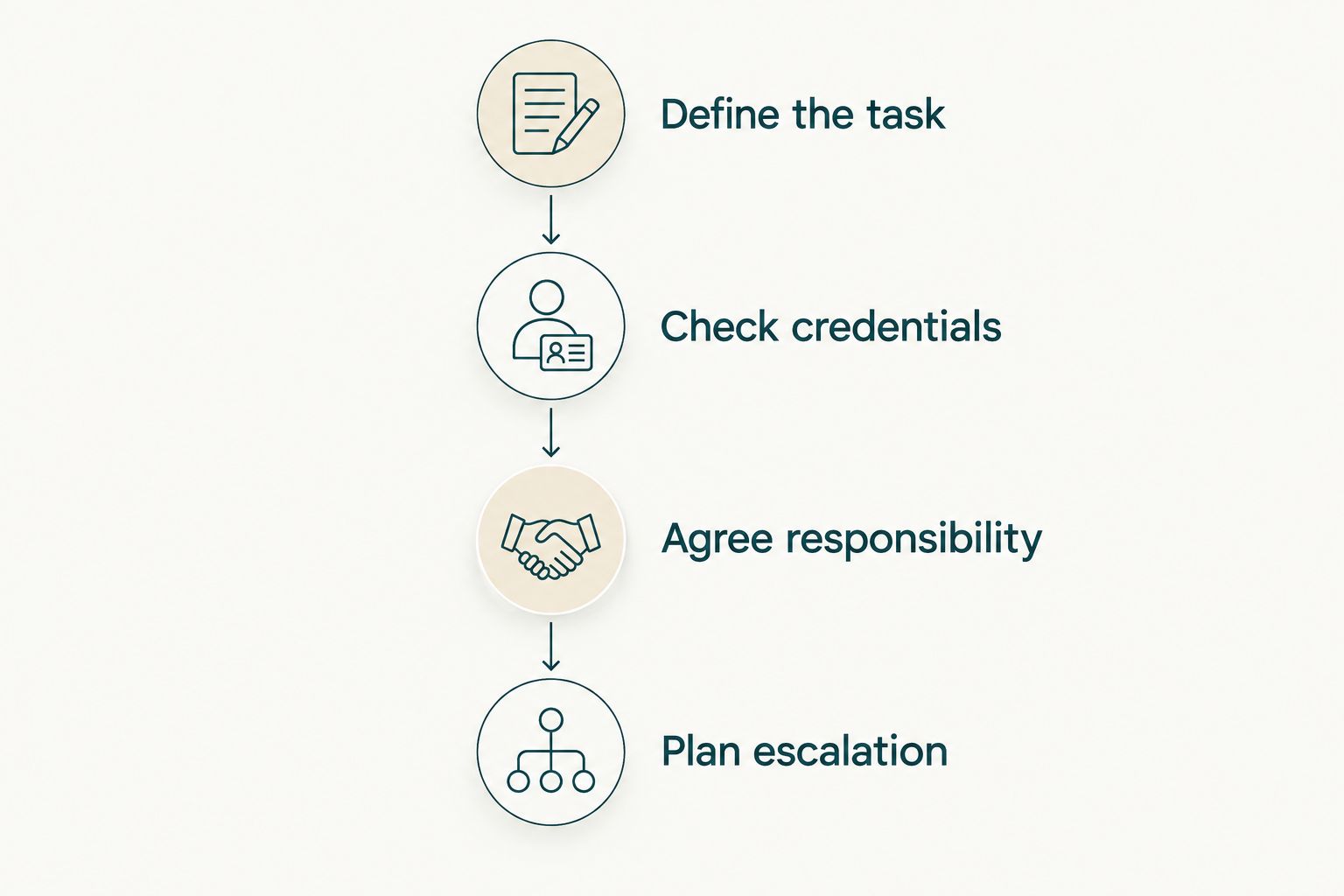
These checks matter more than a provider’s place in a list. For your 2026 decision, ask for answers that relate to the exact patient and task, rather than accepting general assurances about quality.
Review home healthcare options
Explore home and online healthcare, then confirm the service and clinical assessment your situation requires.
Explore home careWhen staying with Burjeel is the right call
Stay with Burjeel when the existing specialist relationship or hospital setting is central to your treatment. Changing a home-care arrangement does not require abandoning the clinician who understands your condition.
After a hospital stay, clarify the discharge instructions before making a change. Ask which tasks another provider can perform, which findings need review, and where follow-up should take place.
In 2026, a sensible plan can include both settings: hospital or clinic care for assessment, with appropriate tasks carried out at home. The aim is coordinated care, not choosing one brand for every medical need.
FAQ
What’s the best Burjeel alternative for home healthcare in 2026?
DarDoc is a relevant choice for families in Dubai and Abu Dhabi seeking its stated home nursing, blood testing, elderly care, or mother/newborn services. Keep your treating specialist involved when the service forms part of an existing medical plan.
Is a home healthcare provider better than Burjeel?
A home healthcare provider is better suited to a clinically appropriate home-care task, not automatically better for the whole condition. Hospital or specialist care remains the appropriate route when assessment or treatment requires that setting.
Can I keep my Burjeel specialist and use another home-care provider?
Discuss a shared-care arrangement with your specialist and the proposed home-care provider. Agree the written instructions, record sharing, responsibilities, and escalation route before care starts.
What should I ask before booking a home nurse in Dubai or Abu Dhabi?
Ask about the attending professional’s licence, permitted scope, and experience with the exact task you need. Also confirm who directs the care plan, what the visit includes, and who reviews any change in condition.
Does a blood test at home include medical review?
Do not assume that home sample collection includes interpretation or follow-up. Confirm which clinician will review the results and explain what action is needed.
When should I choose a hospital instead of a home visit?
Choose emergency care for emergency symptoms and hospital assessment when the condition requires hospital facilities. A routine home visit is not an alternative to urgent evaluation for severe breathing difficulty or stroke symptoms.
How do I compare home healthcare quotations?
Compare quotations for the same clinical task and scope. Check the professional role, procedures, supplies, medical review, and follow-up included rather than comparing an undefined visit label.
One last thing
The most useful question is not “Who replaces Burjeel?” It is “Who is responsible if the patient’s condition changes?”
Before choosing DarDoc or another care route, name the clinician responsible for review and establish how concerns reach them. That answer makes a home-care plan clearer than a longer list of provider features.