Can you get an IV drip at home while pregnant?
Can you get an IV drip at home while pregnant? Yes, after clinical assessment. Learn when home care fits, what to check and when to seek urgent care.

Yes, you can receive an IV drip at home while pregnant when a clinician has assessed you, prescribed the treatment and confirmed that home care is appropriate. Pregnancy does not make every IV fluid, medicine or vitamin mixture safe; the ingredients, your symptoms and the monitoring available determine whether treatment belongs at home or in a medical facility. In 2026, the safe starting point remains a pregnancy assessment—not a wellness-drip menu.
TL;DR- Can you get an IV drip at home while pregnant? Yes, after clinical assessment confirms home treatment is appropriate.
- Prescribed IV hydration treats a clinical need; wellness vitamin mixtures are not interchangeable with pregnancy care.
- DarDoc provides home healthcare in Dubai and Abu Dhabi; confirm pregnancy-specific suitability before arranging an IV drip.
- Persistent vomiting, fainting, severe pain or pregnancy warning signs require medical assessment, not a routine home booking.
Can you get an IV drip at home while pregnant?
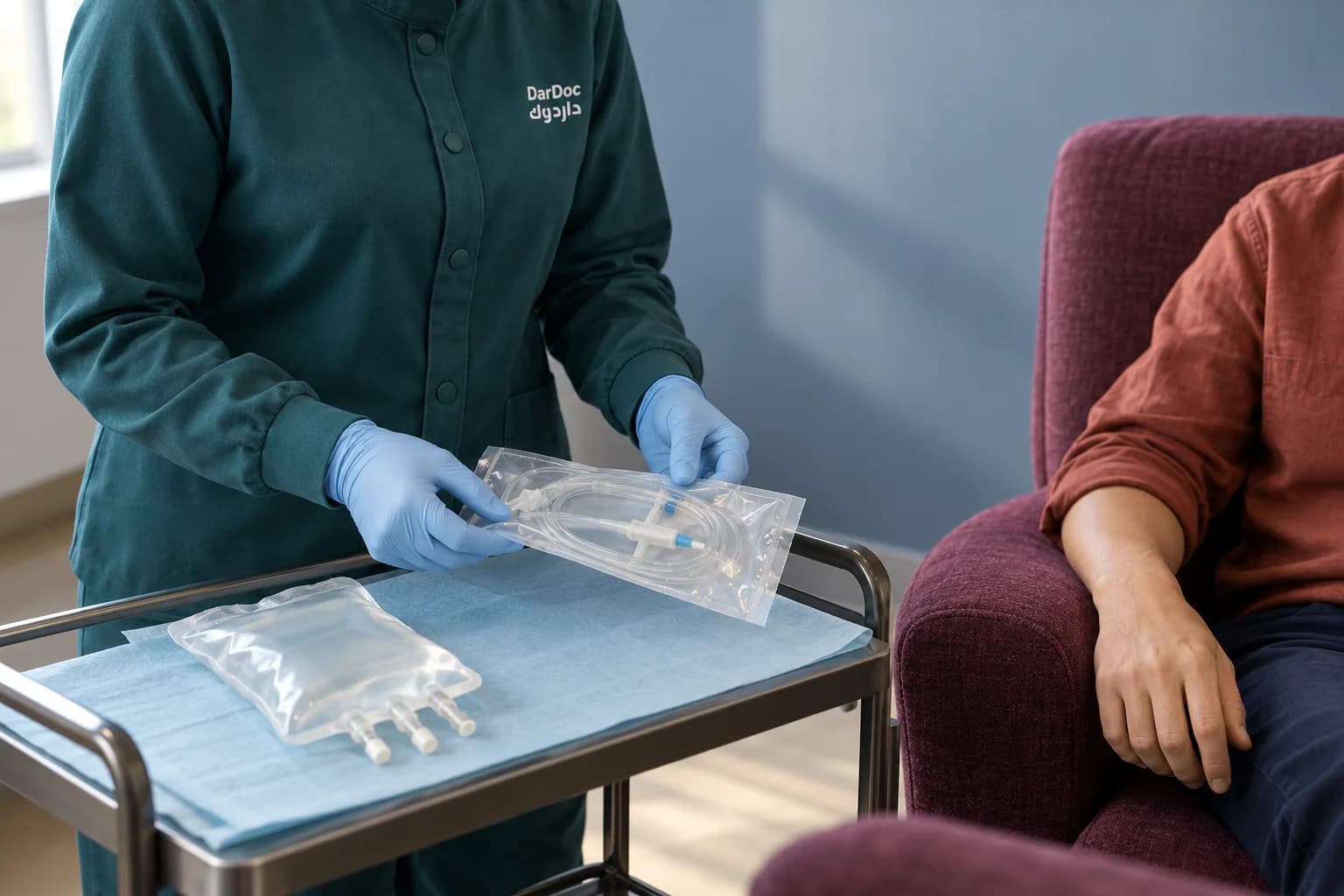
Yes, but a home IV is a treatment setting, not proof that the treatment is suitable. A clinician must establish why you need fluids, whether you need tests or medicines, and whether your condition can be monitored safely outside a clinic or hospital.
DarDoc provides home healthcare, including IV drips, in Dubai and Abu Dhabi. That service description does not establish eligibility for a pregnancy-related infusion; ask specifically about assessment, prescribing and escalation before booking.
| Care option | Best for | Main benefit | Main limitation |
|---|---|---|---|
| Oral fluids and prescribed treatment | People who can retain fluids and have no warning signs after assessment | Avoids a cannula and supports hydration without an infusion | Insufficient when vomiting prevents adequate intake |
| Clinician-prescribed home IV | Clinically stable patients whose assessment supports home treatment | Allows prescribed treatment without travelling for the infusion | Cannot replace hospital investigations or emergency obstetric care |
| Clinic or hospital care | People needing urgent assessment, investigations or closer monitoring | Provides access to diagnostic and escalation services | Requires attendance rather than treatment at home |
These are care settings, not interchangeable packages. Choose the setting that matches your clinical needs, rather than choosing a drip first and arranging an assessment afterwards.
Why this matters
Vomiting during pregnancy can cause dehydration, but an infusion does not explain why you are vomiting or treat every possible cause. Severe pregnancy sickness, known as hyperemesis gravidarum, can also involve nutritional problems and electrolyte disturbances.
The Royal College of Obstetricians and Gynaecologists’ guidance on pregnancy sickness and hyperemesis describes assessment, anti-sickness treatment, fluid replacement and escalation according to severity. It does not make commercial wellness infusions a substitute for maternity care.
For a home-care decision in 2026, separate two questions: do you need an IV, and is home the right place to receive it? A correct prescription still needs a suitable treatment setting.
When is a home IV a reasonable option?
A home infusion is reasonable only after the prescribing clinician decides you are stable enough and that the required care can be delivered there. Being able to stay on your sofa is convenient, but convenience does not establish safety.
The assessment should cover:
- Your symptoms: vomiting, fluid intake, urine output, dizziness, pain and any bleeding.
- Your pregnancy: gestational age, relevant complications and your maternity team's advice.
- Your medical history: kidney or heart problems, diabetes, allergies and previous reactions.
- Your medicines: prescribed treatment, supplements and anything taken for nausea.
- Your monitoring needs: observations, blood tests, reassessment and access to urgent care.
Tell the clinician if drinking triggers more vomiting or if prescribed anti-sickness medicine will not stay down. Those details affect the treatment plan more than the name of a hydration package.
DarDoc is an option for families seeking home healthcare in Dubai and Abu Dhabi, not a substitute for emergency maternity care. Confirm that the proposed service can meet the needs identified by your pregnancy assessment.
When should you seek urgent care instead?
Do not wait for a routine home appointment if you cannot keep fluids down, are passing very little urine, feel faint or are becoming increasingly unwell. Contact your maternity team or seek urgent medical assessment; severe symptoms require emergency care.
Seek immediate help for collapse, confusion, chest pain, difficulty breathing, severe abdominal pain or heavy vaginal bleeding. In the UAE, call 998 for an ambulance when you need emergency assistance.
Other pregnancy warning signs include:
- A temperature of 38°C or higher, particularly with vomiting or feeling very unwell.
- Blood in your vomit.
- Severe headache, visual disturbance or pain beneath the ribs.
- Reduced fetal movements once you have an established movement pattern.
- Vomiting accompanied by significant pain or symptoms that differ from your usual pregnancy sickness.
Pre-eclampsia usually develops after 20 weeks of pregnancy. Headache, visual symptoms or upper abdominal pain need assessment rather than an assumption that dehydration explains them.
An IV can improve fluid balance while another problem remains untreated. Feeling better after fluids does not rule out a pregnancy complication.
Which IV ingredients need particular caution?
The question is not simply whether an IV drip is safe during pregnancy. You need to know exactly what is being infused, why it is needed and how the prescription accounts for pregnancy.
Prescribed fluids are not wellness cocktails
A clinician selects IV fluids according to your condition, examination and, where needed, blood results. Fluid type, amount and infusion rate matter; too much fluid or an unsuitable electrolyte composition can cause harm.
Do not accept a vague description such as an energy, immunity or beauty drip as an ingredient list. Ask for the full prescription, including every additive and medicine.
Vitamins are not automatically harmless
Pregnancy does not create a general indication for high-dose IV vitamins. A vitamin can be clinically appropriate for a specific deficiency or complication without being appropriate as part of an elective mixture.
Prolonged vomiting deserves particular attention to thiamine, also called vitamin B1. RCOG guidance addresses thiamine supplementation in severe pregnancy sickness, particularly before dextrose-containing treatment; this is a prescribing decision, not a reason to request a vitamin cocktail yourself.
Anti-sickness treatment needs a pregnancy-specific plan
An infusion alone does not prevent vomiting from recurring. Your clinician should decide whether you need anti-sickness medicine, which route is suitable and what to do if symptoms continue.
Do not stop prescribed pregnancy medicines or replace them with a commercial infusion without speaking to the prescriber. Bring the medication list into the assessment.
Why the decision varies between pregnancies
There is no single home-IV rule that fits every pregnant patient in 2026. The decision changes with the clinical problem and the support required to treat it safely.
- Ability to drink: retaining fluids supports a different plan from vomiting every attempt at drinking.
- Severity of dehydration: reduced urine, dizziness and abnormal observations can change the urgency and setting.
- Duration of poor intake: prolonged vomiting raises nutritional concerns as well as fluid loss.
- Blood results: electrolyte or kidney-function abnormalities can require closer supervision.
- Other conditions: diabetes, heart disease and kidney disease affect fluid and monitoring decisions.
- Pregnancy warning signs: bleeding, severe pain or symptoms of pre-eclampsia take priority over a home hydration request.
A previous uncomplicated infusion does not establish that the next episode is suitable for home treatment. Ask for reassessment when your symptoms change.
What should happen before a pregnancy IV at home?
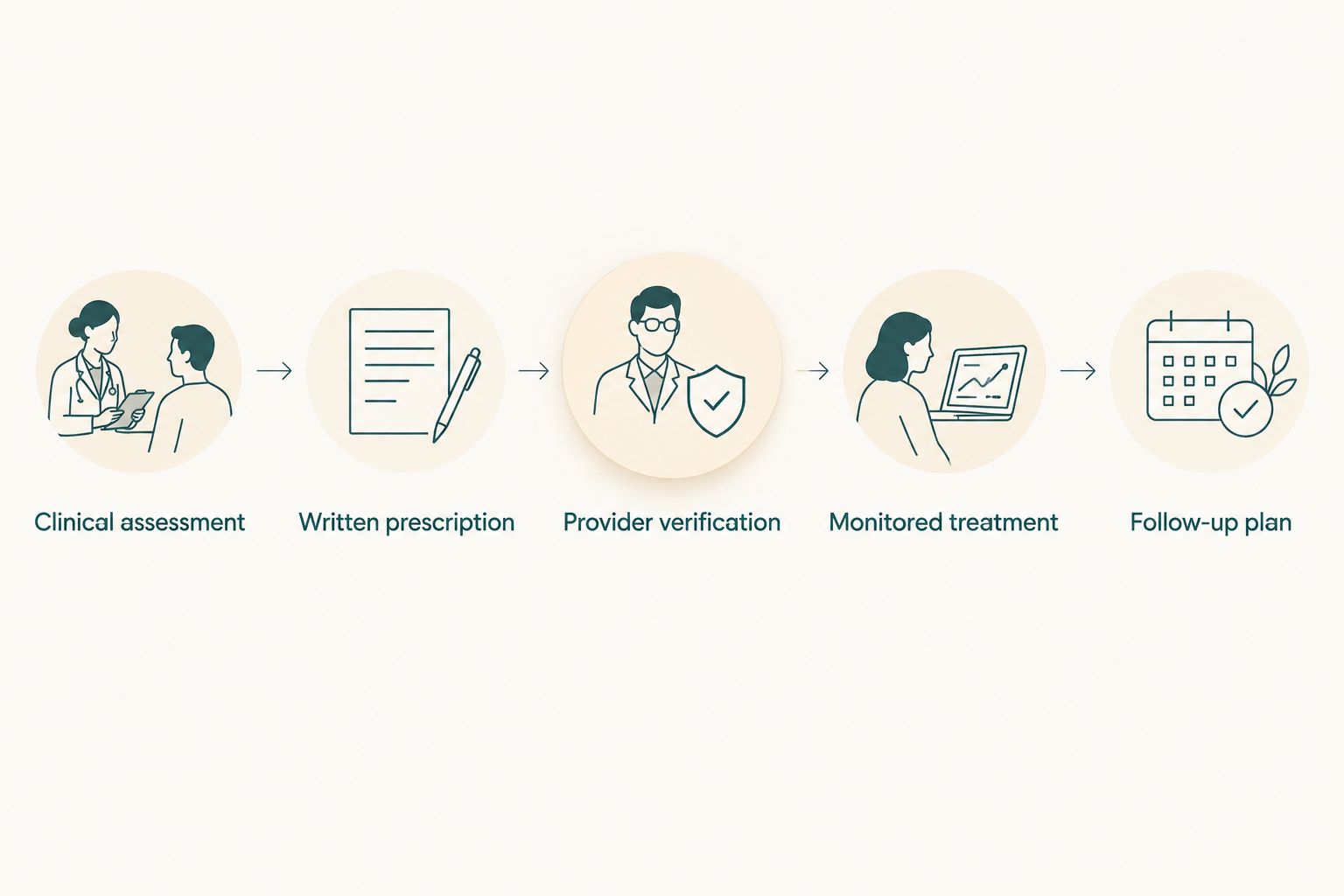
Use this sequence when discussing home treatment in 2026. The prescription and escalation plan should exist before the cannula goes in.
- Clinical assessment. Explain your symptoms, gestational age, fluid intake, urine output, medical history and current medicines. Establish whether you need an examination or investigations before treatment.
- Written prescription. Confirm the indication, fluid, additives, medicines and intended monitoring. Ask who is responsible for prescribing and reviewing the treatment.
- Provider verification. Check the relevant Dubai Health Authority or Department of Health–Abu Dhabi credentials for the service and treating professional. Licensing does not replace individual pregnancy assessment.
- Monitored treatment. The treating professional should follow the prescribed plan, use infection-control precautions and watch for reactions or problems at the cannula site.
- Follow-up plan. Know who to contact, what symptoms require escalation and what happens if you still cannot drink after treatment.
Keep your maternity team's details available and explain any instructions they have already given you. A home provider needs that context; separate care teams should not be working from conflicting plans.
For broader cannula and monitoring questions, read the guide to at-home IV drip safety. Pregnancy still requires its own assessment beyond general infusion precautions.
Can an IV drip treat morning sickness?
An IV drip can replace fluids lost through vomiting, but it does not necessarily stop pregnancy sickness. Treatment can also require anti-sickness medicine, nutritional support and reassessment of the cause.
If fluids improve your dizziness but you continue vomiting, the problem is not resolved. Ask for a plan that addresses both hydration and your ability to eat, drink and take prescribed medicine afterwards.
Is hospital treatment safer than a home drip?
Hospital treatment is the appropriate choice when you need urgent investigations, obstetric assessment or monitoring that cannot be provided at home. Home treatment is not a lower-risk choice simply because it avoids travel.
For a clinically stable patient, an individually prescribed home plan can be appropriate. The deciding factor is what care you need, not whether one setting sounds more comfortable.
Do you need your obstetrician's approval?
You need a prescribing clinician to assess pregnancy suitability, and your maternity team should be involved when symptoms, complications or existing instructions require it. Do not assume a general infusion booking includes obstetric review.
Ask the provider how they will communicate with your maternity team. If the answer is unclear, resolve that before treatment rather than after symptoms recur.
FAQ
Can you get an IV drip at home while pregnant in 2026?
Yes, when a clinician has assessed you, prescribed the infusion and confirmed that home treatment is appropriate. Pregnancy suitability depends on your symptoms, the ingredients and the monitoring required.
Is a vitamin IV drip safe during pregnancy?
A vitamin IV drip is not automatically safe during pregnancy. Each ingredient needs a clinical indication and pregnancy-specific review; a wellness label does not establish safety.
Should I book a home drip if I cannot keep water down?
Contact your maternity team or seek urgent medical assessment if you cannot keep fluids down. Do not use a routine home-drip booking to delay assessment, particularly if you have reduced urine, faintness or worsening symptoms.
Can IV fluids harm my baby?
Appropriately prescribed IV fluids are used during pregnancy when clinically needed. That does not make every fluid, additive or medicine suitable, and untreated dehydration or an underlying illness also needs attention.
What temperature is a warning sign when I am pregnant and vomiting?
A temperature of 38°C or higher warrants prompt medical advice during pregnancy, especially with vomiting or feeling very unwell. Fever needs assessment rather than treatment as simple dehydration.
What should I ask DarDoc before arranging a pregnancy IV?
Ask DarDoc whether pregnancy-specific assessment is required, who prescribes the infusion and what monitoring and escalation are provided. Confirm the full ingredients and whether your maternity team needs to be involved.
What number should I call for an ambulance in the UAE?
Call 998 for an ambulance in the UAE. Collapse, confusion, breathing difficulty, chest pain or severe bleeding require emergency help rather than a home infusion appointment.
One last thing
The most useful question is not which drip to choose, but what happens if you still cannot drink afterwards. A responsible treatment plan answers that before the infusion begins.
For any pregnancy IV decision in 2026, leave with clear instructions about continued vomiting, reduced urine and warning signs. Temporary relief is useful; a safe plan also explains when home care must stop.