Growth hormone is one of the most poorly understood molecules in mainstream sports-medicine vocabulary. The bodybuilding internet treats it as a synonym for performance enhancement. The functional-medicine internet treats it as a marker of biological age. The endocrinology textbooks treat it as a tightly regulated peptide hormone with a specific physiological role and a specific set of pathologies when its production is too high or too low. None of these views is wrong, but each captures only part of the picture, and the combined effect is a public conversation in which the same word means different things in different rooms.
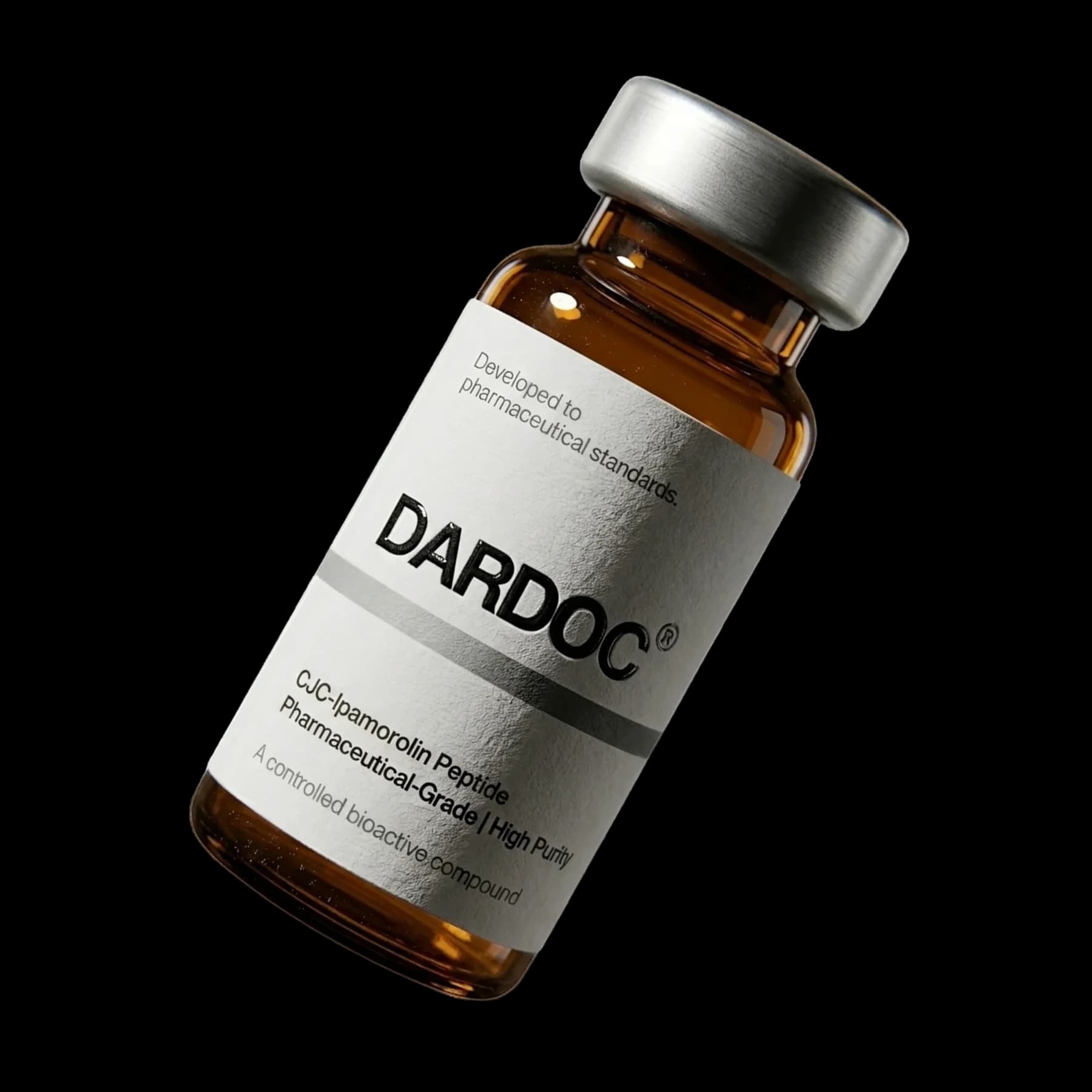
This article is about a peptide combination, CJC-1295 plus Ipamorelin, that sits at the intersection of those rooms. The combination is the most-asked-about growth hormone protocol in UAE clinics in 2026, and it is asked about by patients with very different goals: athletes who want better recovery, professionals who want better sleep, women in the perimenopausal transition who notice changes in body composition, and people in their forties and fifties who notice that they are not bouncing back from training the way they used to. The protocol's appeal is real and it has clinical legs. The marketing around it consistently overshoots what the underlying biology can be expected to deliver. The clinically honest version is more interesting and more qualified than the marketing version, and that is the conversation worth having.
What growth hormone actually does
Growth hormone (GH) is a peptide hormone produced by the anterior pituitary gland under the regulation of two upstream peptides: growth hormone-releasing hormone (GHRH), which stimulates GH release, and somatostatin, which suppresses it. The pituitary releases GH in pulses, predominantly during slow-wave sleep, with smaller pulses during the day in response to exercise, stress and certain foods. The half-life of GH in circulation is short, typically less than thirty minutes, and most of its biological effects are mediated by insulin-like growth factor 1 (IGF-1), which is produced by the liver in response to GH stimulation.
The physiological effects of GH and IGF-1 are broad. They include the stimulation of protein synthesis in skeletal muscle, the mobilisation of fatty acids from adipose tissue, the regulation of bone density, the support of immune function and the maintenance of cellular repair processes. In children, GH drives linear growth, its primary and most-studied role. In adults, GH no longer drives growth in stature, but it continues to play an important role in body composition, recovery, sleep architecture and several aspects of metabolism.
GH production peaks during adolescence and declines progressively through adulthood. By the seventh decade of life, daily GH secretion has fallen to roughly a third of its young-adult level. This decline is part of normal physiology and not, on its own, a pathological state [Veldhuis et al., Journal of Clinical Endocrinology and Metabolism, 1995]. The clinical question is whether the decline contributes meaningfully to the changes in body composition, recovery, sleep and energy that many adults notice from their forties onwards, and whether modestly supporting endogenous GH signaling can support those systems without the risks of exogenous GH replacement.
What CJC-1295 is, and what it does
CJC-1295 is a synthetic analogue of growth hormone-releasing hormone (GHRH). The native GHRH peptide has a very short half-life in circulation, typically less than ten minutes, which makes it impractical as a therapeutic agent in its native form. CJC-1295 is a modified version of GHRH designed to resist enzymatic degradation, extending its biological activity to several hours.
There are two distinct compounds sold under the CJC-1295 name. The first is CJC-1295 with DAC (drug affinity complex), which binds covalently to circulating albumin and has a half-life measured in days. The second is CJC-1295 without DAC, sometimes called modified GRF (1-29), which has a half-life of approximately thirty minutes. The two compounds have different pharmacokinetics, different dosing schedules and different clinical profiles. They are often conflated in the supplement market, and any clinician prescribing CJC-1295 should be specific about which form is being used.
The mechanism, in either form, is the same. CJC-1295 binds to GHRH receptors on the anterior pituitary and stimulates the pulsatile release of endogenous growth hormone. The body produces its own GH, in response to its own regulatory signals, in larger pulses than would occur without CJC-1295 stimulation. This is mechanistically distinct from exogenous GH administration, which delivers GH directly into the circulation regardless of physiological state. The distinction matters because it has implications for both safety and physiological effect: a stimulated pulsatile release preserves more of the natural feedback regulation of the GH axis than a continuous exogenous infusion.
What Ipamorelin is, and what it does
Ipamorelin is a synthetic peptide that acts as a growth hormone secretagogue receptor (GHSR) agonist. It mimics the action of ghrelin, the endogenous ligand for GHSR, but with a much narrower selectivity profile. Native ghrelin stimulates GH release, but it also has effects on appetite, prolactin and cortisol. Ipamorelin stimulates GH release without meaningfully affecting appetite, prolactin or cortisol at therapeutic doses, which is one of the main reasons it has become a preferred GH secretagogue in clinical use.
The half-life of Ipamorelin is short, approximately two hours, and its action on the pituitary is selective and pulsatile. It does not cause the sustained GH release that exogenous GH administration produces. Like CJC-1295, it stimulates the body's own GH machinery rather than replacing it.
The reason CJC-1295 and Ipamorelin are commonly used together is that they activate the GH axis through two different pathways, GHRH receptor agonism in the case of CJC-1295, and GHSR agonism in the case of Ipamorelin, that are synergistic at the level of pituitary GH release. The combined stimulation produces a larger GH pulse than either peptide alone, and the synergy is well-characterised in the underlying receptor pharmacology.
Why the combination is used together
The combination protocol exists because the two peptides activate complementary, non-overlapping pathways at the pituitary, and the synergy is real at the receptor level. There are three additional reasons the combination is preferred over either monotherapy.
- Larger GH pulses, lower individual doses. Because the two peptides synergise, the GH pulse generated by the combination is larger than the sum of the pulses from each peptide alone, at lower individual doses than would be required to achieve the same response from monotherapy. Lower individual doses mean reduced risk of side effects related to either peptide.
- Selectivity for GH. The combination preserves the GH-specific selectivity of Ipamorelin, while adding the receptor-level mechanism of CJC-1295. The result is a relatively clean stimulation of the GH axis without meaningful effects on cortisol, prolactin or other pituitary hormones.
- Pulsatile rather than continuous stimulation. Both peptides produce pulses of endogenous GH release rather than the sustained elevation that exogenous GH administration produces. Pulsatile release more closely resembles the body's natural GH secretion pattern, and is associated with a better safety profile than sustained elevation in the available evidence.
It is worth being explicit about what the combination is not. It is not exogenous growth hormone. It does not deliver GH directly. It does not reliably push GH or IGF-1 into ranges associated with acromegaly or other GH-excess pathologies when used at typical clinical doses. It also is not a magic recovery protocol. The GH pulse it produces is real but modest, and the clinical effects are correspondingly modest.
The evidence ladder
As with most compounded peptides, the CJC-1295 plus Ipamorelin evidence base is a pyramid with a wide base of preclinical and mechanistic data and a narrow top of clinical trial data. The shape is worth understanding before considering the protocol.
- Receptor pharmacology and animal studies. Both peptides have well-characterised receptor pharmacology and substantial preclinical literature confirming their effects on the GH axis. The synergy of the combination is also documented at the level of receptor and animal studies.
- Phase I human pharmacokinetic and pharmacodynamic studies. Both peptides have been studied in healthy human volunteers for pharmacokinetics, GH and IGF-1 response, and basic safety. The studies support the mechanism (the peptides do what their pharmacology predicts they would do) and have not surfaced serious safety signals at therapeutic doses.
- Phase II human clinical trials. Smaller-scale human trials for specific indications, with mixed but generally favourable results in the indications studied. The published indications are heterogeneous and include studies in growth hormone deficiency populations, in adult body composition, and in some specific pathologies.
- Phase III randomized controlled trials. None completed for the combination protocol in any of the indications for which it is most commonly prescribed off-label: recovery, sleep, body composition, anti-aging. The use case in those indications is mechanistic and case-series based, not trial-based.
What this means in practice. A clinician who tells you the combination is "clinically proven" for recovery or anti-aging is overstating the evidence. A clinician who tells you the protocol has no real biology behind it is also overstating, in the other direction. The receptor pharmacology is solid, the preclinical and Phase I human data is consistent, and the protocol does what the underlying biology predicts it would do at the level of GH pulse stimulation. Whether the resulting GH response translates into clinically meaningful outcomes for any specific patient is the question that has not been fully answered, and the honest answer is that it depends on the patient, the protocol, and what is being measured.
What patients actually notice
Patients on a typical CJC-1295 plus Ipamorelin protocol most commonly report changes in three domains, in roughly this order of frequency:
- Sleep architecture. The most commonly reported change is improved depth and quality of sleep, particularly in the first half of the night. This is consistent with the underlying biology: the largest endogenous GH pulse occurs during slow-wave sleep, and stimulation of that pulse can deepen the sleep cycle. Patients often describe falling into deeper sleep more quickly and waking less during the night.
- Recovery from training. A reduction in soreness and a faster return to training capacity after intense sessions. The effect is typically modest, more noticeable in athletes who are training at meaningful volume, and less noticeable in patients with low training stimulus.
- Body composition. Slow, gradual changes in body composition over the course of an eight to ten week cycle, particularly when combined with appropriate training and nutrition. The effect is real but modest. Patients who are looking for dramatic body composition changes from the protocol alone, without changes in training and nutrition, are usually disappointed.
Less commonly reported changes include skin quality improvements, libido changes, and energy level changes. These are real for some patients and absent for others, and the variability reflects the modest size of the underlying GH pulse and the heterogeneous responsiveness of patients to it.
It is worth being explicit about what most patients do not experience. They do not experience dramatic changes in muscle mass on the timescale of weeks. They do not experience significant changes in fat distribution that override their underlying training and nutrition. They do not experience the kinds of changes that exogenous GH administration produces in clinical or non-clinical use. The combination protocol stimulates the body's own GH axis modestly, and the effects are correspondingly modest.
Speak to a DarDoc physician
How a typical protocol is structured
Most combination protocols share a common skeleton, with variation in the specific details. The framework below is illustrative. Specific dosing belongs in a private consultation, not a public-facing article.
- Cycle length. Eight to ten weeks of active treatment is typical, sometimes extended to twelve weeks for specific indications. Longer continuous use is not supported by the available evidence base, and the GH axis is best left to recover at the end of each cycle.
- Dosing frequency. The combination is typically administered once daily, in the evening, by subcutaneous injection. Evening dosing aligns with the body's natural GH pulsing pattern, which peaks during slow-wave sleep. Some protocols add a second daily dose, either in the morning or post-training, depending on the indication.
- Cycle break. A break of at least three months between cycles is standard, sometimes longer depending on the patient's response and the indication. The break allows the GH axis to return to baseline regulation and helps prevent receptor desensitisation.
- Monitoring. Some protocols include baseline laboratory testing (IGF-1, fasting glucose, lipid panel) and follow-up testing during and after the cycle. Others rely on clinical response. The decision depends on the patient's medical history and the prescribing physician's judgement.
What does not belong in any reasonable version of this protocol is open-ended daily use. The GH axis is not designed to be continuously stimulated, and a protocol with no defined end point is one that cannot be evaluated. Any clinic that prescribes the combination on an indefinite basis is operating outside the typical evidence base.
Side effects and safety
Across the available preclinical and clinical literature, the CJC-1295 plus Ipamorelin combination has a generally mild side-effect profile at therapeutic doses. The most commonly reported issues are local injection-site reactions, transient flushing or warmth shortly after injection, mild headaches, and occasional water retention. Less common issues include numbness or tingling in the hands and feet (typically transient and dose-related), and changes in fasting glucose or insulin sensitivity in some patients.
The honest caveats are familiar. There is no long-term human safety data for the combination at five or ten years of cumulative use. The GH and IGF-1 axis has theoretical interactions with malignancy biology. IGF-1 has trophic effects on multiple tissue types, and any therapy that meaningfully stimulates IGF-1 raises a theoretical concern in patients with a personal or strong family history of malignancy. The responsible default in those patients is caution, and a different conversation. Pregnancy and breastfeeding are exclusions. Active autoimmune disease and active diabetes change the calculus and should be discussed with the prescribing clinician before any protocol begins.
The MOHAP, DHA and DoH regulatory reality
Neither CJC-1295 nor Ipamorelin is an FDA-approved drug. The FDA has issued guidance classifying both peptides among the compounded peptides falling outside the bulk-substances list eligible for compounding by 503A pharmacies in the United States [FDA Guidance on Compounded Peptides, 2023]. Both are scheduled for review by the July 2026 FDA advisory panel, alongside five other peptides. The outcome of the review will not change the UAE clinical pathway in the immediate term.
In the UAE, both peptides sit in the compounded category. A licensed clinic working with a licensed UAE compounding pharmacy can, in principle, prescribe and dispense them for off-label use after a documented physician consultation. The same three rules apply that apply to every compounded peptide protocol in this country. The clinic should be DHA-, DoH-, or MOHAP-licensed and able to evidence it. The compounding pharmacy should be UAE-licensed and operating under MOHAP and EDE oversight, with batch-level testing for sterility, potency and endotoxins. The supply chain should be cold-chain controlled at 2 to 8 degrees Celsius from compounding to administration.
Who the combination is, and isn't, for
A reasonable case for considering the combination looks like this. An adult with realistic expectations, looking for modest support of recovery, sleep quality and body composition, who has already established the foundational layer of training, nutrition and sleep hygiene. The patient has no malignancy history, no active inflammatory or autoimmune condition that would change the calculus, no untreated diabetes, and is not pregnant or breastfeeding. The conversation includes informed consent that the evidence is mechanistic and Phase I-II rather than Phase III, and that the protocol is off-label.
An unreasonable case looks like this. A patient looking for dramatic body composition changes that the protocol cannot deliver. A patient with active or recent malignancy or a strong family history that warrants a different conversation. A patient with untreated diabetes or significant insulin resistance, where the GH axis interactions could complicate glucose control. A patient who has not established the foundational layer of training, nutrition and sleep that the protocol modestly supports rather than replaces. A child or adolescent. A patient subject to anti-doping testing without a therapeutic-use exemption.
The single most common mistake in the combination conversation is reaching for it as a substitute for the foundational work. The protocol modestly amplifies what training, nutrition and sleep are already doing. It does not replace them. Patients who get the most out of it are almost always the patients who would already be doing well on the basics.
The bottom line
CJC-1295 plus Ipamorelin is a combination protocol of two synthetic peptides that stimulate the body's endogenous growth hormone axis through complementary receptor mechanisms. The receptor pharmacology is well-characterised. The Phase I human data is consistent with the mechanism. The Phase III clinical trial data for the combination in its most-prescribed off-label indications (recovery, sleep, body composition) does not exist. The protocol carries the regulatory, supply-chain and informed-consent caveats that come with any compounded research-grade peptide therapy in the UAE.
It is reasonable to consider for the right patient, with realistic expectations, on top of a solid foundation of training, nutrition and sleep, with a licensed physician, a licensed compounding pharmacy, cold-chain integrity, a defined cycle and review point, and explicit informed consent. It is not reasonable as a substitute for the foundation, as a shortcut to dramatic body composition changes, or as a self-prescribed protocol from a gym contact.
If you are thinking about the combination for a specific goal, the first conversation is not about the peptides. It is about what you are actually trying to achieve, and whether the foundation is in place that the protocol can build on. Those conversations belong with a DHA-, DoH-, or MOHAP-licensed clinician who knows the literature, the regulatory frame and your medical history. This article is educational. It is not medical advice for your specific situation.