A sustained caloric deficit is one of the most metabolically unforgiving things you can do to a human body. Within the first two weeks the body senses it and begins to adapt: thyroid output trims, sympathetic tone falls, leptin drops, NEAT (non-exercise activity thermogenesis) declines invisibly, and the resting metabolic rate quietly drops below what a calculator would predict from body weight alone. By week six the body is running cooler than it should be. By week ten the lifter who was losing half a kilogram a week at 2,200 calories is now losing nothing at the same intake, and the prescribed solution (eat less, train more) is the solution that pushes the adaptive response harder in the wrong direction. This is not a failure of willpower. It is the predictable physiology of a body defending its energy stores against what it interprets, accurately, as a threat.
Cutting phases in bodybuilding, weight-loss protocols in clinical medicine, and any other context involving a sustained caloric deficit are built on the same biological terrain. The peptide therapy conversation, in this terrain, comes up around two specific compounds: MOTS-c and AOD-9604. They are different molecules with different mechanisms. MOTS-c works at the level of mitochondrial signaling and metabolic flexibility. AOD-9604 is a synthetic fragment of growth hormone targeting its lipolytic activity. But they are the two peptides DarDoc prescribes that map most directly onto the bottlenecks the cutting phase actually produces. This article is about what each of them does, where each fits, what they cannot do, and how a careful clinic thinks about prescribing them. It is the cutting-phase peptide guide. It is not a fat-loss shortcut, because no honest version of this conversation is.
What actually fails in a sustained caloric deficit
Before considering any peptide, it is worth being specific about what the cutting phase is actually doing to the body. The peptides only matter against the right backdrop, and the backdrop is what most marketing skips.
- Resting metabolic rate falls below predicted. The body downregulates resting metabolic rate as a defensive response to deficit. The downregulation is real, measurable in metabolic chamber studies, and substantially larger than what changes in lean mass alone would predict. Researchers call this metabolic adaptation or adaptive thermogenesis, and it is one of the main reasons lifters in the second half of a cut find themselves stuck at lower intakes than they expected to need.
- NEAT declines invisibly. Non-exercise activity thermogenesis (the energy spent on fidgeting, posture, walking around, gesturing, all the unconscious movement of daily life) falls in deficit, often substantially. The lifter is genuinely moving less without realising it, and the daily energy expenditure of an active person in deficit can drop by several hundred calories purely from this mechanism. NEAT does not show up on a watch and is not captured in any tracking system most lifters use.
- Thyroid output trims. T3 and T4 levels typically fall in sustained deficit. The change is rarely large enough to constitute clinical hypothyroidism, but it is often enough to slow metabolic rate, shift body temperature, and produce the subjective sense of being cold and slow that lifters in deep cuts often describe. This is not pathology. It is normal physiology adapting to a perceived shortage.
- Leptin falls and ghrelin rises. Leptin (the satiety hormone produced by adipose tissue) falls in deficit, often disproportionately to the change in body fat mass. Ghrelin (the hunger hormone) rises. The result is intensified subjective hunger, harder food noise, and a hormonal environment that fights against continued adherence.
- Mitochondrial efficiency shifts. Mitochondrial function changes in deficit, with implications for substrate utilisation, exercise capacity and recovery. The shifts are subtle and not always perceptible, but they are real at the cellular level and they matter for how the body handles training stimulus during a cut.
- Recovery from training degrades. The capacity to recover from a given training stimulus falls in deficit. The lifter who could handle five high-intensity sessions a week in maintenance often finds that three is what their body can actually absorb when calories are low. Pushing harder against degraded recovery is one of the fastest ways to lose lean mass during a cut.
These are the bottlenecks any cutting protocol is fighting against. They accumulate over weeks. They compound each other. And they are where the conversation about peptide therapy in cutting phases actually starts, not at the level of "do these compounds make me lose fat," but at the level of "do they support specific aspects of the metabolic and recovery picture that the deficit itself is degrading."
MOTS-c: a peptide encoded inside the mitochondria
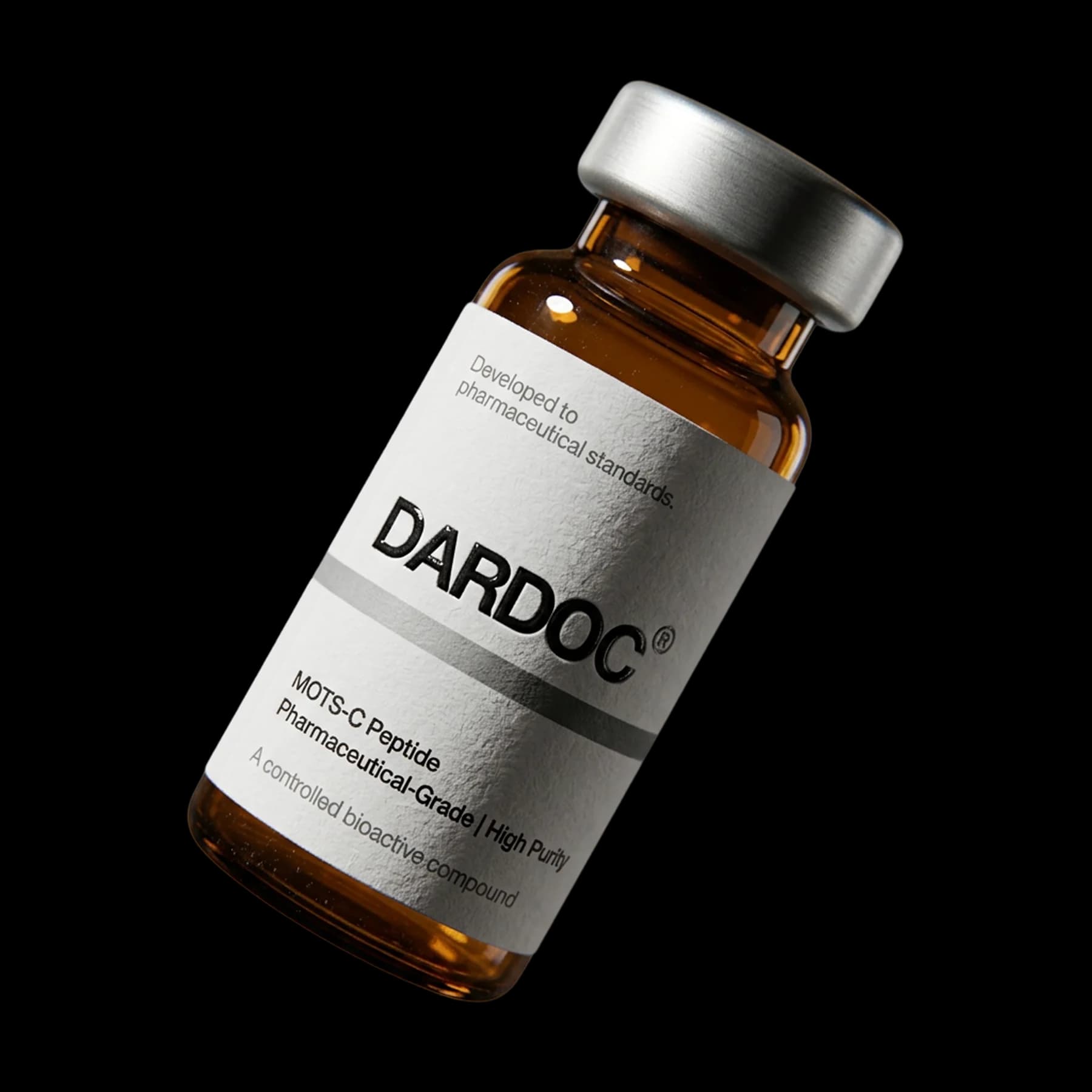
MOTS-c is a 16-amino-acid peptide with a slightly unusual origin story. It is encoded not by nuclear DNA (where most peptides and proteins originate) but by mitochondrial DNA, in a small open reading frame within the mitochondrial 12S rRNA gene [Lee et al., Cell Metabolism, 2015]. It was identified relatively recently, as part of a broader research effort to characterise mitochondrial-derived peptides, a class of signaling molecules that the mitochondria produce and release into circulation, where they appear to coordinate metabolic responses across multiple tissue types.
The mechanistic story is interesting. MOTS-c has been shown to influence the AMPK signaling pathway (the master regulator of cellular energy status) in a way that mimics some of the effects of caloric restriction at the cellular level [Lu et al., Aging Cell, 2019]. When AMPK is activated, the cell shifts toward energy-producing metabolic pathways: increased glucose uptake into skeletal muscle, increased fatty acid oxidation, increased mitochondrial biogenesis. The MOTS-c effect on these pathways is one of the most consistently observed findings across the available preclinical literature, and it is the basis for the peptide's clinical use in metabolic contexts.
Beyond the AMPK story, MOTS-c has been associated with improvements in insulin sensitivity in animal models, reductions in age-related metabolic decline, and effects on exercise capacity. The exercise capacity findings are particularly interesting in the bodybuilding cutting context: MOTS-c has been reported in animal studies to improve endurance and reduce age-related decline in physical performance, with mechanisms consistent with improved mitochondrial efficiency. The translation from animal models to human cutting phases is not direct, but the mechanism is mappable.
The clinical evidence base is small and the peptide should be considered experimental rather than established. There have been small human studies in metabolic syndrome and exercise performance contexts, with promising signals but not the trial scale required for definitive clinical claims [Reynolds et al., Nature Communications, 2021]. There is no Phase III randomized controlled trial of MOTS-c for any indication, including the cutting-phase indications for which it is most commonly considered off-label. The mechanistic case is coherent, the preclinical literature is supportive, and the clinical translation is incomplete. All three of those things are true at the same time, and the honest version of the conversation acknowledges all three.
Where MOTS-c fits in a cutting protocol
The case for MOTS-c in a sustained cutting phase rests on the parts of the cut where mitochondrial signaling and metabolic flexibility are limiting factors. Three patient archetypes come up most often in clinical conversations.
- The plateaued mid-cut lifter. Six to eight weeks into a cut, weight loss has stalled at an intake that should still produce a deficit on paper. Resting metabolic rate has adapted downward. NEAT has fallen. Recovery from training has degraded. The lifter is doing the right things and the body is adapting against them. MOTS-c protocols are sometimes considered in this window on the basis of the AMPK and mitochondrial efficiency mechanisms, with the goal of supporting the metabolic flexibility that is degrading rather than driving fat loss directly.
- The endurance-conditioning lifter. A bodybuilder who is also doing meaningful conditioning work during the cut (fasted cardio, structured zone-2 sessions, metabolic work) and whose limit is exercise capacity rather than fat loss directly. The MOTS-c effects on mitochondrial biogenesis and exercise capacity in the preclinical literature are particularly relevant here, and the lifter who is genuinely trying to build aerobic and metabolic conditioning during a cut has more theoretical case for MOTS-c than the lifter who is purely trying to lose weight.
- The metabolic-syndrome-adjacent lifter. Lifters with insulin resistance, mild metabolic syndrome, or family history of type 2 diabetes who are using a cutting phase as part of broader metabolic rehabilitation. The MOTS-c effects on insulin sensitivity in animal models translate, plausibly, to clinical relevance in this population, although the human evidence remains limited. This is a context where MOTS-c is sometimes used outside the bodybuilding frame entirely, in a more conventional metabolic-medicine setting.
MOTS-c protocols are typically structured as four to six week cycles, with a maximum continuous exposure of approximately ten weeks and minimum breaks of three to six months between cycles. This is consistent with the available data on the peptide's pharmacology and is the cycling pattern your KB documents. It is also consistent with the broader principle that no peptide protocol should be open-ended, particularly in metabolic contexts where the body's adaptive responses are themselves being engaged with.
AOD-9604: the lipolytic fragment of growth hormone
AOD-9604 has a more straightforward origin. It is a 16-amino-acid synthetic peptide corresponding to the C-terminal fragment of human growth hormone, specifically, the region of the GH molecule that is responsible for its effects on lipolysis (fat mobilisation) [Heffernan et al., Endocrinology, 2001]. The peptide was developed by an Australian biotechnology company in the late 1990s and early 2000s with the explicit goal of separating the lipolytic effects of growth hormone from its other physiological effects, particularly its effects on growth, IGF-1 production, and insulin sensitivity.
The mechanism is what makes AOD-9604 interesting in the cutting context. The lipolytic activity of native growth hormone is real and clinically meaningful (it is one of the reasons exogenous GH has been used in fat-loss contexts in some clinical settings) but the lipolytic effect comes packaged with the other GH effects, including effects on IGF-1, insulin sensitivity, and growth signaling. AOD-9604 was designed to retain the lipolytic activity while leaving most of the rest of the GH activity behind. The pharmacology in animal studies and early human studies supported this design: AOD-9604 has been shown to stimulate lipolysis and inhibit lipogenesis, without producing the IGF-1 elevation or insulin resistance signal that exogenous GH produces [Ng et al., Diabetes Obesity and Metabolism, 2003].
The clinical evidence base is more developed than for many compounded peptides, but it is also more mixed. AOD-9604 went through Phase II clinical trials for obesity in the mid-2000s. The trials showed signals consistent with the mechanism (modest fat loss without the GH-related side effects) but the effect sizes were not large enough to support a successful path to drug approval, and the development programme was eventually discontinued [Ng et al., 2003]. This is an important detail. AOD-9604 is one of the few peptides discussed in this category that has actually been through formal Phase II human clinical trials. The trials did not produce results impressive enough to push the compound through approval. That is informative about realistic effect sizes.
In off-label clinical use, AOD-9604 occupies a specific niche: a fat-loss adjunct for athletes and active individuals targeting visceral or stubborn body fat, particularly in cutting phases or when conventional approaches have plateaued. It is not a primary fat-loss intervention. It is an adjunct, with modest expected effect sizes, used alongside the foundational layer of caloric deficit, training and protein intake.
Where AOD-9604 fits in a cutting protocol
The patient archetype for AOD-9604 in clinical practice is more specific than for MOTS-c. Three patterns come up most often.
- The late-cut visceral fat lifter. A lifter who is well into a cut, has lost most of the subcutaneous fat that is going to come off easily, and is now working on the more stubborn visceral and lower-abdomen fat that tends to be the last to mobilise. AOD-9604 has a documented preference, in the available studies, for visceral and stubborn fat depots over peripheral subcutaneous fat. The mechanism is consistent with what GH does in this regard, and the patient archetype is the one most likely to perceive an effect.
- The athlete in a contest-prep or photoshoot prep window. A defined window of weeks where the goal is final conditioning rather than weight loss, and where the lifter is willing to accept a modest adjunct that targets the specific regional fat that is limiting the aesthetic outcome. AOD-9604 protocols in this context are typically time-limited to the prep window.
- The patient where exogenous GH is contraindicated or undesirable. AOD-9604 was specifically designed to deliver the lipolytic component of GH without the other GH effects, which makes it relevant for patients who would benefit from the lipolytic effect but for whom the broader GH profile is contraindicated or unwanted. The case here is the most clinically distinctive of the three archetypes.
AOD-9604 protocols are typically structured as eight to twelve week standard cycles, with maximum continuous use of approximately sixteen weeks and four to eight week breaks before repeating. The protocol is more often used in single defined cycles around specific body composition windows than as a continuous metabolic intervention. This is consistent with the available pharmacology and with the practical reality that the effects are modest enough that open-ended use does not make clinical sense.
Speak to a DarDoc physician
How the two peptides compare and combine
MOTS-c and AOD-9604 are different molecules acting on different mechanisms, and the clinical decision about which one fits a particular cutting phase depends on the bottleneck the lifter is actually trying to address.
If the bottleneck is metabolic adaptation (RMR has fallen, exercise capacity has degraded, the cut has plateaued and the limiting factor feels like the body's adaptive response itself) MOTS-c fits the picture more clearly. The mitochondrial and AMPK mechanisms are aimed at exactly the part of the system that is degrading in this situation.
If the bottleneck is regional fat distribution (visceral and stubborn fat persisting despite a meaningful caloric deficit and otherwise sound conditioning) AOD-9604 fits the picture more clearly. The lipolytic fragment of GH is aimed at the mobilisation of these specific fat depots.
If the bottleneck is general energy and recovery during the cut, neither peptide is the most direct answer. The GH axis peptides, CJC-1295 plus Ipamorelin, are often a better fit for the recovery and sleep components of the cutting phase, and their inclusion in a cutting protocol is more often clinically defensible than either of the metabolic peptides alone.
The two peptides are sometimes used together in a stack, on the basis that they act on different mechanisms and the side-effect profiles of both are mild at therapeutic doses. The clinical case for the combination is reasonable but not formally studied, and the additional cost of running both peptides simultaneously should be weighed against the modest expected effect sizes of each. A stack of MOTS-c plus AOD-9604 plus CJC-1295 plus Ipamorelin during a cutting phase is not unusual in clinical practice in the UAE bodybuilding context, but it is also not necessarily the right answer for every lifter, and a more conservative approach with a single peptide chosen for the specific bottleneck is sometimes the better starting point.
What these peptides do not fix
This is the most important section of the article and the one most likely to be skipped by readers who came looking for protocols. The cutting-phase peptide conversation is particularly susceptible to peptide-as-shortcut thinking, and the consequences of that thinking are usually that the peptide does not work and the lifter blames the wrong thing.
- Inadequate caloric deficit. A lifter eating at maintenance who adds MOTS-c will not lose fat. A lifter eating at maintenance who adds AOD-9604 will not lose fat. The energy balance equation is not optional. Peptides modify the conditions under which a deficit produces fat loss. They do not substitute for the deficit. The lifter who is being honest with themselves about caloric intake and is genuinely in deficit is the lifter who can have a meaningful conversation about peptide adjuncts. The lifter who is not is having a different conversation.
- Inadequate protein intake. The single most important variable in body composition during a cut is protein intake. A lifter eating below 1.6 grams per kilogram of body weight per day is going to lose lean mass in a deficit, and no peptide will compensate for that. The protein conversation has to happen before the peptide conversation.
- Inadequate training stimulus. Lean mass retention during a cut depends on continued progressive overload in resistance training. A lifter who deloads training during a cut is going to lose muscle, and no peptide will substitute for the training stimulus. If anything, the training stimulus has to be defended particularly hard during a cut, and a lifter who is not maintaining training quality is in trouble regardless of pharmacology.
- Inadequate sleep. Sleep restriction during a cut accelerates lean mass loss, increases hunger, degrades recovery and pushes adherence to the breaking point. A lifter sleeping six hours a night during a cut is making the cut substantially harder than it needs to be, and no peptide will compensate. The sleep conversation is one of the highest-leverage conversations in any cutting context.
- Underlying medical issues. Hypothyroidism, low testosterone, vitamin D deficiency, sleep apnoea and several other conditions can produce metabolic and body composition pictures that resemble metabolic adaptation but are actually pathological. A lifter who is plateaued and feels generally unwell deserves a baseline medical workup before reaching for a peptide protocol. Sometimes the answer is that an underlying condition needs treatment, not a peptide.
The clinically honest version of the cutting peptide conversation is that these compounds are a small layer on top of a much bigger picture of caloric deficit, protein intake, training, sleep and underlying health. A lifter who has the foundation in place may benefit from a peptide protocol at the margins. A lifter who has not done the foundation work first will not get the most out of one, regardless of which peptide is chosen and how aggressively it is dosed.
Side effects and safety
Across the available preclinical and clinical literature, both MOTS-c and AOD-9604 have generally mild side-effect profiles at therapeutic doses. The most commonly reported issues are local injection-site reactions, occasional mild fatigue or flu-like symptoms in the early days of a cycle, and rare reports of mild nausea or appetite changes. There are no published reports of serious adverse events at typical clinical doses for either peptide.
The honest caveats are familiar. Neither peptide has long-term human safety data at five or ten years of cumulative use. AOD-9604, despite having gone through Phase II clinical trials, has limited long-term post-marketing safety data because it never reached approval. MOTS-c is newer and the long-term safety profile is genuinely unknown. Both peptides should be used in defined cycles rather than open-endedly. Patients with active or recent malignancy warrant particularly careful evaluation, particularly given that some metabolic and growth-related signaling pathways have theoretical interactions with malignancy biology. Pregnancy and breastfeeding are exclusions for both peptides. Patients with significant insulin resistance or type 2 diabetes should have explicit conversations with the prescribing clinician about the metabolic effects of either peptide before starting.
The MOHAP, DHA and DoH regulatory reality
Neither MOTS-c nor AOD-9604 is an FDA-approved drug. AOD-9604 is among the seven peptides scheduled for review by the July 2026 FDA advisory panel on compounded peptides [FDA Guidance on Compounded Peptides, 2023]. MOTS-c sits in a similar regulatory category. The outcome of the FDA review will not change the UAE clinical pathway in the immediate term.
In the UAE, both peptides sit in the compounded category. A licensed clinic working with a licensed UAE compounding pharmacy can, in principle, prescribe and dispense them for off-label use after a documented physician consultation. The regulatory framework that applies is the same one that applies to every compounded peptide protocol in this country: licensed clinic, licensed compounding pharmacy, documented physician prescription, cold-chain delivery, and explicit informed consent that the protocol is off-label.
The WADA implications are worth flagging for tested athletes. Both peptides sit in prohibited categories on the WADA code, and tested athletes (competitive bodybuilders in tested federations, drug-tested powerlifters, athletes in WADA-aligned sports) should not use either without a therapeutic-use exemption. We have written separately about the WADA frame in the bodybuilding capstone article in this journal.
Who the cutting peptide protocols are, and aren't, for
A reasonable case for considering MOTS-c, AOD-9604, or both, looks like this. A lifter or active individual in a structured cutting phase, with adequate caloric deficit, adequate protein intake, maintained training stimulus, adequate sleep, and a specific bottleneck (metabolic adaptation, regional fat distribution, exercise capacity in the cut) that one of these peptides is mechanistically positioned to address. The patient has realistic expectations about modest effect sizes, has had recent bloodwork, has no malignancy history that warrants a different conversation, no untreated diabetes, and is not pregnant or breastfeeding. The patient is not subject to anti-doping testing without a therapeutic-use exemption. The conversation includes informed consent that the evidence base is mechanistic and Phase I-II rather than Phase III, and that the protocol is off-label.
An unreasonable case looks like this. A lifter looking for peptide-driven fat loss without addressing caloric deficit, protein intake, training or sleep, the foundation that the peptides modify but do not replace. A patient with active or recent malignancy or a strong family history that warrants a different conversation. A patient with untreated diabetes or significant insulin resistance, where the metabolic effects of either peptide could complicate glucose control. A child or adolescent. A tested athlete without a therapeutic-use exemption. A patient who has not had a baseline medical workup to rule out underlying conditions that could explain a stalled cut.
The bottom line
MOTS-c and AOD-9604 are the two peptides DarDoc prescribes that map most directly onto the bottlenecks the cutting phase produces. MOTS-c acts on mitochondrial signaling and metabolic flexibility through the AMPK pathway, with relevance to metabolic adaptation, exercise capacity and insulin sensitivity. AOD-9604 acts on the lipolytic fragment of growth hormone, with documented preference for visceral and stubborn fat depots, and is one of the few peptides in this category to have completed Phase II human clinical trials, which produced signals consistent with the mechanism but effect sizes modest enough that the compound did not reach approval. Both peptides are reasonable adjuncts in the right cutting context. Neither is a primary fat-loss intervention, and both work best as a small layer on top of a solid foundation of caloric deficit, protein intake, training and sleep.
The framework that protects you in the UAE (licensed clinic, licensed compounding pharmacy, documented physician prescription, cold-chain delivery, explicit informed consent) applies to cutting-phase peptide protocols as much as to any other. WADA implications matter for tested athletes. The protocol should be structured in defined cycles with defined endpoints, not open-endedly.
If you are thinking about peptide therapy for a cutting phase, the first conversation is not about the peptides. It is about whether the foundation of the cut is in place, what specific bottleneck is actually limiting you, and whether one of these peptides is mechanistically positioned to support that bottleneck. Those conversations belong with a DHA-, DoH-, or MOHAP-licensed clinician who knows the literature, the regulatory frame and your training context. This article is educational. It is not medical advice for your specific situation.