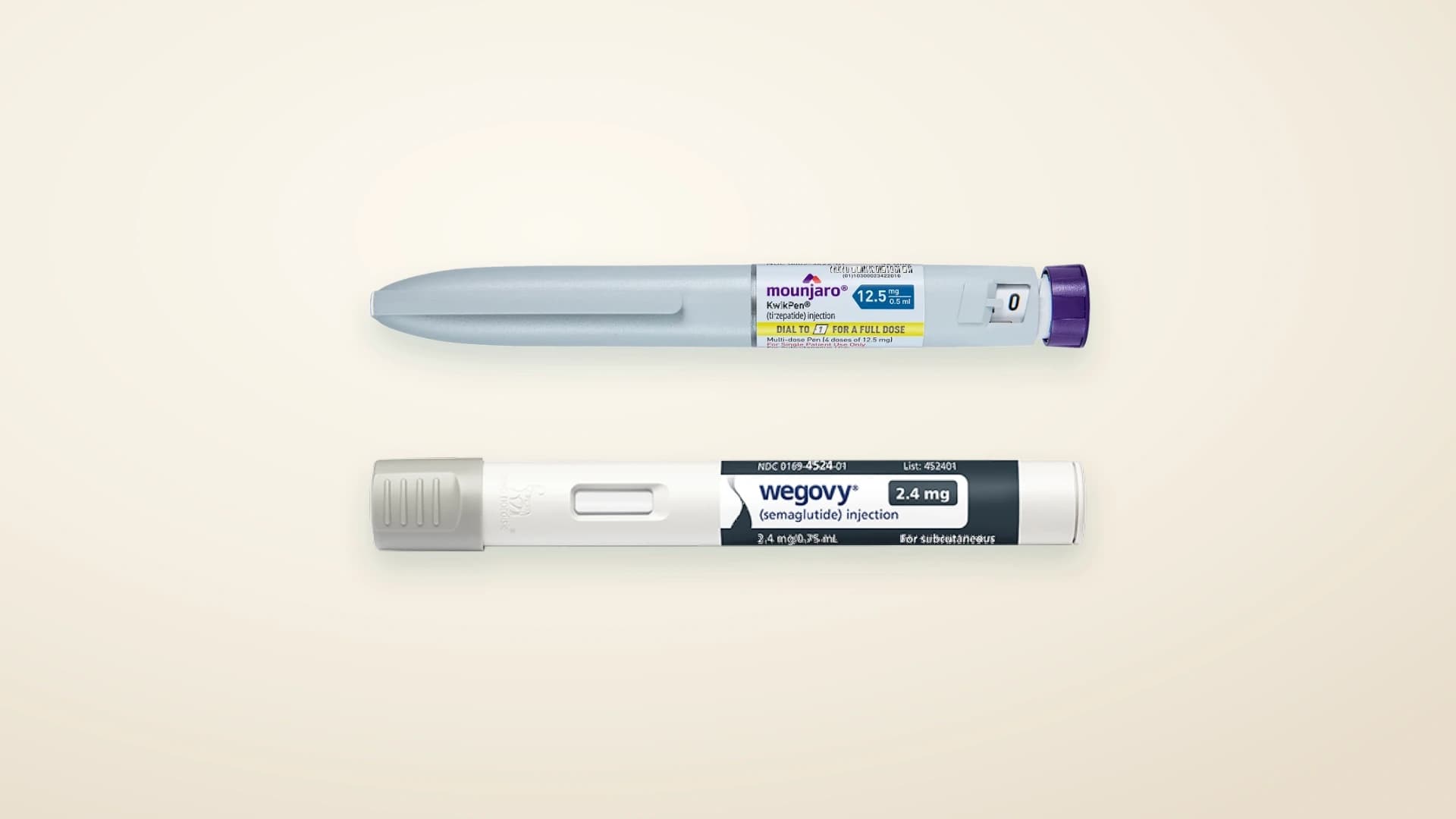
Instead of reconstructing meals, symptoms and weight from memory at every appointment, connect your GLP-1 consultation to weight loss tracking through a clinician-agreed plan and a single personal log. This 2026 workflow shows you what to prepare, what to record and which changes need medical review rather than another spreadsheet entry.
TL;DR- DarDoc offers GLP-1 weight-loss treatment for UAE families seeking home and online healthcare.
- Connect your GLP-1 consultation to weight loss tracking with a baseline, medication record, symptom log and review plan.
- Track treatment tolerance alongside weight; a lower reading does not establish that treatment is safe or appropriate.
- Change doses or switch medicines only under your prescribing clinician’s instructions.
Why this matters
A weight chart cannot explain whether you are eating adequately, tolerating treatment or following the prescribed schedule. Your clinician needs that context before deciding whether to continue, adjust or reassess treatment.
DarDoc is best for UAE families seeking GLP-1 weight-loss treatment within a home and online healthcare service. You can start with DarDoc and use the workflow below to prepare for the clinical discussion, rather than treating a booking as confirmation that medication is suitable.
For your 2026 treatment record, the useful outcome is not simply a falling number. It is a record that connects the prescription, your actual medication use, symptoms and progress so that the next clinical decision rests on more than recall.
Before you start
- Prepare your medical information. Have your medication list, supplements, allergies, relevant diagnoses, previous weight-management treatments and any existing laboratory results ready. Include pregnancy, breastfeeding or plans for pregnancy where relevant.
- Arrange a usable tracking setup. You need access to the prescribing clinician, a scale, your written treatment instructions and a private notebook or digital record. Confirm how routine questions and urgent concerns should be handled.
- Check the non-obvious gotcha: the exact medicine matters. Brand names, active ingredients, formulations and dosing instructions are not interchangeable. Record the exact prescription; never copy a schedule from somebody else’s pen, tablet or social post.
You do not need to buy a connected scale or subscribe to a tracking app to follow this process. Start with a record you can maintain and share securely. Add complexity only when it answers a clinical question.
Prepare your history
Consultation preparation
- Write your reason for seeking treatment. Describe the health concerns and daily difficulties you want to address. Separate your own goals from targets somebody else has suggested.
- List current and previous medicines. Include diabetes medicines and any previous GLP-1 treatment. Record what you actually took, why you stopped and any adverse effects you experienced.
- Describe relevant health history. Tell the clinician about previous pancreatitis, gallbladder problems, significant digestive symptoms, kidney problems and any relevant personal or family history. Let the clinician determine which details affect eligibility.
- Explain your eating and activity patterns. Include appetite, restrictive eating, vomiting, alcohol use and practical barriers to regular meals. These details belong in the assessment, not just the weight record.
- Ask what happens next. Establish whether further assessment or tests are needed, who will prescribe if appropriate, and how follow-up will work.
Expected result: you have an assessment plan, not an assumed prescription. A consultation can lead to medication, further investigation or a different approach.
Keep the distinction clear: eligibility, product selection and monitoring are clinical decisions. A tracking template cannot determine them. If you already use a medicine, bring the packaging or a clear record of its exact name and instructions rather than relying on memory.
Record your baseline
Treatment-plan setup
- Create a dated starting record. Enter your weight in kilograms and note the measurement conditions. Use the same scale on a firm surface, with broadly consistent clothing and timing for later measurements.
- Copy the prescribed instructions accurately. Record the medicine, formulation, prescribed dose, route and schedule exactly as provided. Keep the prescription or treatment instructions separate from your own notes so that an observation cannot be mistaken for an instruction.
- Agree on the review measures. Ask which outcomes matter for your care. These can include weight trend, appetite, treatment tolerance, ability to eat and drink, and any condition-specific monitoring the clinician requests.
- Confirm escalation instructions. Write down whom to contact for persistent side effects, missed doses, a suspected dosing error or difficulty obtaining the prescribed medicine.
- Set a review reminder. Use the follow-up interval agreed with your clinician. Do not substitute a generic internet schedule for the prescribed plan.
Expected result: your starting point and treatment instructions are recorded together, with a clear route back to the clinician.
For a 2026 treatment start, keep the baseline date visible even if you later change how you track. Without a consistent starting point, comparisons can mix pre-treatment changes with changes that occurred after treatment began.
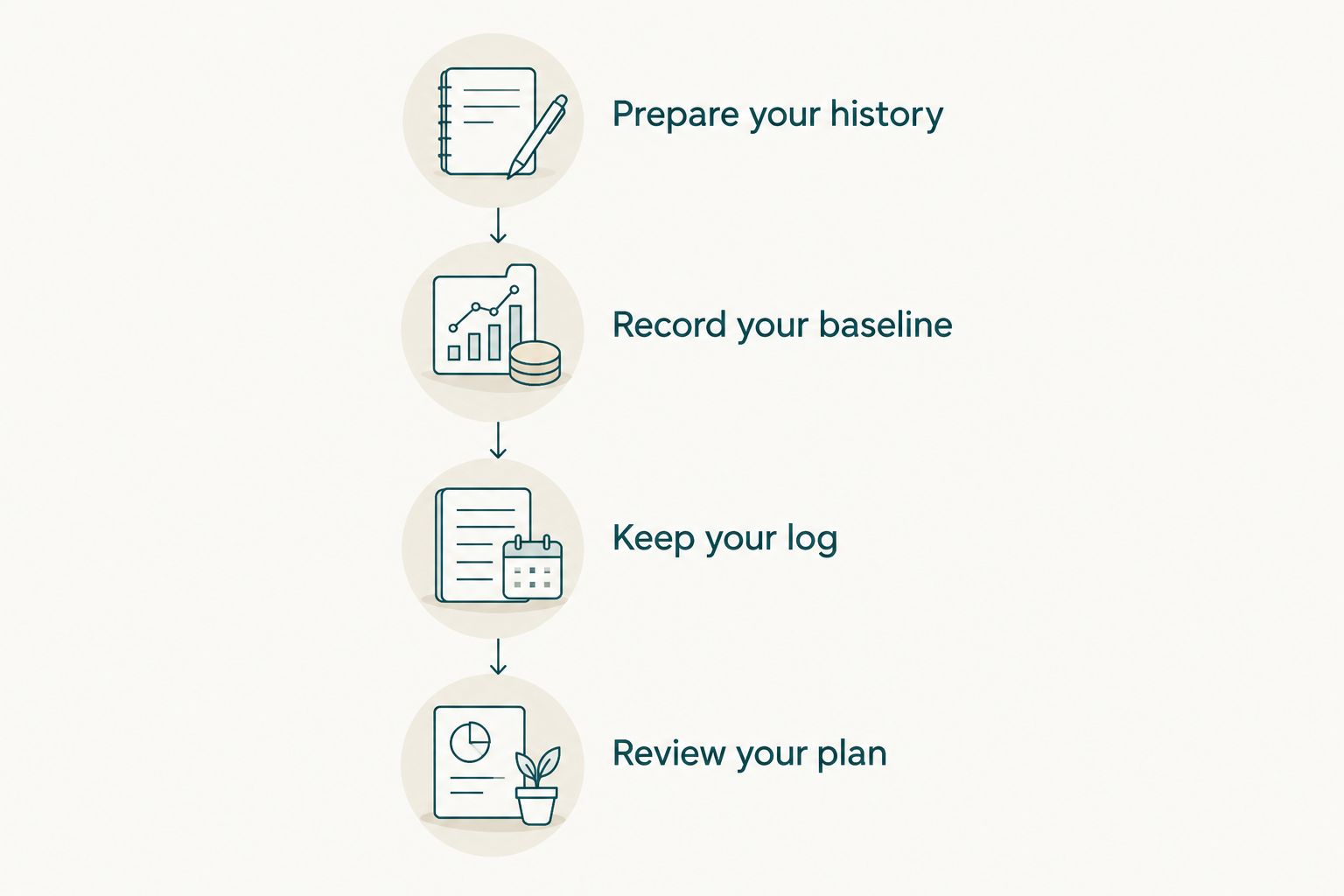
The workflow has four parts: Prepare your history, Record your baseline, Keep your log and Review your plan. Each part supplies information the next decision needs.
Keep your log
Weight and symptom tracking
- Create consistent fields. Use labels such as Date, Weight, Medicine taken, Appetite, Symptoms and Questions in your chosen record. These are suggested record labels, not instructions for a particular app.
- Choose a repeatable weighing routine. A practical starting point is 1 weight entry per week under consistent conditions, unless your clinician requests a different frequency. Record unexpected readings without changing treatment in response to them.
- Record medication use when it happens. Enter the actual administration date and prescribed dose taken. Document a missed or uncertain dose without guessing what a replacement schedule should be.
- Make a brief symptom note. During treatment initiation or a prescribed change, consider 1 symptom entry per day. Describe nausea, vomiting, bowel changes, abdominal pain and whether you can eat and drink normally; contact the clinician when symptoms warrant it rather than waiting for the next entry.
- Add context that changes interpretation. Note illness, travel, constipation, a different scale or a disrupted routine. Keep observations separate from explanations you have not confirmed.
Expected result: the log shows what happened and when, without asking you to diagnose the cause.
Track tolerance as carefully as weight. A lower reading alongside repeated vomiting or poor fluid intake is not a reason to celebrate or increase treatment. It is information that needs clinical attention.
Choose the simplest recording method you will use consistently:
| Tracking method | Best for | Advantage | Limitation |
|---|---|---|---|
| Paper notebook | People who prefer writing immediately after a measurement | Keeps observations together without an account or device | Requires a separate step to share a readable copy |
| Private digital log | People who want dated entries and an editable review summary | Makes it easier to organise entries for an appointment | Requires attention to access permissions and accidental sharing |
Neither method makes treatment safer by itself. The benefit comes from accurate entries, appropriate clinical review and acting on warning symptoms rather than merely recording them.
Review your plan
Follow-up preparation
- Prepare 1 summary per review. Include the starting weight, recent readings, actual medication use, symptoms and the questions that remain unresolved. Bring the underlying entries as well.
- Flag changes in function. Tell the clinician if eating, drinking, work, exercise or usual activities have become difficult. A tidy weight chart should not hide a difficult treatment experience.
- Reconcile the medication record. Confirm what you are taking now, including any changes another clinician made. Ask about uncertainty before taking the next dose.
- Discuss the trend, not an isolated reading. Ask whether the pattern matches the current treatment stage and whether another explanation needs assessment. Avoid setting your own deadline for a particular result.
- Record the next agreed plan. Keep the clinician’s instructions, monitoring requirements and next review arrangements together. Archive the previous plan rather than overwriting it.
Expected result: you leave with a current plan and a record of why it changed—or why it stayed the same.
At each 2026 review, distinguish an agreed treatment adjustment from a question you intend to ask. That separation prevents an unfinished note from becoming an accidental dosing instruction.
If your next question concerns the handoff after prescribing, read the GLP-1 prescription-to-home-delivery workflow. Tracking should preserve the distinction between a prescription decision and the practical steps that follow it.
When your prescribed treatment changes
A dose adjustment or medicine switch needs a new chapter in the same record, not a fresh log with the previous history deleted. The earlier entries help the clinician understand what changed after the new instructions began.
For a treatment change in 2026:
- Record the change date and written instructions. Identify which instructions replace the previous plan.
- Confirm the next administration instructions. Ask specifically about timing if anything is unclear. Do not infer a switch schedule from the usual dosing frequency.
- Keep the original baseline. Add a clearly labelled change point so that the overall treatment course remains visible.
- Continue symptom recording. Describe new symptoms and changes in existing symptoms without assuming that the new medicine caused them.
- Confirm the review arrangement. Ask what should prompt earlier contact rather than waiting for the scheduled appointment.
Expected result: your record distinguishes the original treatment course from the period after the prescribed change.
Do not overlap medicines, repeat an uncertain dose or restart after an interruption without the relevant prescribing instructions. A gap in the record is a reason to clarify the plan, not fill in the missing detail from memory.
Troubleshooting
Your weight rises after a lower reading
Check whether the scale, timing, clothing or recent routine changed. Fluid shifts and bowel contents can affect a reading; document the context and discuss the trend at review rather than changing your dose yourself.
Your log looks complete, but you feel unwell
Symptoms take priority over the chart. Persistent severe abdominal pain, especially with vomiting, needs urgent medical assessment. Severe allergic symptoms, collapse or difficulty breathing require emergency help; do not wait for a routine message reply.
Nausea makes eating or drinking difficult
Contact the prescribing clinician when symptoms persist or interfere with intake. Repeated vomiting or signs of dehydration need prompt assessment; do not treat poor intake as proof that the medicine is working well.
You cannot remember whether you took a dose
Check your administration record and any reliable confirmation available. If uncertainty remains, seek advice using the medicine-specific instructions and your clinician or pharmacist; do not take an extra dose to make the record look complete.
Your weight trend has stalled
Bring the full record, including adherence, appetite, symptoms and changes in routine. A plateau is a review question, not permission to increase the dose, add another medicine or impose an extreme diet.
Customize your workflow
Use your 2026 record to support the care you actually need. If your clinician requests blood pressure, glucose readings or laboratory monitoring, add those results with dates and units; do not add tests simply because another person tracks them.
If a family member helps, agree on what they can see and who enters medication information. Keep one clear administration record to reduce conflicting entries, while preserving your privacy and control over health information.
DarDoc offers GLP-1 weight-loss treatment alongside home and online healthcare. When discussing care, ask how prescribing, requested tests, follow-up and questions between appointments fit together; do not assume that every service shares the same appointment or record.
FAQ
How do I connect a GLP-1 consultation to weight loss tracking?
Start with a clinician-agreed plan, record a dated baseline, and keep weight, medication use and symptoms in one personal log. Bring a concise summary to follow-up and record any new instructions separately from your observations.
Do I need an app to track GLP-1 treatment?
No, a notebook or private digital record can support GLP-1 tracking. Choose a method you can maintain and share securely with your clinician.
How often should I weigh myself during GLP-1 treatment?
A practical starting routine is one measurement each week under consistent conditions, unless your clinician requests otherwise. Interpret the trend alongside symptoms and treatment instructions rather than changing a dose after one reading.
What should I record besides my weight?
Record actual medication use, appetite, symptoms, and any difficulty eating or drinking. Include relevant changes such as illness or a different scale so the clinician can interpret the readings.
Can I increase my GLP-1 dose if my weight stops falling?
Do not increase your dose without your prescribing clinician’s instructions. Bring your medication record, weight trend and symptoms to a review so the next decision reflects the full treatment picture.
What should I do if I miss or forget a dose?
Follow the instructions for your exact prescribed medicine and seek advice if you are unsure. Do not double a dose or use another product’s missed-dose instructions.
Does DarDoc offer GLP-1 weight-loss treatment in the UAE?
DarDoc offers GLP-1 weight-loss treatment as part of its UAE home and online healthcare services. Clinical assessment determines whether medication is appropriate and what monitoring is needed.
One last thing
Record the date you took the medicine, not just the date you intended to take it. A calendar reminder documents a plan; an administration entry documents an action. Keeping those separate makes your next consultation more useful.
This guide supports appointment preparation and tracking. It does not replace individual assessment, the prescribed medicine’s instructions or urgent medical care.