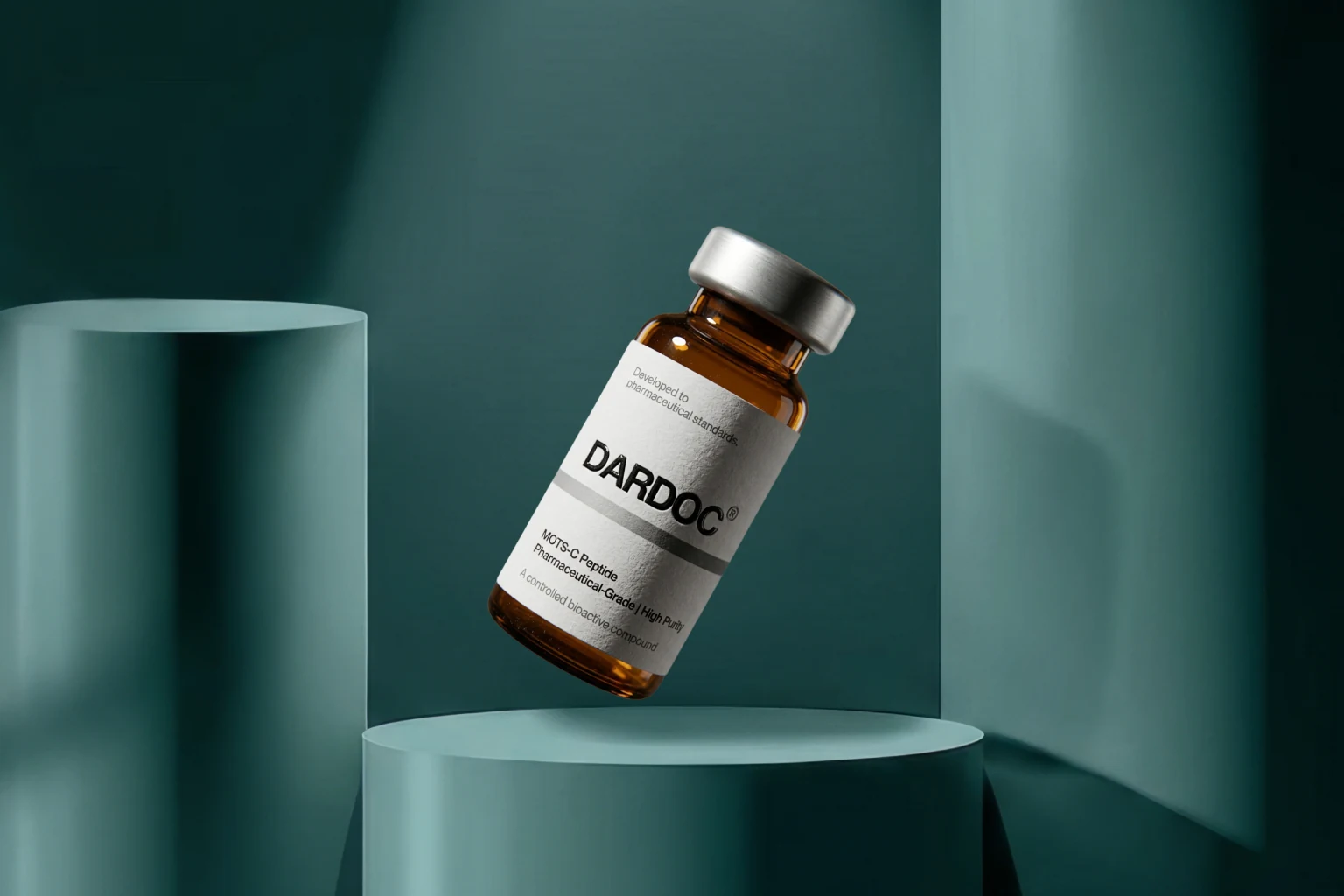
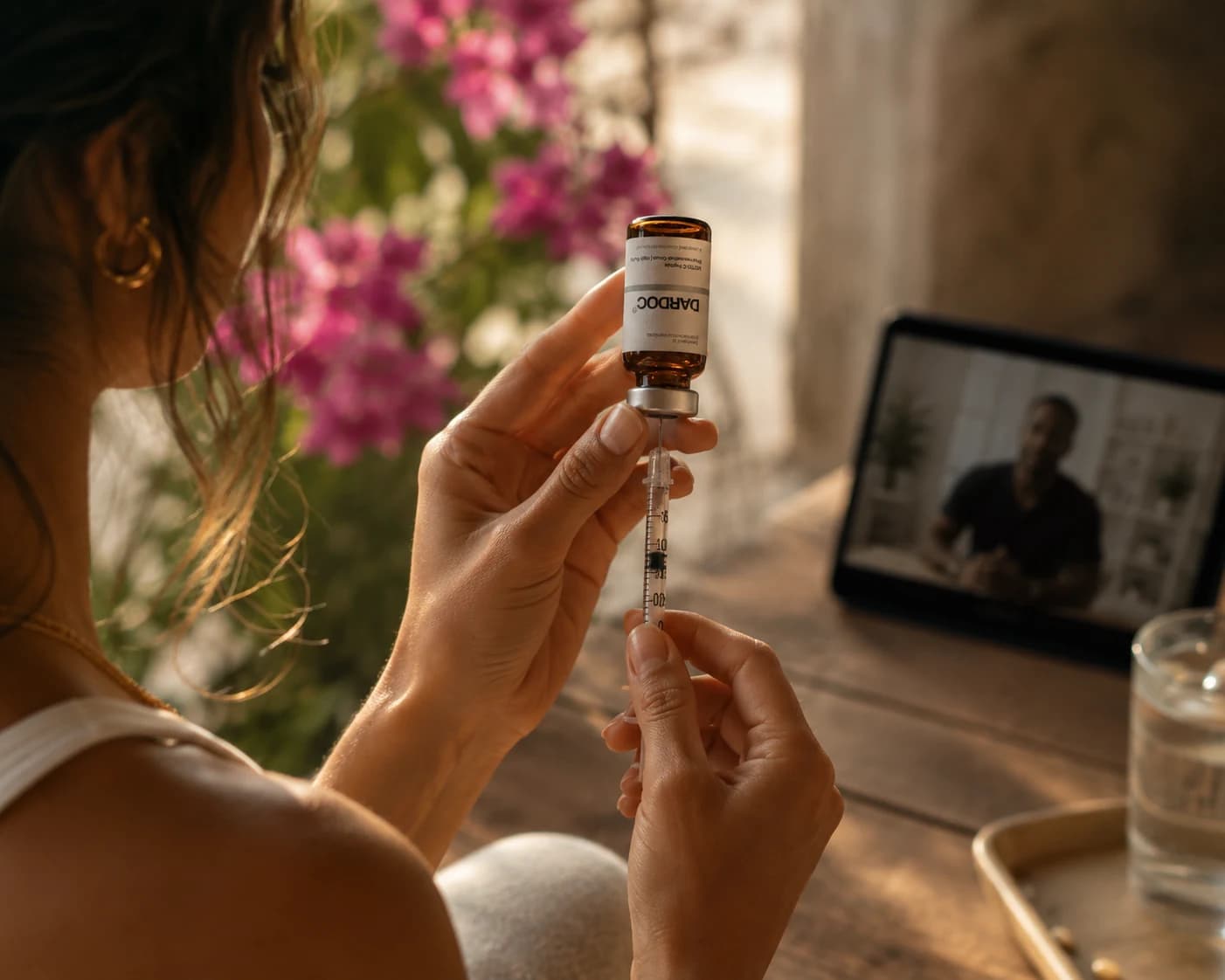
In 1973, a researcher at the University of California named Loren Pickart was studying why old human serum could not keep liver tissue alive in culture as well as young serum could. The young serum had something the old serum had lost. Pickart isolated the something. It turned out to be a small three-amino-acid peptide bound to a copper ion, and it would go on to be called GHK-Cu. Fifty-three years later, that molecule is the centrepiece of a peptide protocol being asked about over dinner in DIFC, in WhatsApp threads in Saadiyat, and in the inboxes of every wellness clinic in the UAE that has put the word 'peptide' on its homepage.
The protocol is called the Glow Stack. The configuration varies by clinic, but the most common version in the UAE pairs GHK-Cu with two systemic repair peptides, BPC-157 and Thymosin Beta-4 (commonly sold as TB-500), that readers of this journal will recognise from earlier pieces on tendon healing and the Wolverine Stack. The pitch is skin quality from the inside out. The reality is more interesting and more qualified than the pitch, and the goal of this article is to give you the temperature a careful clinician brings to the conversation when a patient walks in asking about it. The Glow Stack is real. It also sits in the same evidence grey zone that every honest peptide article eventually has to acknowledge.
It is worth noting, as a marker of how the wellness vocabulary in the UAE has shifted, that this is the conversation that has, over the last eighteen months or so, quietly started to replace the IV drip as the topic at dinner tables. The move from "vitamin infusions for energy" to "signaling molecules for systems-level support" tracks a broader sophistication in how patients think about what their bodies actually need, and the skin is one of the most legible places that shift shows up.
What the Glow Stack actually is
The name is loose. "Glow Stack" is used to describe several different combinations in the broader peptide market, and the specific configuration varies by clinic. The version that comes up most often in the UAE wellness conversation has three components.
GHK-Cu (copper tripeptide-1). The aesthetic centrepiece. A naturally occurring three-amino-acid peptide bound to a copper ion, found in human plasma at concentrations that decline with age. Used both topically and as a subcutaneous injection in clinical protocols.
BPC-157. A 15-amino-acid synthetic peptide derived from a fragment of human gastric juice protein. Included for systemic tissue repair signaling, gut-axis support, and angiogenesis.
TB-500 (Thymosin Beta-4 fragment). A synthetic peptide based on the active fragment of Thymosin Beta-4, a 43-amino-acid actin-sequestering protein. Included for cell migration support and dermal repair signaling.
The clinical logic for combining them is that they act on three different parts of how skin quality is maintained over time. GHK-Cu is the direct skin-signaling molecule. BPC-157 brings systemic angiogenic and gut-axis support that influences the inflammatory background against which skin operates. TB-500 supports cell migration and turnover. The idea is to support the underlying biology of skin repair and remodeling rather than to chase a specific cosmetic outcome. Whether that translates into a visible difference depends on the patient, the dosing, the duration and the realism of expectations. We will come back to that.
Why skin biology declines with age, briefly
Skin quality is not a single thing. It is the visible output of half a dozen overlapping biological processes that change with time.
Collagen production declines. Type I and type III collagen synthesis falls steadily after the third decade, with an accelerated drop in women around the perimenopausal transition. Existing collagen is also progressively damaged by sun exposure and oxidative stress.
Elastin synthesis effectively stops. Most of the elastin in adult skin is laid down in childhood and adolescence. Adult skin produces very little new elastin, which is part of why elastic recoil deteriorates with age.
The barrier function weakens. Lipid composition of the stratum corneum changes, transepidermal water loss increases, and the skin becomes more susceptible to environmental insults.
Cell turnover slows. The replacement rate of keratinocytes (the cells that make up the bulk of the epidermis) falls, so dead cells linger at the surface and the skin loses some of its baseline luminosity.
Microvascular delivery decreases. The dermal capillary network thins, which means oxygen and nutrient delivery to the upper layers of the skin is gradually less efficient.
The Glow Stack is built around the idea that you can signal into several of these processes at once. The mechanistic case is reasonable. The clinical evidence for the combined protocol producing a measurable, reproducible cosmetic outcome at a population level is mostly absent. Both of those statements are true at the same time, and any honest discussion has to hold both.
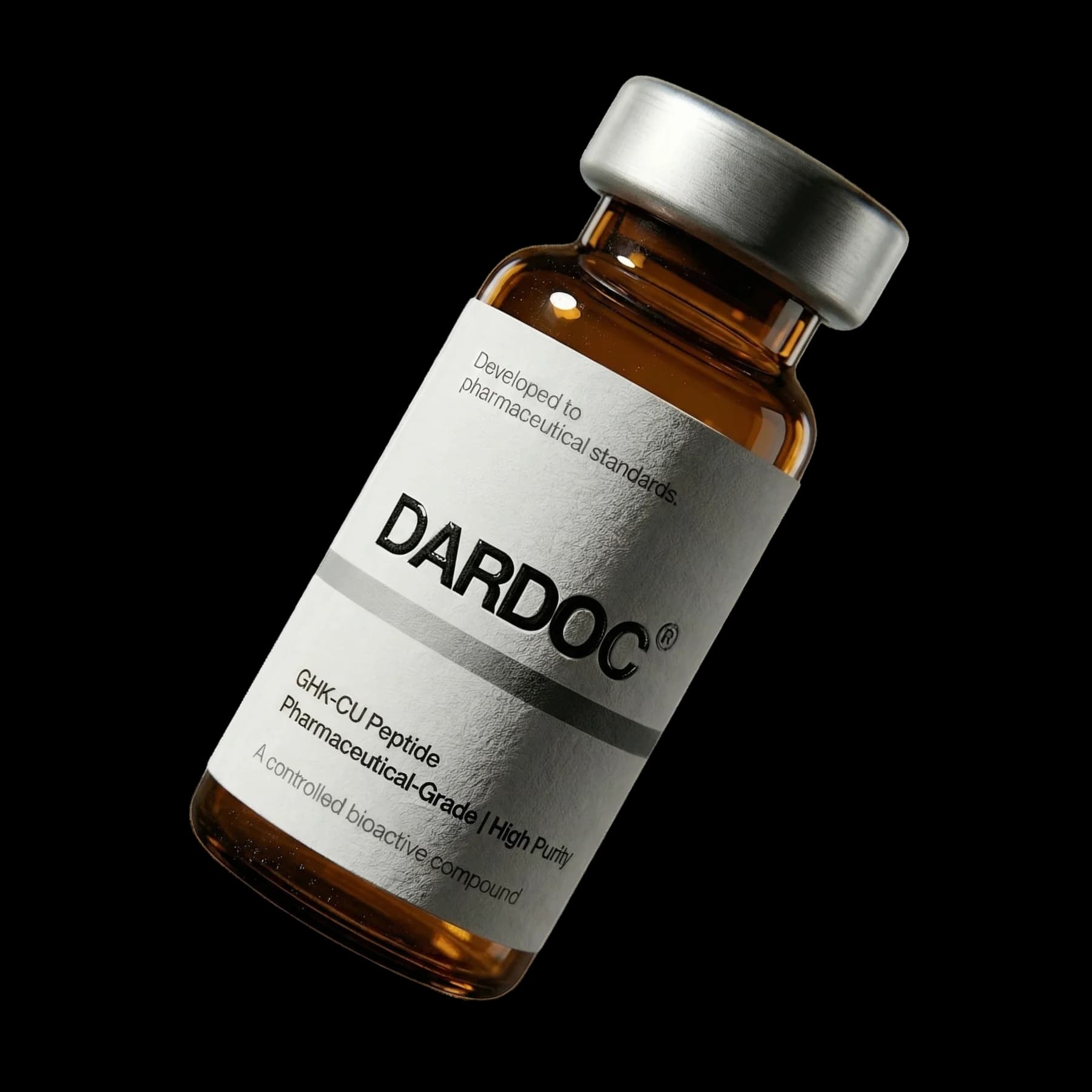
GHK-Cu: the peptide with the strongest skin evidence
Returning to the molecule that opened this article: the literature on GHK-Cu now spans more than fifty years and runs into the hundreds of papers. The decline Pickart first noticed in old serum has been quantified. Plasma concentrations of GHK fall from around 200 ng/mL in young adults to less than half that in older adults, and that decline tracks several of the visible markers of skin aging [Pickart and Margolina, International Journal of Molecular Sciences, 2018].
The skin-relevant mechanistic story has several parts. GHK-Cu has been shown to upregulate the genes involved in collagen and elastin synthesis, modulate matrix metalloproteinases (the enzymes that break down the extracellular matrix), and support fibroblast activity [Pickart et al., BioMed Research International, 2015]. The molecule's activity depends on the copper ion, which functions in part as a cofactor for lysyl oxidase, the enzyme that crosslinks newly formed collagen and elastin fibres into the structural networks that give skin its mechanical properties. The peptide without the copper is largely inert at the relevant concentrations, which is one reason why 'copper peptide' formulations vary so widely in actual activity depending on how they are formulated.
The cosmetic literature on topical GHK-Cu is the most developed of any peptide in skincare. Studies have reported improvements in fine lines, skin firmness, photodamage markers, and barrier function across multiple small trials. The evidence base is small-trial-heavy rather than phase III randomized (the standard caveat for the peptide space) but the mechanistic and observational picture is consistent enough that GHK-Cu is the closest thing peptide medicine has to a defensible aesthetic claim. We have covered copper peptides specifically in more depth in a separate journal piece on GHK-Cu and skin in the UAE climate.
Subcutaneous GHK-Cu, the injectable form used in compounded clinical protocols, is a different conversation from the topical serum. The systemic absorption profile is different, the concentrations achieved are different, and the protocol is typically run in cycles rather than continuously. Both formats have a place. They are not interchangeable, and any clinic that suggests they are is glossing over something that matters.
BPC-157 in the Glow Stack: the systemic and gut-axis arguments
BPC-157's primary literature is in tendon healing, gut healing, and angiogenesis [Sikiric et al., Inflammopharmacology, 2018]. Its inclusion in a skin-quality protocol rests on two ideas, both reasonable and neither proven in a phase III human trial.
The first is the gut-skin axis. Chronic low-grade gut inflammation is increasingly recognised as a driver of multiple skin pathologies, most clearly in rosacea and atopic dermatitis, but with a broader signal in skin aging, barrier dysfunction and inflammatory acne. BPC-157's most replicated indication outside of soft tissue is gastrointestinal: it has been shown to support gastric ulcer healing and inflammatory bowel models in animal studies. If a patient's baseline skin quality is being held back by a gut that is not in good shape (which describes a meaningful fraction of the high-stress, frequent-traveller cohort that comes through UAE clinics) the systemic effect on gut signaling is a defensible adjunct.
The second is angiogenesis. BPC-157 upregulates VEGFR2 signaling and modulates the nitric oxide system [Huang et al., Vascular Pharmacology, 2015]. The dermal microvascular network is one of the systems that thins with age, and supporting microvascular delivery is one of the more underrated levers in skin quality. The signal is preclinical-heavy and there is no human trial in skin specifically, but the mechanistic case is coherent.
The candid version is that BPC-157 is in the Glow Stack for indirect reasons. It is not primarily a skin peptide. The case for including it depends on the patient. Someone with no gut issues, no inflammatory background, and a normal microvascular profile may not need it. Someone with a history of stress-driven gut symptoms, frequent travel and elevated systemic inflammation markers may benefit more meaningfully. This is part of why the Glow Stack should be a clinical decision rather than a recipe.
TB-500 in the Glow Stack: cell turnover and dermal repair
Thymosin Beta-4 has independently characterised activity in dermal wound healing models, with work going back to the early 2000s on full-thickness wound repair [Goldstein et al., Nature Reviews Molecular Cell Biology, 2005]. The mechanism is consistent with what the molecule does elsewhere in the body: it binds G-actin, regulates cytoskeletal remodeling, and enables the cell migration that any tissue maintenance and remodeling depends on. It also upregulates laminin-5, a basement membrane protein that matters for the integrity of the dermal-epidermal junction.
The clinical exploration of Thymosin Beta-4 in chronic non-healing wounds and pressure ulcers [Sosne et al., Clinical Ophthalmology, 2015] speaks to the same biology that underwrites its inclusion in a skin-quality protocol. The TB-500 sold for human use is most commonly the LKKTETQ active fragment of the parent protein rather than the full sequence, and the labelling in the supplement market is loose. We have covered the TB-500 evidence base in more depth in a separate journal piece. The short version: the cell-biology case for skin turnover support is strong, the dermatologic phase III trial does not exist, and any honest protocol acknowledges both.
The Korean glass-skin conversation, briefly
It is impossible to write about peptides and skin quality in 2026 without the Korean glass-skin reference appearing somewhere. The aesthetic (luminous, even-toned, hydrated skin with minimal visible texture) has become a global vocabulary, and the UAE has been one of the more enthusiastic adopters. It is a useful aesthetic shorthand, and it captures something real: skin quality at this level is the visible output of barrier function, microvascular health, hydration, even pigmentation, and underlying collagen and elastin support. Those are exactly the systems peptide signaling can in principle influence.
The honest version is that no peptide protocol on its own produces glass skin. The patients who consistently achieve and maintain that aesthetic do so through a stack of inputs: rigorous sun protection, a barrier-supporting routine, sleep, hydration, occasional procedural support from a dermatologist, and, for some, peptide therapy as part of the picture. The Glow Stack is one input among several, and any clinic positioning it as the input is overselling. The patients who get the most out of it are usually the ones who have already sorted the basics, and are looking for the signaling layer on top.
Speak to a DarDoc physician
How a baseline-quality protocol is structured
A baseline-quality Glow Stack (one aimed at long-term skin quality rather than recovery from a specific procedure) looks different from the post-procedural version of this protocol. It is typically slower, longer, and more focused on cycling. The framework below is illustrative. Specific dosing belongs in a private consultation, not a public-facing article.
Phase one: assessment. Before any peptide protocol begins, a careful clinician will ask why the patient is asking for it, what they have already tried, what the skin actually looks like under good light, and whether there are underlying drivers (gut symptoms, sleep disruption, systemic inflammation markers) that should be addressed alongside or instead of a peptide regimen. A baseline blood panel may or may not be ordered depending on the clinical picture. A skin-specific assessment by a dermatologist may be appropriate if the cosmetic concerns are significant.
Phase two: cycle one. The first peptide cycle is typically the longest, often eight to twelve weeks of the systemic components, with topical GHK-Cu used continuously through the cycle. The endpoint is defined in writing: what does the patient and the clinician expect to see, and what does the next decision point look like.
Phase three: review. A formal review at the end of the cycle. Did the protocol produce the expected response? Are there changes (better skin barrier, improved hydration, reduced background inflammation) that the patient and clinician can both observe? Or has nothing meaningful happened? Both outcomes are valid information. A cycle that produces no observable response is not necessarily a failure of the peptides; it may be a signal that the limiting factor is somewhere else.
Phase four: maintenance. If the response has been positive, most protocols move to a maintenance pattern: shorter cycles of the systemic components two or three times a year, with topical GHK-Cu continued in a cycle-on, cycle-off pattern. Open-ended daily use of any of the systemic peptides is not supported by the evidence base.
What does not belong in any version of this protocol is the assumption that more is better. Both BPC-157 and TB-500 have been studied predominantly in the context of acute repair and short-to-medium term cycling, not chronic uninterrupted use. GHK-Cu is the component most amenable to longer-term application, particularly in topical form. The protocol should reflect that.
Side effects and safety
Across the available preclinical and clinical literature, all three peptides have generally mild side-effect profiles at therapeutic doses. Topical GHK-Cu is associated with rare contact dermatitis and occasional mild irritation; subcutaneous GHK-Cu with mild injection-site reactions [Pickart and Margolina, 2018]. BPC-157 is associated with occasional dizziness, transient blood pressure changes, and injection-site reactions [Sikiric et al., 2018]. TB-500 / Thymosin Beta-4 is associated with rare transient flu-like symptoms and injection-site reactions [Sosne et al., 2015]. There are no published reports of serious adverse events at typical clinical doses for any of the three.
The honest caveats are familiar. There is no long-term human safety data for the combined protocol at five or ten years. All three peptides have angiogenesis-related effects, which is one mechanism for benefit and also the theoretical concern in patients with a personal or strong family history of malignancy. The responsible default in those patients is caution. Pregnancy and breastfeeding are exclusions for the systemic components. Active autoimmune disease and active infections change the calculus and should be discussed with the prescribing clinician before any protocol begins.
The MOHAP, DHA and DoH regulatory reality
None of the three peptides in the Glow Stack is an FDA-approved drug. The FDA has issued guidance classifying many compounded peptides, including BPC-157, as falling outside the bulk-substances list eligible for compounding by 503A pharmacies in the United States [FDA Guidance on Compounded Peptides, 2023]. TB-500 is on the World Anti-Doping Agency prohibited list, which is relevant to any patient subject to anti-doping testing in competitive sport [WADA Prohibited List, 2024]. GHK-Cu in topical cosmetic form sits in a different regulatory category from its compounded subcutaneous form, and the two should not be conflated.
In the UAE, all three peptides sit in the compounded category for systemic use. A licensed clinic working with a licensed UAE compounding pharmacy can, in principle, prescribe and dispense them for off-label use after a documented physician consultation. The same three rules apply that apply to every compounded peptide protocol in this country. The clinic should be DHA-, DoH-, or MOHAP-licensed and able to evidence it. The compounding pharmacy should be UAE-licensed and operating under MOHAP and EDE oversight, with batch-level testing for sterility, potency and endotoxins. The supply chain should be cold-chain controlled at 2-8°C from compounding to administration. If any one of those three is missing, what you are buying is not a Glow Stack. It is a vial of something, of unknown content, with unknown quality control.
The World Health Organization has flagged the Eastern Mediterranean as a hotspot for substandard and falsified medical products [WHO, 2017], and topical peptide serums purchased online (particularly the cheaper end of the GHK-Cu market) are particularly vulnerable to mislabelling. The price difference is the safety margin. The UAE summer is also particularly punishing on heat-sensitive products that have been shipped without cold-chain controls. A bottle that has spent two weeks in a fulfilment warehouse and a delivery van in July is not the same product that left the manufacturer.
Who the Glow Stack is, and isn't, for
A reasonable case for considering the baseline-quality Glow Stack looks like this. A patient who has already sorted the basics (sun protection, a barrier-supporting routine, sleep, hydration) and is looking for a clinically supervised signaling layer on top. The patient has no malignancy history, no active inflammatory or autoimmune condition that would change the calculus, and is not pregnant or breastfeeding. The patient is realistic about expectations: peptides are a signaling layer, not a substitute for the foundation. The conversation includes informed consent that the evidence for the combined stack in baseline skin quality is mechanistic rather than trial-based, and that the protocol is off-label.
An unreasonable case looks like this. Use as a substitute for the foundational layer of skin care. Use to chase a specific cosmetic outcome that a peptide protocol cannot deliver on its own. Use in pregnancy or breastfeeding. Use in any patient with active or recent malignancy, or a strong family history that warrants a different conversation. Use without proper assessment of what is actually limiting the patient's skin quality. Use because a friend at dinner mentioned it and a clinic on Instagram offered a flat-rate package.
The single most common mistake in the baseline Glow Stack conversation is reaching for the peptides before the foundation is solid. The patients who get the most out of this protocol are almost always the patients who would have looked good on the basics alone. The peptides are an addition, not a replacement, and the order matters.
The bottom line
The Glow Stack (GHK-Cu, BPC-157 and TB-500) is a category of peptide protocol with three components that act on different but complementary parts of the biology that underwrites skin quality. GHK-Cu has the most directly relevant evidence base for skin specifically, with mechanistic and cosmetic literature spanning fifty years and a coherent biology that depends on the copper ion. BPC-157 contributes systemic angiogenesis and gut-axis support. TB-500 contributes cell migration and dermal turnover support. None of the three peptides is FDA-approved for skin quality or longevity indications. None has been tested in a phase III randomized trial for these uses. The combined protocol carries the regulatory, supply-chain and informed-consent caveats that come with any compounded research-grade peptide therapy in the UAE.
It is reasonable to consider for the right patient, on top of a solid foundation of basic skin care, with a licensed physician, a licensed compounding pharmacy, cold-chain integrity, a defined cycle and review point, and explicit informed consent. It is not reasonable as a shortcut, a substitute for the basics, or a self-prescribed regimen built from gym contacts and Instagram pages.
If you are thinking about the Glow Stack for baseline skin quality, the first conversation is not about the peptides. It is about whether the foundational layer of your skin care is in good shape, and whether there are underlying drivers of skin quality that should be addressed alongside or instead of a peptide regimen. The second conversation is about whether the peptide protocol is a sensible adjunct in your specific situation. Those conversations belong with a DHA-, DoH-, or MOHAP-licensed clinician who knows the literature, the regulatory frame and your medical history. This article is educational. It is not medical advice for your specific situation.