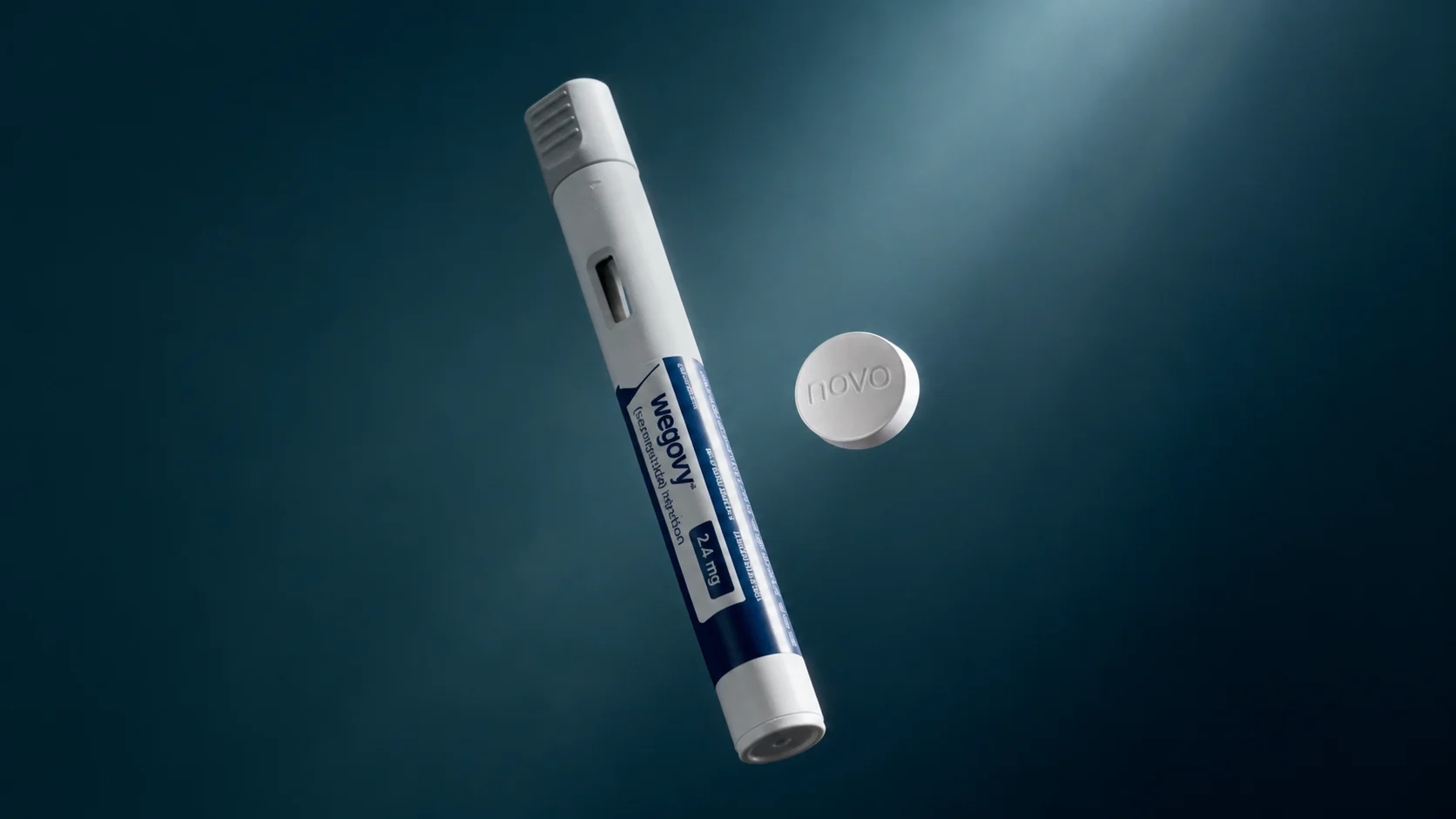
In the STEP 5 trial of semaglutide for obesity, weight loss followed a particular curve. The first six months were the steepest. Average weight loss accelerated through months three, four, and five. By month nine, the curve had begun to flatten. By month fifteen, the trial's primary endpoint, the average participant had lost 15.2 percent of their starting weight, and the curve had become essentially horizontal [Garvey et al., Nature Medicine, 2022]. The SURMOUNT-1 trial of tirzepatide showed a similar pattern, with greater absolute weight loss but the same shape: a steep early decline, a gradual deceleration, and a plateau that arrived later but arrived nonetheless. This is not the GLP-1 medication failing. This is exactly what the trials predicted, occurring on the timeline the trials documented.
The GLP-1 plateau is a real biological phenomenon that has produced a specific, predictable, and widely shared patient experience. It is also one of the most commonly misinterpreted moments in any weight-loss journey. Patients who have lost twelve or fifteen kilos in their first six months of semaglutide or tirzepatide and then watch the scale stop moving in month seven often conclude, reasonably but incorrectly, that the medication has stopped working. It has not. The underlying biology has shifted, the body has begun to defend its new lower set point, and the medication's effect has been overlaid by an adaptive response that the medication does not, on its own, fully overcome.
This article is about that plateau, why it happens, what the published evidence actually says about combining GLP-1 therapy with a peripheral fat-metabolism peptide called AOD-9604, and what we have observed in our own clinical practice in UAE patients who have stalled on GLP-1 monotherapy. The combination is mechanistically defensible. The published randomized controlled trial evidence for the specific combination is essentially absent. Both of those statements are true at the same time, and the clinically honest version of the conversation acknowledges both. This article is not a recommendation for adding AOD-9604 to every stalled GLP-1 patient. It is an honest discussion of when the conversation makes clinical sense, when it does not, and what realistic expectations look like in the patients for whom it might.
Why GLP-1 weight loss plateaus, in biological terms
The plateau is not a single phenomenon. It is the convergence of several adaptive responses, each of which is a normal physiological reaction to weight loss and each of which the GLP-1 medication only partly addresses.
Adaptive thermogenesis. As a person loses weight, their resting metabolic rate falls below what their new body weight would predict. After a 10 percent weight loss, total energy expenditure typically declines by approximately 15 percent, meaningfully more than the change in body mass alone would account for. About 40 percent of this decline is attributable to adaptive thermogenesis, a defensive mechanism in which the body becomes more energy-efficient in response to the perceived shortage. This shift is real, measurable in metabolic chamber studies, and largely independent of the GLP-1 medication's direct effects.
Loss of fat-free mass. A meaningful proportion of the weight lost on GLP-1 therapy is fat-free mass (skeletal muscle, organ tissue, water) rather than fat alone. The exact proportion depends on protein intake, training stimulus, and individual factors, but estimates from the STEP trials suggest that 25 to 40 percent of weight lost may be fat-free mass in patients without specific muscle-preservation strategies. Fat-free mass is metabolically more active per kilogram than fat tissue, so its loss disproportionately reduces resting metabolic rate going forward. The patient at the plateau is, in some cases, a smaller person with a metabolically less active body composition than they would have been if the same weight loss had been achieved with more deliberate muscle preservation.
Strengthening of the appetite feedback circuit. GLP-1 therapy works in significant part by weakening the body's normal appetite feedback, the homeostatic system that increases hunger as weight is lost. Mathematical modelling of the published trial data suggests that semaglutide and tirzepatide both substantially weaken this circuit, which is why they produce extended periods of weight loss before the plateau, compared with diet restriction alone. But the weakening is partial, not complete. Over time, the circuit reasserts itself, hunger signals return at lower body weights than they would have appeared at without medication, and the patient finds that maintaining the deficit takes more deliberate effort than it did in months one through six.
Behavioural drift. Less biological but equally real. The early dramatic appetite suppression of GLP-1 therapy makes adherence almost effortless in the first months. As the appetite suppression becomes the new normal, the patient's behaviours can drift back toward pre-treatment patterns. Small portions become medium portions, hidden calories accumulate in tracking, and the deficit becomes narrower than the patient believes it to be. This is not failure of will. It is what happens when a powerful behaviourally-active medication becomes part of routine life rather than a novel intervention.
The plateau, then, is the convergence of these forces. The GLP-1 medication is still doing its work. The body's defences against weight loss have caught up to it. The clinically honest version of the conversation acknowledges both, and recognises that there are two distinct categories of intervention that might support the patient through the plateau. The first is to address the foundation: dose optimisation, protein intake, strength training, accurate tracking. The second is to consider whether an adjunct that acts on a different mechanism might support the patient through the plateau. AOD-9604 is the peptide most often discussed in this second category, and it is the one we have seen used most often in UAE practice.
What AOD-9604 is, and what the evidence actually shows
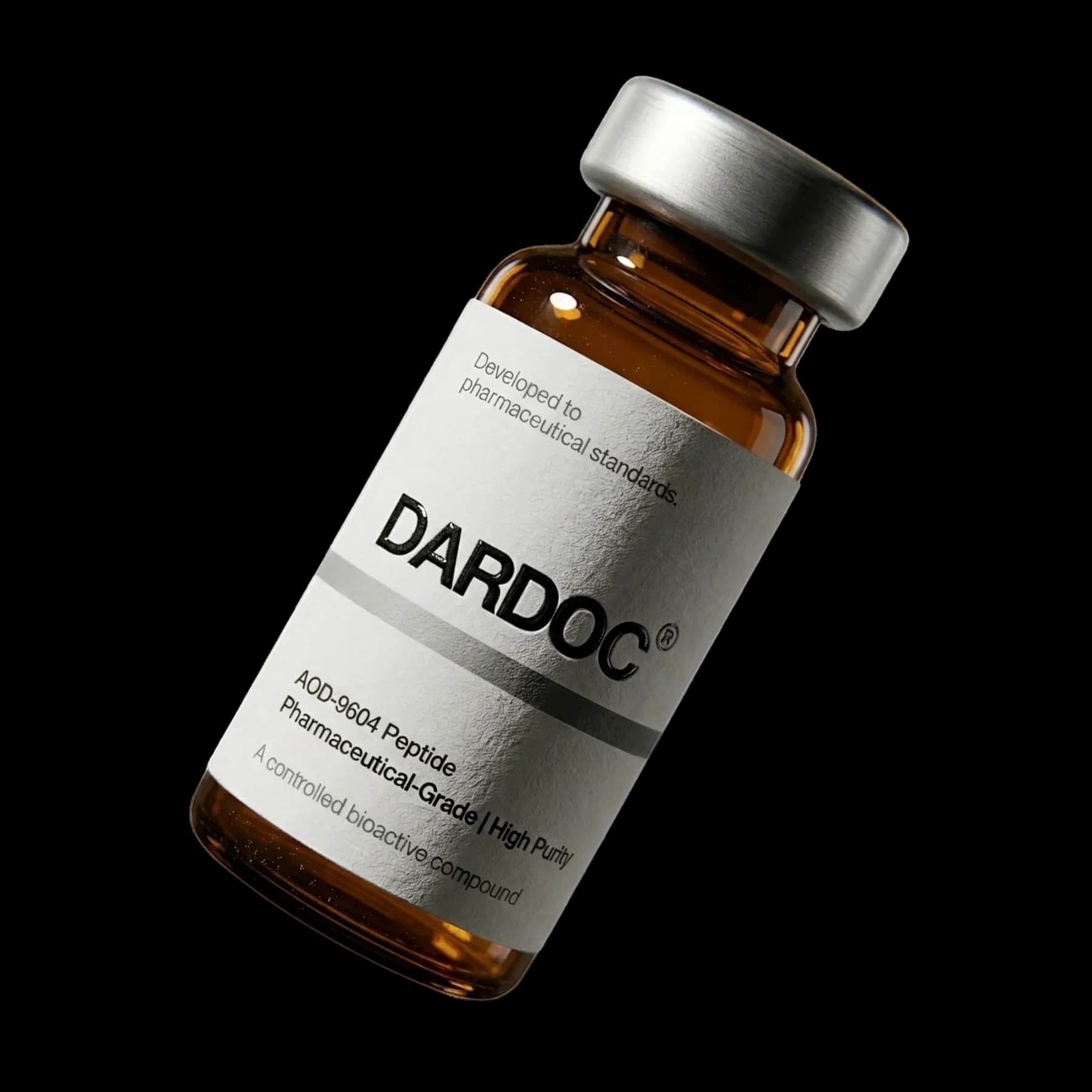
AOD-9604 is a 16-amino-acid synthetic peptide corresponding to the C-terminal fragment of human growth hormone, specifically the region responsible for the lipolytic (fat-mobilising) effects of GH [Heffernan et al., Endocrinology, 2001]. The peptide was developed in the late 1990s and early 2000s with the explicit goal of separating the fat-mobilising activity of growth hormone from its other physiological effects, particularly its effects on IGF-1 production and insulin sensitivity. The pharmacology in animal studies and early human studies supported this design: AOD-9604 stimulates lipolysis and inhibits lipogenesis through activation of beta-3 adrenergic receptors in adipose tissue, without producing the IGF-1 elevation or insulin resistance signal that exogenous GH produces.
The clinical evidence base is more developed than for many compounded peptides, and it is also more honestly mixed than the marketing typically suggests. AOD-9604 went through formal Phase II human trials in obesity in the mid-2000s. The 12-week Phase IIb trial in 300 obese adults, with 1mg daily dosing, produced an average weight loss of 2.6 kg compared with 0.8 kg in the placebo group. The result was statistically significant. It was also modest. The definitive 24-week Phase III trial in 534 obese participants, testing doses of 0.25mg, 0.5mg and 1.0mg daily, did not produce statistically significant weight loss over placebo. Development of AOD-9604 as a standalone obesity drug was discontinued in 2007 on the basis of these results.
This is the most important detail in the article and the one most often glossed over in clinic marketing. AOD-9604 has been through formal human clinical trials. The trials produced signals consistent with the mechanism (the peptide does what its pharmacology predicts it would do), but the effect sizes were not large enough to support a successful path to drug approval as a standalone obesity treatment. A clinic that presents AOD-9604 as a clinically proven fat-loss agent is overstating what the literature supports. A clinic that dismisses the peptide entirely on the basis of the failed Phase III is also overstating, in the other direction. The peptide has a real but modest effect, in the right patient, in the right context. The conversation about whether the right context includes patients on GLP-1 therapy is the conversation worth having.
The mechanistic case for combining AOD-9604 with GLP-1 therapy
The case for combining AOD-9604 with semaglutide or tirzepatide does not rest on randomized controlled trial evidence, because that evidence does not exist. It rests on the observation that the two compounds act on different sides of the energy balance equation, on different mechanisms, with non-overlapping side-effect profiles, and that the bottlenecks in the GLP-1 plateau are bottlenecks the GLP-1 medication does not directly address.
GLP-1 therapy is centrally acting. Semaglutide and tirzepatide work primarily through central nervous system mechanisms: appetite suppression in the hypothalamus, modification of food reward signaling in the brainstem, slowed gastric emptying that prolongs satiety. The compounds act on the input side of the energy balance equation. They reduce caloric intake by reducing the drive to eat. They have minimal direct effects on lipolysis, fat oxidation, or peripheral fat metabolism.
AOD-9604 is peripherally acting. The peptide's mechanism is in adipose tissue, through beta-3 adrenergic receptor activation that stimulates lipolysis and inhibits lipogenesis. It does not act centrally. It does not affect appetite. It does not slow gastric emptying. It works on the output side of the energy balance equation: it modifies how the body handles the fat tissue once the caloric environment has produced a deficit.
The plateau is partly a peripheral problem. The forces that produce the GLP-1 plateau (adaptive thermogenesis, fat-free mass loss, the strengthening of appetite feedback) are not all addressed by appetite suppression alone. Adaptive thermogenesis is, in significant part, a peripheral phenomenon: the body's tissues become more energy-efficient at using the calories they receive. Fat-free mass loss has peripheral consequences: a smaller, less metabolically active body composition. A peptide that supports peripheral fat metabolism, in theory, addresses parts of the plateau picture that the GLP-1 medication does not.
Side-effect profiles do not significantly overlap. GLP-1 therapy's side effects are predominantly gastrointestinal (nausea, occasional vomiting, constipation), with secondary effects on heart rate and theoretical concerns about pancreatitis and gallbladder disease. AOD-9604's side-effect profile is predominantly local injection-site reactions and occasional mild fatigue or flu-like symptoms in early cycles. The combination does not present obvious additive safety concerns over either compound alone. This is not the same as saying the combination is safe at all doses for all patients. It is to say that the safety conversation does not produce specific red flags from the combination itself.
The case is mechanistically coherent. It is also entirely theoretical at the level of the published clinical literature. There is no randomized controlled trial of AOD-9604 added to semaglutide or tirzepatide. There is no peer-reviewed cohort study of patients on the combination. There are clinic-reported observations and case-series-level reports, of variable quality and almost universal commercial interest. A clinically honest article on the combination has to acknowledge this gap rather than gloss over it. The mechanistic logic is real. The evidence that the logic translates into clinically meaningful additional fat loss in human patients is not.
What we have observed in our own UAE clinical practice
This is the section where we report what we have actually seen, with the appropriate caveats that clinical observation is not evidence in the formal sense. Among our patients on GLP-1 therapy who have stalled (typically between months six and twelve, in line with the trial data), we have observed a subset who have shown renewed progress after adding AOD-9604 to their protocol. The pattern is not universal. Some patients have continued to plateau despite the addition. Some have responded modestly. A smaller subset have responded more meaningfully, with renewed weight loss over a defined window before stabilising again at a lower body weight.
We are not suggesting this constitutes evidence. It does not. Selection bias, regression to the mean, the placebo effect, and the simultaneous behavioural changes that often accompany a clinic visit (renewed attention to diet, restored adherence to protocols, increased motivation) all confound the interpretation of clinical-observation reports of this kind. What we are reporting is that the pattern is consistent enough across our patient population to make us think the combination is worth considering in carefully selected cases, while acknowledging that we cannot yet quantify the effect with the rigour that randomized trial evidence would provide.
The patients in whom we have observed the most meaningful response share several characteristics. They are typically beyond the early high-response phase of GLP-1 therapy and well into the plateau (typically nine to twelve months in). They have addressed the foundation: they are on optimal GLP-1 doses, their protein intake is adequate, they are doing some form of resistance training, and their tracking is honest. They have realistic expectations: they are not expecting a return to the early dramatic phase of GLP-1 weight loss, but rather a renewed period of modest progress through what would otherwise be a flat curve. The patients in whom we have observed less meaningful response tend to be those who have not addressed the foundation, who have unrealistic expectations, or who have other factors (significant sleep restriction, untreated metabolic comorbidities, chaotic eating patterns) that any pharmacological adjunct would struggle against.
Speak to a DarDoc physician
Before adding AOD-9604: the foundation conversations
This section is brief because the focus of the article is the combination, but it would be dishonest to skip it. Before any conversation about adding AOD-9604 to a stalled GLP-1 protocol, the foundation should be examined. In our practice, the foundation conversations cover four areas, and patients who address them adequately often find the plateau begins to resolve without any additional pharmacology.
GLP-1 dose optimisation. Many patients plateau at sub-maximal doses. A patient on 1.0mg semaglutide who has plateaued is a different conversation from a patient at the maximum 2.4mg dose. Tirzepatide has its own dose-titration ladder. Confirming that the patient is at the appropriate therapeutic dose for their goals, before considering adjunct therapy, is the first conversation.
Protein intake. The single most underappreciated variable in body composition during weight loss. Patients eating below 1.6 grams per kilogram of body weight per day are losing meaningfully more fat-free mass than they would at 2.0g/kg. Protein intake is what determines whether the weight lost is lean or fat-skewed, and it is often the actual limiter at the plateau.
Resistance training. Strength training during GLP-1 therapy preserves fat-free mass, supports the metabolic rate that adaptive thermogenesis is degrading, and changes the composition of any further weight lost. A patient at the plateau who has not been training is in a different position from a patient who has been training consistently.
Honest tracking. The third most common cause of GLP-1 plateaus, after dose optimisation and adaptive thermogenesis, is hidden calories. The early dramatic appetite suppression makes accurate tracking feel unnecessary. As the appetite suppression normalises into routine, intake drifts upward in ways the patient may genuinely not be aware of. Several weeks of careful tracking, before any adjunct therapy is considered, often clarifies the picture.
If these four areas have been addressed and the patient is genuinely stalled at an appropriate dose, with adequate protein, with strength training in place, and with honest tracking confirming the deficit, then the conversation about adjunct therapy becomes meaningful. If they have not been addressed, the AOD-9604 conversation is premature, and adding the peptide is more likely to produce confusion about what is and is not working than to produce meaningful additional fat loss.
How a combination protocol is structured in practice
Where the combination is clinically appropriate, the protocol structure follows the available pharmacology of each compound. The framework below is illustrative; specific dosing belongs in a private consultation, not a public-facing article.
AOD-9604 cycle. Standard cycles in this context typically run 8 to 12 weeks, with maximum continuous use up to 16 weeks and a 4 to 8 week break before any repeat cycle. The cycling structure reflects the available pharmacology of the peptide and the broader principle that no peptide protocol should be open-ended.
GLP-1 continuation. The GLP-1 medication is typically continued at the patient's existing dose throughout the AOD-9604 cycle. Dose changes to the GLP-1 are rarely made simultaneously with the addition of AOD-9604, because confounding the two interventions makes it impossible to evaluate the response to either.
Defined endpoint and review. The protocol should have a defined review point, typically at the end of the AOD-9604 cycle, where the response is assessed. Body weight is one variable. Body composition (where measurable, by DEXA or similar), waist circumference, subjective energy and recovery, and any side-effect profile changes are others. A protocol that produces no meaningful response over the cycle should be discontinued, not extended on the assumption that more time will produce results that have not appeared.
Maintenance considerations. Patients who do respond meaningfully to the combination may continue cycling AOD-9604 in defined patterns (typically with the 4 to 8 week break between cycles) for as long as the response remains clinically useful. Open-ended daily AOD-9604 use is not supported by the pharmacology and is not standard practice. The GLP-1 medication, by contrast, is typically a long-term commitment in patients who have responded to it, with the literature generally supporting continued use to maintain the weight loss achieved.
Side effects and safety of the combination
The side-effect profile of the combination is essentially the union of the individual profiles, with no documented additive concerns at typical clinical doses. GLP-1 therapy contributes the gastrointestinal side effects characteristic of the class: nausea (particularly during dose escalation), occasional vomiting, constipation, and reduced appetite that is the desired effect but can be excessive in some patients. AOD-9604 contributes local injection-site reactions, occasional mild flu-like symptoms in early cycles, and rare reports of fatigue or appetite changes. Neither category of side effect is amplified by the other in any documented way.
The honest caveats apply. There is no long-term human safety data for the combination at five or ten years of cumulative use. AOD-9604, despite having gone through Phase II and III clinical trials, has limited long-term post-marketing safety data because the compound did not reach drug approval. GLP-1 medications have substantially more long-term safety data, particularly for semaglutide which has been in widespread clinical use for over a decade across multiple indications. Patients with active or recent malignancy warrant particularly careful evaluation given the theoretical concerns that apply to any compound with effects on cellular metabolism. Pregnancy and breastfeeding are exclusions for both compounds. Patients with significant gastroparesis, history of medullary thyroid carcinoma, multiple endocrine neoplasia type 2, or pancreatitis warrant particular care with the GLP-1 component, regardless of the AOD-9604 question.
Who the combination is, and isn't, for
A reasonable case for considering the addition of AOD-9604 to a GLP-1 protocol looks like this. A patient on semaglutide or tirzepatide at an appropriate therapeutic dose, typically nine to twelve or more months into therapy, with a documented plateau over at least four to six weeks. The patient has addressed the foundation: protein intake adequate, strength training in place, tracking honest. The patient has realistic expectations: modest additional fat loss over a defined cycle, not a return to early-phase GLP-1 weight loss rates. The patient has no contraindications to either compound, has had recent bloodwork confirming the absence of concerning metabolic or hormonal issues, and is willing to commit to a defined cycle with a defined review point. The conversation includes informed consent that the combination is mechanistically defensible but not supported by randomized controlled trial evidence.
An unreasonable case looks like this. A patient who is plateaued because they are on a sub-therapeutic GLP-1 dose, where dose optimisation is the actual answer. A patient whose foundation has not been addressed, where protein, training and tracking interventions would likely produce more meaningful response than any peptide adjunct. A patient with unrealistic expectations who is looking for a return to early-phase GLP-1 weight loss rates. A patient with active or recent malignancy or other conditions that warrant a different conversation about either compound. A patient who is pregnant, breastfeeding, or trying to conceive. A patient looking for an open-ended addition rather than a defined cycle with a defined endpoint.
The most common mistake in this specific clinical conversation is reaching for AOD-9604 as a plateau-breaker before the foundation has been addressed. The plateau is real, the patient's frustration is real, and the appeal of an additional pharmacological intervention is understandable. But adjunct therapy on top of a sub-optimal foundation is unlikely to produce the result the patient is looking for, and can produce confusion about what is and is not working. The order of operations matters.
The bottom line
The GLP-1 plateau is a real, biologically predictable phenomenon that occurs in the documented timeline of the trials that produced semaglutide and tirzepatide. It is the convergence of adaptive thermogenesis, fat-free mass loss, strengthening of the appetite feedback circuit, and behavioural drift. It is not the medication failing. It is what the medication's effect looks like once the body's defences against weight loss have caught up to it.
AOD-9604 is a peptide with a real but modest mechanistic effect on peripheral fat metabolism, supported by Phase II human trial evidence for the standalone compound and not supported by a successful Phase III for standalone obesity treatment. The clinical case for combining AOD-9604 with GLP-1 therapy in patients who have plateaued is mechanistically coherent (the two compounds act on different sides of the energy balance equation through non-overlapping mechanisms) and is not supported by randomized controlled trial evidence for the specific combination. Both of these statements are true at the same time.
In our own UAE clinical practice we have observed that a subset of GLP-1 patients who have plateaued show renewed progress after the addition of AOD-9604, in carefully selected cases where the foundation has been addressed first. We are not presenting this observation as evidence in the formal sense. We are presenting it as the clinical pattern we have seen, with the appropriate caveats that clinical observation is subject to selection bias and confounding. The combination is not appropriate for every plateaued GLP-1 patient. It is potentially appropriate for some, in the right context, with realistic expectations, on top of an addressed foundation, with a defined cycle and a defined endpoint.
If you are on a GLP-1 medication and have plateaued, the first conversations are not about adding AOD-9604. They are about whether your dose is optimal, whether your protein intake supports the body composition you are trying to achieve, whether resistance training is part of your routine, and whether your tracking accurately reflects your intake. If those are addressed and you remain genuinely stalled, the AOD-9604 conversation can become meaningful. Those conversations belong with a DHA-, DoH-, or MOHAP-licensed clinician who knows the literature, the regulatory frame and your specific situation. This article is educational. It is not medical advice for your specific situation.