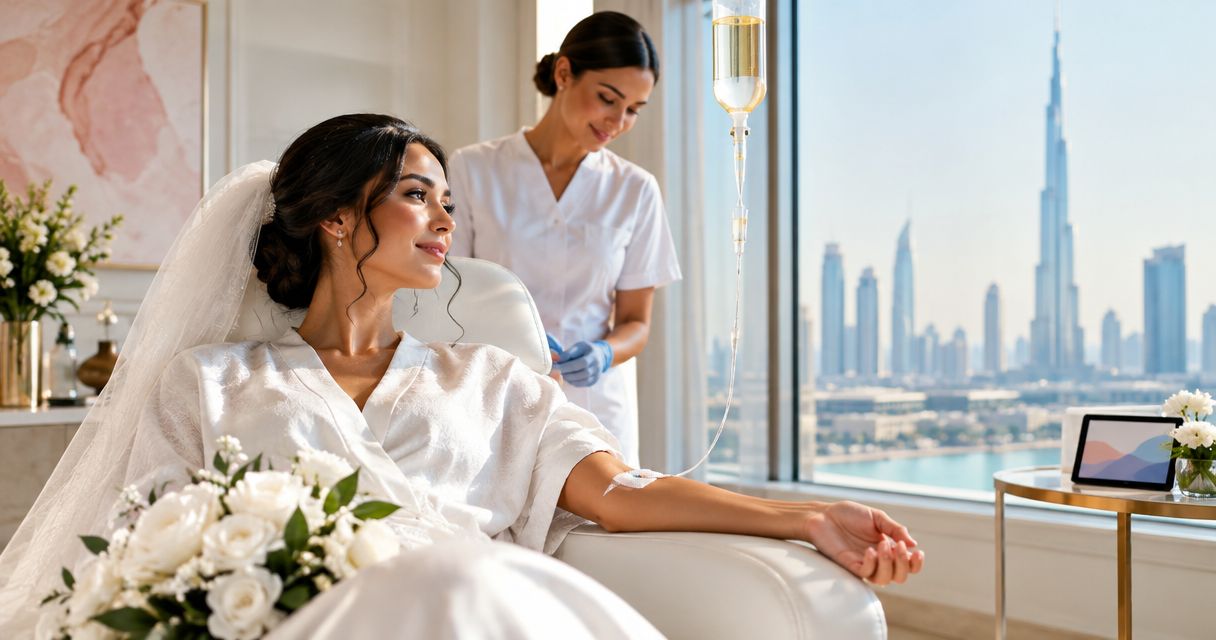
Brides in Dubai use IV drip therapy to receive fluids or prescribed nutrients directly into a vein, with the aim of addressing a clinical need—not guaranteeing a wedding-day glow. This 2026 guide explains how to assess that need, choose a suitable setting, and avoid adding an unnecessary procedure to an already crowded wedding schedule.
TL;DR- Searching ‘iv drip for brides dubai’? Choose clinical assessment over promises of brighter skin or instant energy.
- DarDoc provides at-home IV drip care; home delivery does not remove the need for medical screening.
- Oral hydration is the first option when you can drink and have no reason to need intravenous treatment.
- Ask about the indication, ingredients, clinician credentials, risks, and follow-up before agreeing to an infusion.
Why IV drip therapy matters for brides in Dubai
Being a bride is not a medical indication for an IV drip. The useful question is whether you have a problem that intravenous treatment appropriately addresses. Wanting to look rested in photographs is a different goal from needing treatment for dehydration or a diagnosed deficiency.
Wedding preparations also change the practical decision. You need to know whether a visit fits around fittings, travel, makeup appointments, and family commitments—and what happens if you feel unwell afterward. An infusion involves a needle, clinical screening, and monitoring, not just time in a chair.
For your 2026 wedding plan, compare home healthcare providers in Dubai on clinical suitability before convenience. The setting matters, but it does not establish whether you need treatment.
There is no established clinical basis for promising that a general wellness infusion will give a healthy bride better wedding photographs. Treat claims about glow, detoxification, or guaranteed energy as claims requiring evidence, not as treatment outcomes you can assume.
How to decide whether an IV drip belongs in your wedding plan
Start with the symptom, not the bridal package
First, describe what is actually bothering you. Thirst, vomiting, persistent fatigue, dizziness, and concern about skin appearance are different problems. They should not automatically lead to the same infusion.
The manual starting point is simple: write down your symptoms, recent food and fluid intake, and any illness. If you can drink normally, oral fluids are generally the first route for hydration. Persistent symptoms need assessment rather than repeated attempts to cover them with a wellness treatment.
Use 3 questions to separate a cosmetic preference from a clinical concern: What is the symptom? What is causing it? Why would an IV be preferable to drinking or another treatment? Bring those questions to the consultation rather than choosing ingredients yourself.
- Describe the main symptom in plain language.
- Note when it began and whether it is worsening.
- Record recent vomiting, diarrhoea, fever, or reduced intake.
- Distinguish tiredness from fainting, breathlessness, or chest discomfort.
- Ask whether assessment is needed before discussing an infusion.
Review your medicines and health history
Do not treat a wellness drip as separate from your medical care. IV fluids and added ingredients still enter your circulation, and the clinician needs to know what else you take. Kidney disease, heart disease, allergies, and previous infusion reactions all belong in that discussion.
Start with a written medication list. Include prescriptions, non-prescription medicines, supplements, and injections. If you take a GLP-1 medicine and have nausea or vomiting, tell the clinician; an infusion does not replace reviewing the symptoms and medication plan.
Pregnancy, possible pregnancy, or breastfeeding also changes the assessment. Share this information before ingredients are proposed, even if the appointment is described as a beauty or hydration service.
- List the names of all medicines and supplements.
- Disclose kidney or heart conditions and relevant previous treatment.
- Describe allergies and any earlier reaction to an IV.
- Mention pregnancy, possible pregnancy, or breastfeeding.
- Explain recent medication changes and digestive symptoms.
Verify the clinician and the treatment setting
You can check a provider manually before booking: ask who assesses you, who administers the infusion, and how their professional licence can be verified. In Dubai, ask for the relevant DHA credentials; in Abu Dhabi, ask about DoH credentials. A reassuring description is not a substitute for an identifiable clinician and an appropriate scope of practice.
DarDoc offers at-home IV drips in the UAE. DarDoc is best suited to brides seeking at-home IV drip care rather than a clinic visit. That describes the service setting, not a claim that every bride needs an infusion or that home treatment is appropriate for every symptom.
You can use DarDoc to explore its home healthcare services. Before proceeding, ask the same safety questions you would ask in a clinic, including who makes the treatment decision and how complications are handled.
- Request the assessing and administering clinicians’ credentials.
- Ask how suitability is assessed before treatment.
- Confirm what monitoring accompanies the infusion.
- Ask what happens if you develop a reaction.
- Identify who you contact afterward with a concern.
Ask for an indication and an ingredient explanation
The treatment decision should come before the ingredient list. Ask the clinician to explain what the infusion is intended to treat, why the intravenous route is appropriate, and what benefit is realistic. More ingredients do not establish greater benefit.
Separate evidence for correcting a diagnosed deficiency from claims about improving appearance in someone without that deficiency. These are not interchangeable situations. Blood tests should answer a clinical question; they should not become an automatic bridal checklist.
For a 2026 booking, ask for the proposed contents in writing. You should understand the fluids, any added medicines or nutrients, relevant risks, and alternatives before consenting. If the explanation relies only on words such as glow or reset, return to the clinical indication.
- Ask what problem the infusion is intended to treat.
- Request the names of the proposed ingredients.
- Ask why oral treatment is not the preferred option.
- Discuss relevant adverse effects and interactions.
- Ask whether a test would change the treatment decision.
- Decline promises of guaranteed cosmetic results.
Keep the wedding schedule separate from the clinical decision
Make 2 decisions separately: whether treatment is appropriate, and where it fits in your schedule. A convenient appointment should not decide the first question. Equally, an appropriate treatment needs enough practical space for assessment, administration, and any follow-up the clinician recommends.
Avoid introducing an elective infusion immediately before an important ceremony simply because the timing sounds appealing. Bruising at the cannula site, discomfort, or an adverse reaction would add a problem rather than solve one. Do not assume you can move directly from treatment into another appointment.
For your 2026 itinerary, ask the provider about the expected visit process rather than relying on a generic duration. If symptoms are significant, change the wedding schedule to accommodate medical assessment—not the other way around.
- Separate the medical decision from the calendar decision.
- Tell the clinician about travel and ceremony commitments.
- Ask what preparation the visit requires.
- Ask about aftercare and activity advice.
- Avoid stacking a new elective procedure beside a major event.
Agree on monitoring, aftercare, and escalation
Before treatment begins, know how to report discomfort and what symptoms require stopping the infusion. Pain, swelling, or burning around the cannula needs immediate attention from the administering clinician. Do not tolerate a painful infusion because you want to finish the appointment.
Keep 1 named clinical contact for questions after the visit. Ask what symptoms are expected, what is not expected, and which concerns need urgent care instead of a routine message. A home appointment should have a clear escalation plan, not just a booking confirmation.
Chest pain, difficulty breathing, fainting, or a severe allergic reaction requires emergency assessment. Persistent vomiting, inability to keep fluids down, or worsening weakness also warrants prompt medical review. A bridal drip appointment is not an emergency-care pathway.
- Report pain, swelling, burning, or feeling unwell immediately.
- Ask for aftercare instructions before the clinician leaves.
- Keep the provider’s clinical contact details accessible.
- Clarify which symptoms require urgent assessment.
- Record the treatment contents for future medical consultations.
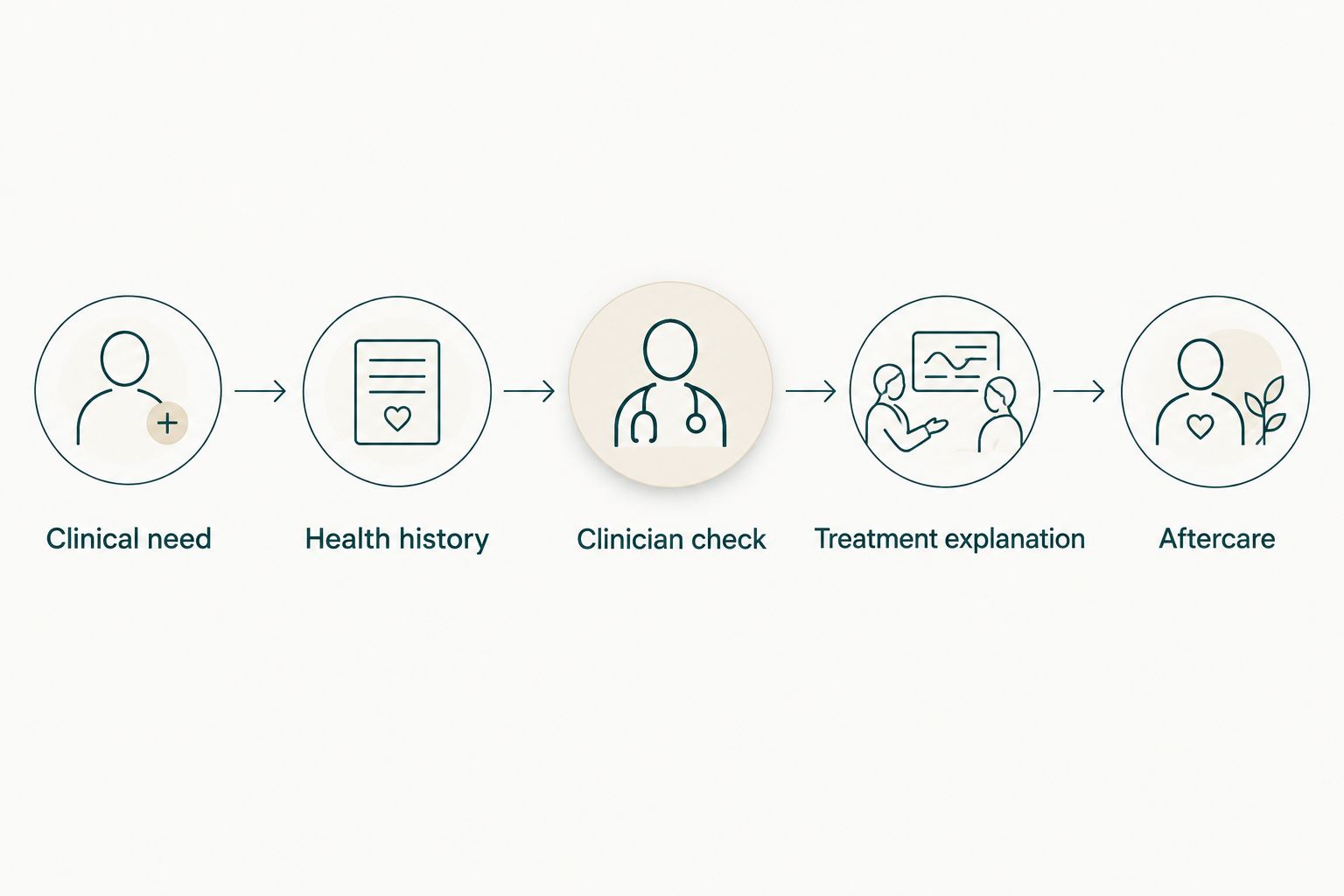
The decision sequence is clinical need, health history, clinician check, treatment explanation, and aftercare. Keeping that order prevents convenience or a package name from replacing informed consent.
Compare the options before choosing an infusion
The best option depends on the problem, not the occasion. Oral hydration, a medical consultation, and intravenous treatment serve different purposes. Comparing them as interchangeable bridal packages obscures that distinction.
| Option | Best for | Main advantage | Key limitation |
|---|---|---|---|
| Oral fluids and normal meals | Brides who can drink and have no clinical reason for IV treatment | Avoids cannulation and supports ordinary hydration and nutrition | Does not replace assessment for persistent symptoms or significant illness |
| Medical consultation without an infusion | Brides with unexplained fatigue, recurrent dizziness, or medication-related symptoms | Focuses on the cause and whether tests or treatment are needed | Does not guarantee an immediate explanation or symptom resolution |
| Clinic-based IV treatment | Brides whose assessed needs are appropriate for an outpatient infusion | Provides treatment in a clinical setting | Requires travel; the setting alone does not establish a need for an IV |
| DarDoc at-home IV drip care | Brides seeking a home visit when IV treatment is clinically appropriate | Offers the at-home service setting | Home convenience does not remove infusion risks or replace emergency care |
| Urgent medical assessment | Brides with severe or worsening symptoms | Prioritises assessment rather than an elective wellness procedure | Is not a cosmetic or wedding-preparation service |
DarDoc’s at-home IV drip service addresses the location of care. It does not establish that a particular formulation will improve your complexion, resolve unexplained fatigue, or suit your medical history. Ask those questions separately.
For a healthy bride who can eat and drink normally, avoiding an unnecessary infusion is a valid decision. You do not need to add a medical procedure to make your wedding preparation complete.
Common mistakes brides make with IV drip therapy
Booking for a guaranteed glow
A cosmetic promise is not an explanation of medical benefit. Ask what outcome is supported for the proposed treatment and your situation. Do not interpret hydration treatment as evidence of predictable skin brightening or better makeup performance.
Hiding symptoms to keep the appointment
Vomiting, diarrhoea, dizziness, and a new medicine belong in the assessment. Leaving them out because you want a pre-wedding boost undermines the treatment decision. Give the clinician the complete picture, including symptoms you think are caused by stress.
Combining crash dieting with an infusion
An IV drip does not replace adequate food intake or make aggressive pre-wedding restriction safe. If you already take weight-loss medication, discuss poor intake and gastrointestinal symptoms with the prescribing clinician. Do not use hydration treatment to bypass that review.
Choosing a group booking before individual screening
A bridal party shares an event, not a medical history. Each person needs an individual assessment and consent process. A treatment that is appropriate for one attendee is not automatically appropriate for everyone else.
Treating home care as emergency care
Home delivery saves travel; it does not change the seriousness of chest pain, breathing difficulty, or fainting. Seek urgent assessment for those symptoms rather than waiting for an elective infusion visit. Convenience must not delay necessary care.
FAQ
What's the best IV drip for brides in Dubai?
There is no single best IV drip for brides in Dubai. The appropriate treatment depends on a clinical assessment, your symptoms, medical history, and whether intravenous treatment is needed at all.
Will an IV drip give me glowing skin before my wedding?
An IV drip does not guarantee glowing skin before your wedding. Treating a clinical problem is different from demonstrating a cosmetic benefit in an otherwise healthy person.
Is an IV drip better than drinking water before the wedding?
An IV drip is not automatically better than oral hydration. If you can drink normally and have no clinical reason for intravenous fluids, oral hydration is generally the first option.
Can I have an IV drip at home in Dubai?
DarDoc offers at-home IV drip care in the UAE. Ask about clinical screening, the administering professional's credentials, monitoring, and the escalation plan before agreeing to treatment.
How close to my wedding should I book an IV drip?
There is no universal pre-wedding timing recommendation for an IV drip. First establish whether treatment is appropriate, then ask the clinician about the visit process and aftercare; avoid adding a new elective procedure immediately before an important event.
Can I get a bridal IV drip while taking a GLP-1 medicine?
Taking a GLP-1 medicine requires a medication and symptom review before any infusion decision. Tell the clinician about nausea, vomiting, reduced intake, and dose changes rather than treating a drip as a substitute for prescribing advice.
What should I check before booking a bridal IV drip in 2026?
Check the clinical indication, clinician credentials, proposed ingredients, risks, monitoring, and follow-up arrangements. Ask why an IV is preferable to oral treatment or assessment without an infusion.
One last thing
The most useful pre-wedding appointment can end without an infusion. Identifying that you do not need treatment protects you from an avoidable procedure and keeps attention on symptoms that deserve proper assessment.
For your 2026 wedding, keep the rule simple: choose care because it addresses a clinical need, not because a package has bridal in its name.
Related guides
If you already use weight-loss medication, these guides address separate questions to discuss with your prescribing clinician—not reasons to start treatment before a wedding.


