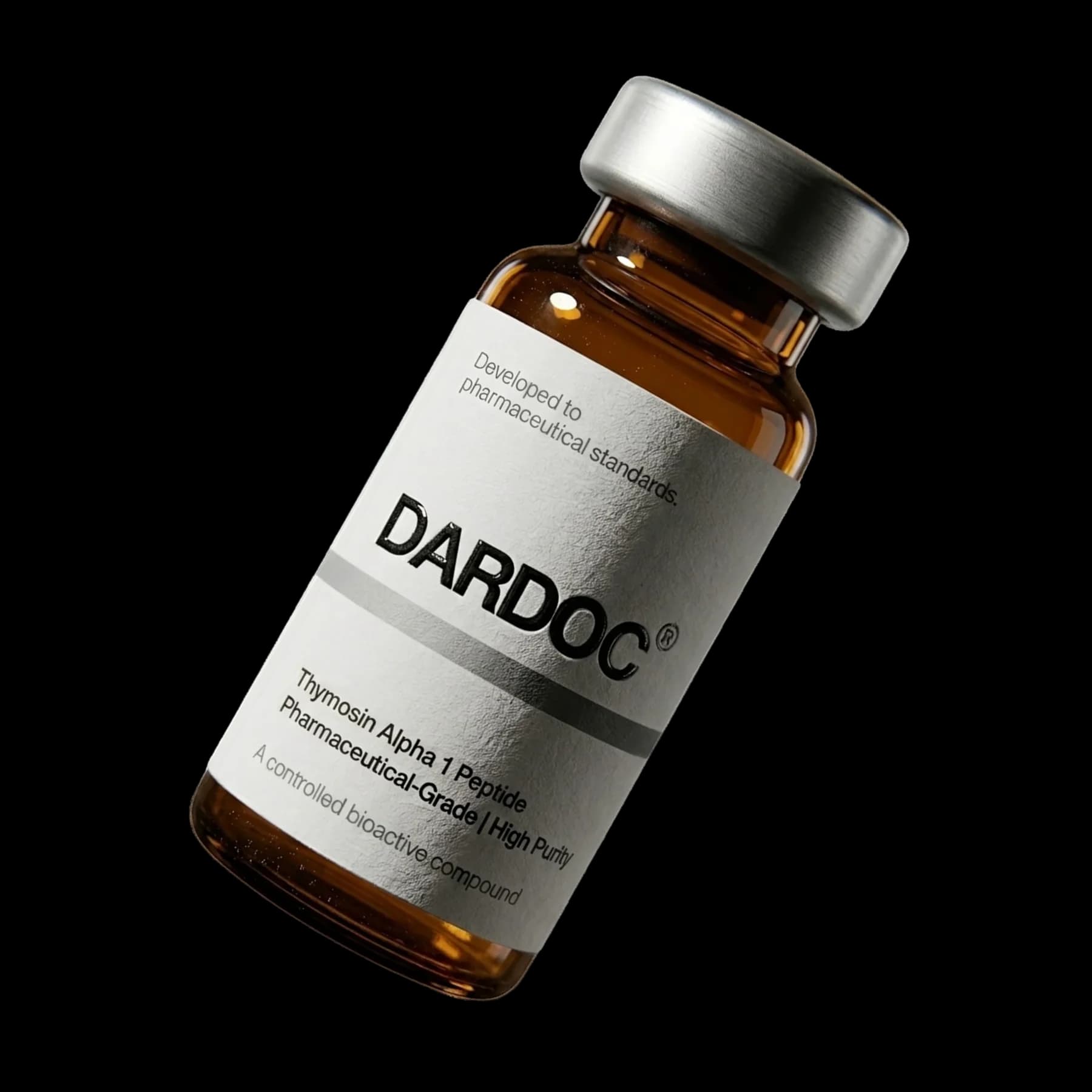
Most peptide articles in this journal have had to spend real estate explaining why the underlying evidence base is preclinical-heavy, why the clinical trial data is small, and why the responsible clinical position involves more caveat than conclusion. Thymosin Alpha-1 is the article where the conversation runs in the other direction. The peptide is approved as a prescription drug in more than thirty-five countries under the brand name Zadaxin. It has Phase III randomised trial data for chronic hepatitis B and chronic hepatitis C. It has been studied in over eleven thousand patients across more than thirty clinical trials. It is the most clinically validated immune-modulating peptide currently used in compounded clinical practice, and it sits in a meaningfully different evidence position from BPC-157, TB-500, or any of the GH-axis peptides discussed elsewhere in this journal.
This article is about what Thymosin Alpha-1 actually does, where the published evidence supports its use, where the off-label use cases sit on the evidence spectrum, and how a careful clinic in the UAE thinks about prescribing it in 2026. The peptide's clinical pedigree is real. Its appropriate use cases are specific. The marketing around it sometimes overshoots into territory the evidence does not yet cover. The clinically honest version of the conversation is the one that respects both the genuine clinical foundation and the boundary between approved indications and emerging ones.
What Thymosin Alpha-1 actually is
Thymosin Alpha-1 is a 28-amino-acid peptide originally isolated from calf thymus tissue in 1972 by Allan Goldstein's laboratory at the National Cancer Institute [Goldstein et al., Proceedings of the National Academy of Sciences, 1977]. The peptide is derived from prothymosin alpha, a 113-amino-acid precursor protein, and is naturally produced in the thymus gland, the organ in the upper chest that plays a central role in the development and maturation of T lymphocytes, the white blood cells that carry out the bulk of adaptive immune responses.
The thymus has a particular biological trajectory that matters for this conversation. It is largest and most active in childhood. It begins to involute in adolescence, declining in size and functional output through adulthood. By the seventh decade of life, the thymus has substantially shrunk and its production of new T cells has fallen dramatically. This involution is part of normal physiology and is one of the underlying reasons immune function declines with age. Older adults produce fewer naive T cells, mount less effective responses to new pathogens and vaccines, and recover more slowly from infections than younger adults do.
Thymosin Alpha-1, as a synthetic peptide for clinical use, was developed against this biological backdrop. The thymus produces less of it with age. Exogenous administration restores some of the signaling that the involuting thymus has stopped delivering. The clinical question, whether this signaling restoration translates into meaningful immune function improvement in specific clinical contexts, has been studied extensively over the past four decades, and the answer is more clinically established than for any other peptide in this journal.
How it actually works
The mechanism of Thymosin Alpha-1 is unusual among immune-modulating peptides because it is bidirectional. The peptide does not simply stimulate immune function in the way a vaccine adjuvant does, and it does not simply suppress immune function in the way an immunosuppressant does. It acts as a regulator that pushes the immune system back toward homeostasis, whether the starting point is overactive or underactive.
T cell development and maturation. Thymosin Alpha-1 promotes the differentiation and maturation of T cells, including helper T cells (CD4+) and cytotoxic T cells (CD8+). Patients with depleted T cell populations, whether from chronic viral infection, severe illness, chemotherapy, or post-sepsis immunoparalysis, typically show partial restoration of T cell counts and function with treatment.
Toll-like receptor signaling. The peptide activates signaling through Toll-like receptors, particularly TLR2 and TLR9, which are part of the innate immune system's machinery for recognising pathogens and triggering appropriate responses. This activation amplifies the early innate immune response while supporting the transition to a coordinated adaptive response.
Modulation of inflammatory cytokines. Thymosin Alpha-1 has been shown to modulate the production of multiple inflammatory cytokines, including reducing pro-inflammatory cytokines (TNF-alpha, IL-6) in inflammatory contexts and supporting balanced cytokine production in immunosuppressed states. The bidirectional nature of this effect is part of why the peptide can be useful in conditions characterised by either excessive or insufficient inflammatory response.
Dendritic cell and natural killer cell activation. The peptide enhances the function of dendritic cells (which process and present antigens to T cells) and natural killer cells (which provide rapid early immune defence against infected and abnormal cells). This activation supports both the recognition phase of immune responses and the early effector phase.
The clinically meaningful framing of this mechanism is that Thymosin Alpha-1 is not an immune stimulant in the simple sense. It is an immune regulator. Patients whose immune systems are underperforming, through chronic viral infection, immunosenescence, or post-illness depletion, typically show improvement toward normal function. Patients whose immune systems are dysregulated through inflammation typically show modulation toward more balanced function. This bidirectional profile is one of the reasons the peptide has accumulated clinical use across an unusually wide range of indications.
The approved indications and the evidence supporting them
Thymosin Alpha-1's primary regulatory approvals are in two indications, with substantial supporting evidence in several others. Understanding the difference between approved and off-label uses is the foundation of any honest clinical conversation about the peptide.
Chronic hepatitis B. The first regulatory approval for Thymosin Alpha-1 came in chronic HBV infection, where the peptide has been studied as monotherapy and in combination with interferon and antiviral medications. Phase III randomised trial data has demonstrated meaningful HBV DNA clearance and HBeAg seroconversion rates with combination therapy. The mechanism is consistent with the underlying biology. Chronic HBV infection produces a state of T cell exhaustion and immune tolerance toward the viral antigens, and Thymosin Alpha-1 supports the restoration of T cell function necessary for viral clearance.
Chronic hepatitis C. A secondary approval in many countries, where the peptide has been studied in combination with interferon-alpha-based regimens. The evidence base is older and somewhat overtaken by the more recent direct-acting antiviral medications that have transformed HCV treatment, but the immune-restoration mechanism remains relevant for some patient populations.
Vaccine adjuvant. Thymosin Alpha-1 is approved as a vaccine adjuvant in several jurisdictions, particularly for use in elderly and immunocompromised patients who mount weaker responses to standard vaccines. The mechanism is consistent: the peptide supports the dendritic cell and T cell activation that vaccine responses depend on, and the patient populations most likely to benefit are those whose age-related immune decline reduces baseline vaccine response.
Adjuvant in oncology. The peptide is approved in many jurisdictions as an adjuvant therapy for chemotherapy-induced immune suppression, and has been studied across a range of cancer types including non-small cell lung carcinoma, malignant melanoma, hepatocellular carcinoma, and several others. More recent research has explored combinations with immune checkpoint inhibitors, with retrospective Phase II data suggesting potential synergy in some patient populations. This is an area of active research rather than settled practice, but the underlying clinical foundation is meaningful.
These are the indications for which Thymosin Alpha-1 has the strongest evidence and, in many countries, formal regulatory approval. The article is not about these indications. UAE patients asking about Thymosin Alpha-1 in clinical practice are typically asking about the off-label uses that have grown up around the established clinical foundation. Those are the conversations the rest of the article is about.
The off-label conversations: what we hear in clinic
Three patient archetypes drive the bulk of Thymosin Alpha-1 inquiries in UAE clinical practice in 2026. Each sits in a different position on the evidence spectrum, and the clinically honest conversation differs by archetype.
The post-viral fatigue patient. Typically presenting twelve to twenty-four months after a significant viral illness, often COVID-19, less often other viral infections, with persistent fatigue, reduced exercise tolerance, brain fog, and a general sense of not having returned to baseline. The patient has typically been worked up extensively, found to have nothing acute, and has been told that the recovery curve is what it is. The Thymosin Alpha-1 conversation here is supported by the most rapidly developing recent evidence base, including ex vivo studies suggesting the peptide can restore appropriate immune homeostasis in patients with post-acute sequelae of SARS-CoV-2 infection, but the clinical evidence in this specific population is still developing rather than established. Some patients respond meaningfully. Others do not. The variability is real and the reasons for it are not yet fully characterised.
The recurrent infection patient. Adults who notice they have been getting sick more often than they used to, colds that linger for weeks rather than days, sinus infections that recur three or four times a year, viral infections that produce more symptomatic illness than they did a decade ago. Some of these patients have identifiable underlying issues (vitamin D deficiency, sleep restriction, chronic stress, untreated medical conditions) that should be addressed first. Some do not, and present with a picture suggesting age-related immune decline at an earlier age than expected. Thymosin Alpha-1 protocols are sometimes considered in this context on the basis of the immune-restoration mechanism, with the appropriate caveat that the evidence in this specific patient archetype is more empirical than trial-based.
The general immune resilience patient. A subset of patients who arrive at the conversation through longevity-focused thinking rather than through a specific symptom picture. The patient is generally well, has read about thymic involution and immunosenescence, and is interested in supporting immune function as a component of broader healthy aging. This is the archetype where the evidence is thinnest and the conversation should be most measured. Thymosin Alpha-1 is not a longevity peptide in the way that Epitalon is sometimes positioned. Its strongest evidence is in clinical contexts of immune dysfunction, not in healthy adults seeking immune optimisation.
In each of these conversations, the clinically honest framing acknowledges the difference between the established evidence and the off-label extrapolation. The mechanism is the same in each case. Thymosin Alpha-1 supports T cell function, modulates inflammatory cytokines, activates innate immune signaling. The strength of the clinical evidence varies considerably by indication, and the conversation should reflect that variation rather than treating the established hepatitis evidence as if it directly transferred to a longevity context.
Speak to a DarDoc physician
The COVID-19 and post-viral evidence in detail
The COVID-19 era produced a substantial body of clinical evidence on Thymosin Alpha-1, primarily from Chinese hospital systems where the peptide had pre-existing approval and was deployed at scale during the pandemic. The most-cited findings come from a study by Liu and colleagues in Clinical Infectious Diseases in 2020, which reported that Talpha1 treatment significantly reduced mortality in severe COVID-19 patients, with the benefit most pronounced in patients with low CD4 or CD8 T cell counts [Liu et al., Clinical Infectious Diseases, 2020]. The mechanistic story was consistent with the underlying biology: severe COVID-19 produced T cell exhaustion and lymphocytopenia, and Thymosin Alpha-1 supported the restoration of T cell function and survival of cytotoxic lymphocyte populations.
Not all of the COVID-19 data was favourable. A separate retrospective study in 275 patients reported that Thymosin Alpha-1 had no significant effect on the recovery of CD4+ and CD8+ T cell counts compared with patients who did not receive it, and that virus shedding duration was actually longer in treated patients [Yang et al., Frontiers in Immunology, 2020]. The discrepancy between studies likely reflects patient population differences (disease severity, baseline T cell counts, timing of treatment), and the clinically honest interpretation is that the COVID-19 evidence base is mixed rather than uniformly supportive. The peptide appeared to help certain patient subgroups, particularly those with severe disease and depleted lymphocytes, more than others.
The post-acute sequelae of SARS-CoV-2 infection (PASC), the syndrome more commonly known as long COVID, has generated more recent and more directly relevant research. Ex vivo studies have demonstrated that Thymosin Alpha-1 can support the restoration of appropriate immune responses in lymphocytes from PASC patients, with the most pronounced effects in patients who had more severe acute illness and required respiratory support during the acute phase [Matteucci et al., International Immunopharmacology, 2023]. The data is preclinical rather than clinical at this point. Ex vivo studies on patient-derived lymphocytes rather than clinical trials in patients themselves. But the mechanism is consistent with the broader immune-restoration profile of the peptide and the underlying immunology of PASC.
The honest summary, for UAE patients asking about Thymosin Alpha-1 for post-viral fatigue or long COVID, is that the mechanistic case is reasonable, the early clinical signals are encouraging, and the definitive randomised trial evidence in this specific patient population is not yet established. The peptide is being used in this context off-label, with the appropriate informed consent that the evidence base is developing. Some patients respond well. Some do not. The variability is real and is part of why patient selection matters.
How protocols are typically structured
Thymosin Alpha-1 protocols are typically less standardised across patient populations than the protocols for many other peptides, partly because the indications it is used for are themselves varied and partly because the peptide's bidirectional immune effect produces different optimal cycling patterns in different contexts.
Route of administration. Subcutaneous injection is the standard route, with bioavailability and predictable absorption supported by decades of clinical use. Some research has explored intranasal and oral routes, but these are not established in clinical practice and the subcutaneous route remains standard.
Cycle length. For acute infectious indications and post-viral recovery contexts, cycles typically run several weeks to several months depending on the response. For ongoing immune support in chronic indications, longer-term protocols are sometimes used. There is no single standard cycle, and the protocol should be matched to the specific clinical indication and the patient's response. Open-ended use without defined review points is not standard practice.
Dosing frequency. Twice-weekly subcutaneous injection is a common pattern, though daily protocols are used in some clinical contexts (particularly in the more substantial hepatitis evidence base). The frequency is calibrated to the pharmacokinetics of the peptide and the indication being treated.
Repeat protocols. Patients who have responded to an initial protocol and who continue to have the underlying clinical indication may go through repeat cycles, with the clinical decision based on response, indication and the broader treatment plan rather than on a fixed schedule.
As with any peptide protocol, specific dosing belongs in a private consultation rather than a public-facing article. The frameworks above are illustrative and the actual dosing for any patient depends on the indication, the patient's medical history, and the clinical judgement of the prescribing physician.
Side effects and safety
Thymosin Alpha-1 has one of the most extensively characterised safety profiles of any peptide in clinical use, reflecting its long history as an approved drug and its use in over eleven thousand patients across more than thirty clinical trials [Dinetz and Lee, Alternative Therapies in Health and Medicine, 2024]. The most commonly reported side effects are mild local injection-site reactions and rare reports of transient fatigue, mild fever, or general malaise in early administrations, typically interpreted as consistent with immune activation and usually resolving with continued use.
Serious adverse events are uncommon at typical clinical doses. Rarer reports include muscle aches, joint pain, swelling, and rash, particularly with extended use. The peptide does not have the cardiovascular, hepatic, endocrine or psychiatric safety concerns that characterise some other classes of immune-active or growth-related compounds. Its safety profile compares favourably with that of most immune-modulating drugs in the broader pharmacopoeia.
The honest caveats apply. Pregnancy and breastfeeding safety has not been definitively established and the peptide is generally considered contraindicated in those contexts. Patients with active autoimmune disease warrant particularly careful consideration. The peptide's bidirectional immune effect may be useful in some autoimmune contexts and counterproductive in others, and the decision is best made with specialist input rather than as a general protocol. Patients on immunosuppressive therapy after organ transplantation should not use Thymosin Alpha-1 outside of specialist supervision, because immune stimulation could undermine the immunosuppression that the transplant depends on. Patients with active malignancy may use the peptide in oncological adjuvant contexts under specialist supervision, but should not initiate use without appropriate oncological input.
The MOHAP, DHA and DoH regulatory reality
Thymosin Alpha-1 sits in a more nuanced regulatory position than most of the other peptides covered in this journal. It is an approved drug in many international jurisdictions, but it is not FDA-approved in the United States, and in the UAE it is typically prescribed as a compounded peptide rather than as the branded Zadaxin formulation. The compounded pathway is the same one that applies to other peptide protocols in this country.
The framework that protects patients is the same framework that applies to every compounded peptide protocol in the UAE: the clinic should be DHA-, DoH-, or MOHAP-licensed; the compounding pharmacy should be UAE-licensed and operating under MOHAP and EDE oversight, with batch-level testing for sterility, potency and endotoxins; the prescription should be documented and based on a proper consultation; and the supply chain should be cold-chain controlled at 2 to 8 degrees Celsius. The framework matters here as much as anywhere else, and the international approval status of Thymosin Alpha-1 does not exempt the local pathway from the same quality controls.
Where Thymosin Alpha-1 sits relative to other peptides
It is worth being explicit about how Thymosin Alpha-1 differs from the other peptides covered in this journal, because the differences are clinically meaningful and patients sometimes group all compounded peptides together when they should not.
The evidence base is meaningfully more developed than for BPC-157, TB-500, CJC-1295, Ipamorelin, GHK-Cu, MOTS-c, AOD-9604, or any of the cognitive peptides. Thymosin Alpha-1 has Phase III data in approved indications. Most of the other peptides in this journal have Phase II at best, often Phase I or preclinical only.
The mechanism is in a different category. The other peptides discussed in this journal are mostly tissue-repair signaling, growth-axis stimulation, or metabolic modulation. Thymosin Alpha-1 is immune regulation. The biological systems it acts on, the patient populations it is appropriate for, and the goals of treatment are different.
The patient archetype is different. Most of the peptides discussed elsewhere in this journal are used by relatively healthy adults seeking optimisation in specific domains, recovery, sleep, body composition, skin quality. Thymosin Alpha-1 is more often used by patients with specific clinical pictures of immune dysfunction, post-viral recovery, or recurrent infection. The longevity and general-resilience use case exists, but it is the smaller part of the clinical conversation rather than the dominant one.
The safety profile is among the most favourable of any peptide in this journal, with extensive long-term human use through approved indications providing a confidence in the safety data that the other compounded peptides have not yet accumulated.
None of this is to say Thymosin Alpha-1 is uniformly superior or that it should be used in place of other peptides in their respective contexts. It is to say that the evidence position, the mechanism, and the appropriate patient archetype are different, and the clinical conversation should reflect the differences rather than treating all compounded peptides as broadly interchangeable.
Who Thymosin Alpha-1 is, and isn't, for
A reasonable case for considering Thymosin Alpha-1 looks like this. A patient with a specific clinical picture of immune dysfunction or dysregulation: post-viral fatigue, long COVID, recurrent infections that have persisted despite addressing underlying contributors, post-illness immune depletion, age-related immune decline with documented functional consequences. The patient has had appropriate medical workup including investigation of contributing factors (vitamin D, B12, thyroid, sleep, metabolic health). The patient has realistic expectations: meaningful clinical response is plausible but not guaranteed, and the response timeline is typically weeks to months rather than days. The patient has no active autoimmune disease that would change the calculus, no active malignancy without specialist input, no organ transplant on immunosuppressive therapy, and is not pregnant or breastfeeding. The conversation includes informed consent that the off-label evidence base for the specific indication is more developed in some cases (post-viral) than others (general immune resilience).
An unreasonable case looks like this. A healthy adult seeking general immune optimisation without any specific clinical indication. A patient with active autoimmune disease without specialist input. A patient on immunosuppression after organ transplantation. A patient with active malignancy outside an oncologically supervised adjuvant protocol. A patient whose immune symptoms have a clearly addressable underlying cause that has not been worked up: significant vitamin D deficiency, undiagnosed thyroid disease, untreated sleep apnoea, chronic stress, alcohol use, and similar contributors that should be addressed before reaching for an immune-active peptide. A patient who is pregnant or breastfeeding.
The bottom line
Thymosin Alpha-1 is the most clinically validated immune-modulating peptide in compounded clinical practice. It is approved as a prescription drug in over thirty-five countries for chronic hepatitis B, chronic hepatitis C, vaccine adjuvant use, and adjuvant therapy in chemotherapy-induced immune suppression, with substantial supporting evidence in oncology and emerging evidence in post-viral immune dysregulation. The peptide acts as a bidirectional immune regulator, supporting T cell function, modulating inflammatory cytokines, and activating innate immune signaling. Its safety profile, characterised across more than eleven thousand patients in over thirty clinical trials, is among the most favourable in the peptide field.
The off-label uses for which UAE patients most commonly ask, post-viral fatigue, long COVID, recurrent infection, age-related immune support, sit on a spectrum of evidence strength. Some are supported by recent and rapidly developing research. Others are extrapolations from the established mechanistic foundation that have less direct clinical evidence. The clinically honest version of the conversation acknowledges this spectrum rather than treating all off-label uses as equivalently supported.
If you are considering Thymosin Alpha-1 for a specific clinical picture, the first conversation is not about the peptide. It is about whether the underlying clinical picture has been worked up appropriately, what other interventions are relevant to consider alongside or instead of peptide therapy, and where your specific situation sits on the evidence spectrum. Those conversations belong with a DHA-, DoH-, or MOHAP-licensed clinician who knows the literature, the regulatory frame and your specific medical history. This article is educational. It is not medical advice for your specific situation.