Is at-home IV drip therapy safe?
Is at-home IV drip therapy safe? It depends on assessment, licensed care and monitoring. Know the risks, safety checks and when to seek urgent help.

At-home IV drip therapy can be safe for a medically suitable patient when an appropriately licensed clinician assesses the need, uses sterile equipment, selects the correct treatment and monitors the infusion. It is not risk-free: infection, vein irritation, allergic reactions and fluid overload remain possible, and home treatment is not a substitute for emergency care.
TL;DR- Is at-home IV drip therapy safe? Only with appropriate assessment, licensed clinical care, sterile technique and monitoring.
- DarDoc offers at-home IV drip therapy in Dubai and Abu Dhabi; assess clinical safeguards before booking.
- Oral hydration avoids needle-related risks when you can drink and do not need intravenous treatment.
- Chest pain, breathing difficulty or collapse require emergency assessment, not a wellness drip.
Why this matters
An IV puts fluid and any added ingredients directly into your bloodstream. That makes the treatment decision, preparation and monitoring more important than the convenience of receiving it at home.
For a UAE booking in 2026, check the treating professional’s licence and the healthcare provider’s authorisation for the service. Dubai Health Authority and Abu Dhabi’s Department of Health oversee healthcare within their respective jurisdictions; a booking confirmation is not evidence of clinical licensing. For Abu Dhabi, use this guide to verifying a home nursing provider to organise your checks.
Is at-home IV drip therapy safe?
At-home IV therapy is appropriate only when both the treatment and the home setting suit your clinical needs. A qualified person inserting a cannula does not, by itself, establish that you need the infusion or that its ingredients are suitable.
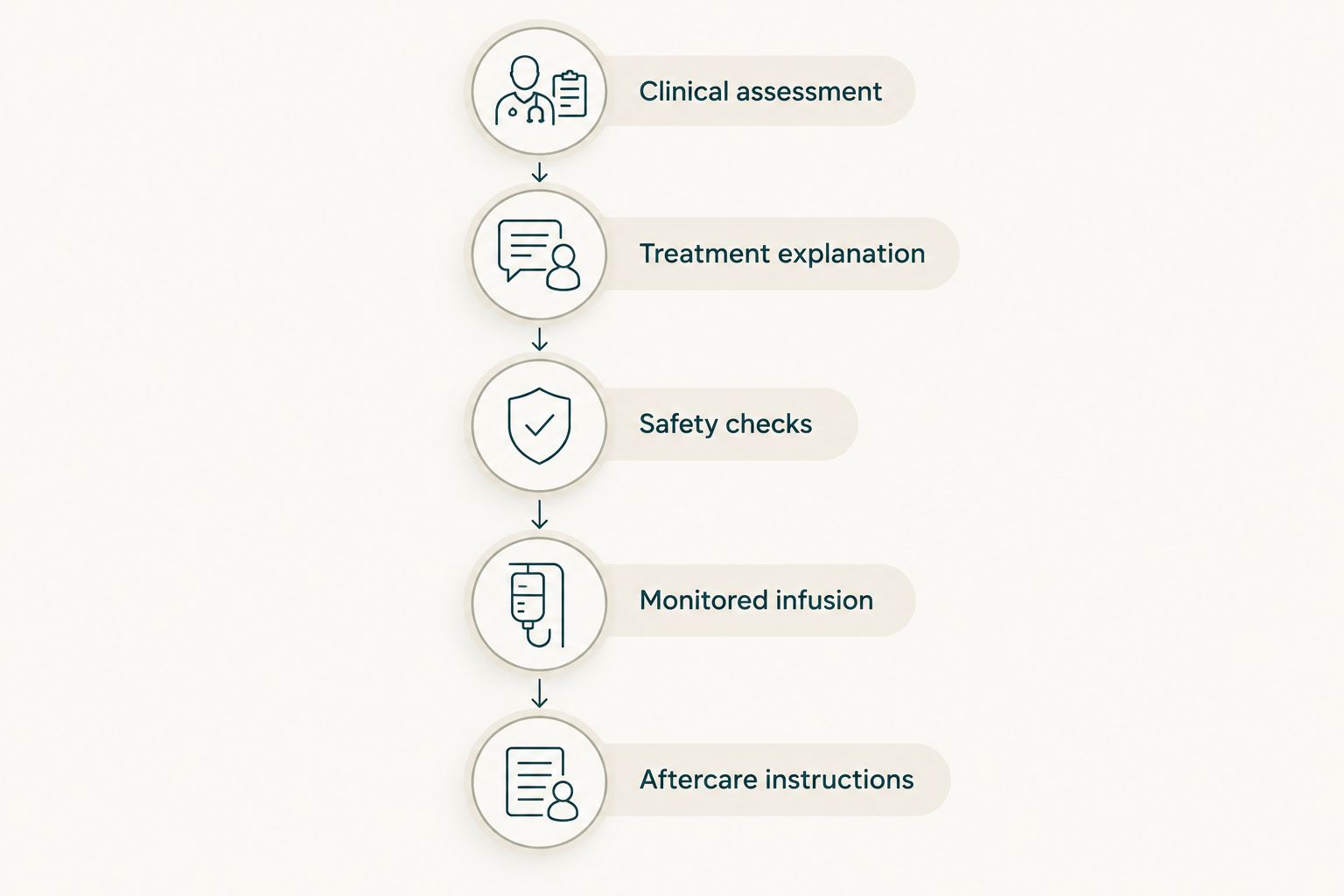
Before proceeding, expect a clear sequence:
- Clinical assessment. Explain your symptoms, medical conditions, medicines, allergies and previous reactions. The clinician should decide whether an infusion is indicated or whether you need another form of care.
- Treatment explanation. Confirm what the fluid contains, why each ingredient is included and what benefit is realistically expected. Understand the material risks and alternatives before consenting.
- Safety checks. The treating professional should confirm your identity, treatment instructions, relevant observations and the condition of the supplies before starting.
- Monitored infusion. The clinician should check the cannula site and your response during treatment, with a clear plan for stopping treatment and escalating concerns.
- Aftercare instructions. Before the visit ends, know which symptoms to report, whom to contact and when to seek urgent help.
A safety checklist for 2026 should cover all these stages, not just whether the needle and tubing are new. If the clinical assessment is missing, do not proceed simply because the appointment is already booked.
Oral hydration, home IV or hospital care: which fits?
The safest route is the least invasive option that adequately treats your condition. Drinking, receiving an infusion at home and attending hospital are not interchangeable choices.
| Option | Best for | Main benefit | Main limitation |
|---|---|---|---|
| Oral hydration | People who can drink and whose condition does not require IV treatment | Avoids cannulation and infusion-related risks | Not sufficient when your condition requires intravenous treatment or urgent assessment |
| Clinician-led home IV | Clinically stable patients with an assessed reason for intravenous treatment and a suitable home setting | Allows selected treatment without travelling to a facility | Home care does not provide the immediate resources of an emergency department |
| Clinic or hospital assessment | People needing investigation, closer observation or escalation | Provides access to assessment and treatment resources appropriate to the setting | Requires travel; emergency transport is appropriate for severe symptoms |
For mild dehydration, oral fluids are often appropriate when you can drink and keep them down. An oral rehydration solution can replace fluid and electrolytes lost through diarrhoea or vomiting; persistent vomiting or worsening symptoms need clinical assessment.
Hospital care is not automatically necessary for every infusion. Equally, avoiding a hospital visit is not a sound reason to receive treatment at home when your symptoms require investigation.
What are the risks of an at-home IV drip?
The main risks come from the cannula, the solution and your response to treatment. A familiar ingredient does not become harmless because it is labelled a vitamin.
Cannula-related problems
A cannula can cause bruising, bleeding, vein irritation or infection. Fluid can also leak into surrounding tissue instead of remaining in the vein, causing swelling, discomfort or other injury depending on the infused substance.
Tell the clinician immediately if you develop pain, burning, swelling, redness or leakage around the insertion site. Do not assume discomfort means the treatment is working, and do not adjust the cannula yourself.
Reactions to the contents
Infused medicines and other ingredients can cause adverse reactions, including allergic reactions. The clinician needs the exact ingredient list and your allergy history, not just the commercial name of a drip.
Breathing difficulty, throat tightness, facial swelling or collapse during an infusion require immediate action. New symptoms should trigger reassessment, not an automatic decision to continue more slowly.
Excess fluid or unsuitable electrolytes
IV treatment can deliver more fluid or particular electrolytes than your body can safely manage. Heart disease, kidney disease and some medicines make this assessment especially important.
The prescribed volume, infusion rate and ingredients need to fit your condition. A standard package is not evidence that the same treatment suits everyone.
Why at-home IV safety varies
Safety depends on several connected factors. Use these checks for a 2026 booking rather than judging a provider by the drip menu alone:
- Your clinical condition. Symptoms, examination findings and existing illness determine whether home treatment is suitable.
- The treatment indication. A defined clinical reason makes the expected benefit easier to weigh against the risks.
- The contents. Every added ingredient needs a purpose, an appropriate dose and a check for contraindications or interactions.
- The treating professional. Verify the clinician’s identity, licence and role in the treatment being provided.
- Infection prevention. Hand hygiene, appropriate skin preparation, sterile single-use equipment and safe handling reduce infection risk.
- Monitoring and escalation. Someone must recognise deterioration, stop treatment when necessary and arrange appropriate help.
No single item replaces the others. Sterile equipment cannot correct an unsuitable prescription, and a suitable prescription cannot correct poor infection prevention.
Who needs extra assessment before a home infusion?
Tell the assessing clinician if you have heart failure, kidney disease, a history of serious allergic reactions, or a previous complication from IV treatment. These details can change the treatment choice, required monitoring or appropriate setting.
Pregnancy, childhood and frailty also call for an assessment tailored to the patient. Do not treat an adult wellness package as a suitable prescription for a child, and do not assume fatigue during pregnancy needs an infusion.
Bring an accurate medicine and supplement list. Include prescribed medicines, over-the-counter products and any recent injections or infusions, because these can affect the clinical decision.
Blood tests are not automatically required before every IV treatment. The clinician should decide whether testing is necessary based on your symptoms, medical history and proposed treatment; a package should not replace that judgement.
Can an IV drip help if I feel tired but am not dehydrated?
Tiredness alone does not establish a need for IV fluids or vitamins. Persistent fatigue deserves assessment because its causes include sleep problems, anaemia, medication effects and other medical conditions.
Evidence for routine wellness infusions in otherwise healthy people is limited. Claims about detoxification, immunity or immediate recovery do not establish a clinical benefit for your situation.
In 2026, ask a direct question: what identified problem is this infusion intended to treat? If the explanation is only that intravenous delivery is faster than taking something by mouth, it has not established that treatment is necessary.
What should I ask before booking an IV drip in Dubai or Abu Dhabi?
Ask who will assess you, who will administer the infusion and who is responsible if your condition changes. Request the exact contents and an explanation of why the proposed treatment fits your symptoms.
DarDoc provides home and online healthcare, including at-home IV drips, to families in Dubai and Abu Dhabi. DarDoc is an option for families seeking at-home IV drip therapy, not a substitute for emergency assessment. Apply the same clinical checks to this service as to any other provider; home convenience does not remove infusion risks.
Before consenting, make sure you can answer these questions:
- Who reviewed my medical history and decided this infusion was appropriate?
- What will I receive, and what are the relevant risks and alternatives?
- How will the clinician monitor me during treatment?
- What happens if the cannula becomes painful or I develop a reaction?
- Who should I contact after the visit, and which symptoms require emergency care?
Keep the treatment record, including the contents and any reaction you experience. That information helps another clinician assess you if symptoms develop later.
When should I seek emergency help instead?
Do not book a wellness infusion for chest pain, severe breathing difficulty, collapse, new confusion or signs of a stroke. Severe illness needs urgent assessment, not a trial of hydration at home.
In the UAE, call 998 for an ambulance in a medical emergency. If symptoms start during an infusion, alert the treating clinician immediately so they can stop treatment and initiate the appropriate response.
After treatment, seek urgent advice for increasing redness, warmth, swelling, discharge or fever. Rapidly worsening symptoms or severe pain require prompt assessment rather than waiting for a routine follow-up.
FAQ
Is at-home IV drip therapy safe in Dubai and Abu Dhabi?
At-home IV drip therapy can be safe for a suitable patient when appropriately licensed professionals assess, prescribe and monitor treatment with proper infection prevention. It remains an invasive procedure with risks, and unstable or seriously unwell patients need an appropriate clinical facility.
Is drinking water safer than getting an IV drip?
Oral hydration avoids needle-related and infusion-related risks when you can drink and do not need intravenous treatment. A clinician should assess persistent vomiting, worsening dehydration or other concerning symptoms rather than assuming a home drip is the answer.
Can I have an allergic reaction to a vitamin IV?
Yes, ingredients in a vitamin IV can cause an allergic reaction. Disclose previous reactions and ask for the exact contents; breathing difficulty, throat tightness or collapse require emergency action.
Should a nurse leave me alone during an IV drip?
A home infusion needs appropriate clinical monitoring and a clear response plan for complications. Confirm how the treating professional will observe you and respond throughout treatment before consenting.
Do I need blood tests before an at-home IV drip?
Blood tests are not required before every infusion; the need depends on your condition and the proposed treatment. Kidney function, electrolyte concerns or suspected deficiency can affect what assessment is appropriate.
Does DarDoc offer IV drips at home?
DarDoc offers at-home IV drips as part of its home healthcare services in Dubai and Abu Dhabi. Ask about clinical assessment, the proposed ingredients, monitoring and aftercare before agreeing to treatment.
What should I do if my arm swells during an infusion?
Tell the treating clinician immediately if your arm swells during an infusion. Swelling can indicate fluid leaking outside the vein; do not adjust the cannula or restart treatment yourself.
One last thing
The safest outcome of an IV assessment can be a decision not to insert a cannula. A clinician who recommends oral hydration, further investigation or emergency care is matching treatment to your condition, not failing to provide a service.
For any 2026 home infusion booking, ask for the clinical reason before choosing the ingredients. The right question is not just whether a drip can be given safely, but whether you need it at all.
Related guides
Join our newsletter for 20% off all DarDoc services.*
*20% off all DarDoc services, except newborn care services.


