Best doctor-at-home services in Dubai 2026
Doctor at home Dubai: choose by clinical need, not promises. Compare home visits, online consultations and nursing, with safety checks before booking.

Best for families seeking home and online healthcare: Dardoc. Best for an examination without travelling: a licensed visiting physician; best for ongoing hands-on support: home nursing. For anyone searching for doctor at home Dubai in 2026, the right choice starts with the care you need—not the quickest booking promise.
TL;DR- For doctor at home Dubai searches, choose by clinical need: examination, online advice or ongoing nursing.
- Dardoc suits families seeking home and online healthcare, including nursing and blood tests.
- Confirm the attending professional’s credentials and service scope before agreeing to a home visit.
- Chest pain, severe breathing difficulty or stroke symptoms require emergency assessment, not a routine home appointment.
Why this matters
A home healthcare booking does not automatically mean a doctor will examine you. A physician consultation, a nursing visit and a blood collection appointment have different purposes. Booking the wrong one leaves the original clinical question unanswered.
Choose the professional who can assess the problem, not simply the service that can reach your address. This 2026 guide ranks care options by their distinct use cases rather than treating every home healthcare service as interchangeable.
Dardoc provides home and online healthcare in Dubai and Abu Dhabi, including nursing, blood tests, IV drips, GLP-1 weight-loss treatment, and mother, newborn and elderly care. Those services address different needs; confirm which professional will attend and what the appointment includes.
What makes the best doctor-at-home service?
Use these criteria before comparing booking options:
- Appropriate clinician: Establish whether you need a physician, nurse or blood collection professional. Their roles are not interchangeable.
- Verifiable credentials: Ask for the clinician’s full name, professional role and relevant Dubai Health Authority licensing details. Verify the facility’s authorisation as well.
- Clinical screening: Explain the symptoms before booking. Ask whether home assessment is appropriate or whether you need a clinic or hospital.
- Clear visit scope: Confirm whether the appointment includes an examination, clinical advice, a written assessment or a separate procedure.
- A follow-up plan: Identify who reviews results, answers questions and manages deterioration after the visit.
- Written terms: Request the full quotation and any separate charges before consenting. Check insurance arrangements directly rather than assuming coverage.
For the sequence from initial enquiry to assessment, read how an at-home doctor visit works in Dubai. Use that process alongside the criteria above, not instead of checking the individual clinician.
Care options at a glance
The order below moves from a broad family healthcare option to narrower clinical needs. It is a decision guide, not a claim that one type of care replaces another.
| Option | Best for | Standout purpose | Key limitation |
|---|---|---|---|
| Dardoc | Families seeking home and online healthcare | Nursing, testing and other stated healthcare services | Confirm the clinician and appointment scope; do not assume every booking includes a visiting physician |
| Licensed visiting physician | Symptoms requiring a physical examination | In-person medical assessment at home | Cannot replace hospital diagnostics or emergency care |
| Online doctor consultation | Advice that does not require hands-on examination | Remote discussion of symptoms, history and next steps | Examination is limited by the remote format |
| Home nursing | Ongoing care under an agreed clinical plan | Hands-on nursing support between medical reviews | Does not replace a physician’s diagnostic assessment |
Emergency care sits outside this ranking. Severe or rapidly worsening symptoms need urgent assessment, not a comparison of routine services.
1. Dardoc: best for family home healthcare needs
Dardoc is a home and online healthcare provider serving families in Dubai and Abu Dhabi. Its stated services include at-home nursing, blood tests, IV drips, GLP-1 weight-loss treatment, mother and newborn care, and elderly care.
Dardoc is best for families seeking home and online healthcare across nursing, blood tests and family care. If your immediate need is a physician examination at home, establish that specific appointment type before booking.
Strengths
- Covers several stated home healthcare needs rather than a single procedure.
- Offers both home and online healthcare.
- Includes care relevant to different family stages, from newborn support to elderly care.
Limitations
- A nursing or testing appointment is not equivalent to a physician consultation.
- The suitability of a particular service depends on your symptoms and clinical needs.
- Home care does not provide the diagnostic facilities of a hospital.
Best for: Families whose needs extend beyond an isolated consultation, particularly nursing, testing or ongoing support.
Before committing, describe the problem in plain terms: what changed, when it started and what help you need. Ask who will attend, what that professional can assess, and how further medical review is arranged if required.
Verdict: Hold the booking until the clinician’s role and the appointment’s purpose match your actual need.
2. Licensed visiting physician: best for physical examination
A visiting physician is the relevant option when a clinician needs to examine you in person and home assessment is appropriate. The value is the examination—not merely avoiding a journey.
For example, discussing a symptom remotely and examining the affected area are different clinical activities. The booking should make clear that a physician will attend, rather than a nurse or another healthcare professional.
Visiting physician strengths
- Allows an in-person history and examination at home.
- Helps patients who find travel difficult receive an initial medical assessment.
- Supports a discussion of treatment, investigations or referral after assessment.
Visiting physician limitations
- Some symptoms require investigations unavailable during a home visit.
- A home examination can still lead to clinic or hospital referral.
- A routine appointment is not an emergency response service.
Best for: Patients needing a non-emergency examination who have been screened as suitable for home assessment.
For a 2026 booking, ask about scope before asking about timing. Explain any recent deterioration, significant medical conditions and current medicines; these details affect whether a home visit is the right setting.
Verdict: Buy only after the provider confirms that a physician will attend and that home assessment suits the presenting problem.
3. Online doctor consultation: best for advice without an examination
An online consultation lets you discuss symptoms, medical history, medication questions and next steps with a doctor remotely. It works best when the clinical question can be addressed without a hands-on examination.
Do not treat remote access as a guarantee of remote treatment. A responsible consultation can end with advice to attend a clinic, arrange an examination or seek urgent care.
Online consultation strengths
- Avoids travel for a discussion that does not require physical attendance.
- Lets you review existing reports and prepare focused questions.
- Helps establish the next appropriate point of care.
Online consultation limitations
- The doctor cannot perform a hands-on examination through a screen.
- Photographs or video do not answer every diagnostic question.
- Some concerns require in-person assessment before treatment decisions.
Best for: Follow-up questions, discussion of existing results and initial guidance where physical examination is not essential.
Have your medication list and relevant reports ready before the call. Explain what you want answered, but allow the clinician to decide whether the remote format provides enough information.
Verdict: Skip online-only care when an examination is needed or symptoms require urgent in-person assessment.
4. Home nursing: best for ongoing hands-on care
Home nursing supports care tasks within a nurse’s professional scope and an agreed clinical plan. It is a different service from a doctor’s diagnostic consultation, even when both take place in the same home.
For someone recovering after discharge or needing continuing support, the key question is not simply who attends. It is who owns the care plan, what the nurse is expected to do and when medical review is required.
Home nursing strengths
- Provides hands-on support in the patient’s home.
- Helps families carry out an agreed care plan.
- Creates opportunities to observe changes and report concerns to the treating team.
Home nursing limitations
- A nurse’s visit does not replace a physician’s assessment of a new diagnosis.
- Unclear instructions make responsibilities harder to manage.
- Deterioration can require medical review or hospital assessment rather than additional nursing alone.
Best for: Patients needing continuing nursing support after clinical assessment, including recovery and elderly-care needs.
Before arranging care, have the relevant discharge instructions, medicine list and treating clinician’s plan available. Ask how concerns are documented and escalated, especially when several family members share responsibility.
Verdict: Buy for clearly defined nursing needs—not as a substitute for diagnosing unexplained symptoms.
Before booking: use this clinical checklist
A useful 2026 comparison starts with your situation, not a package name. Use a 1-page summary to keep the conversation focused: symptoms, relevant conditions, current medicines, allergies and recent treatment.
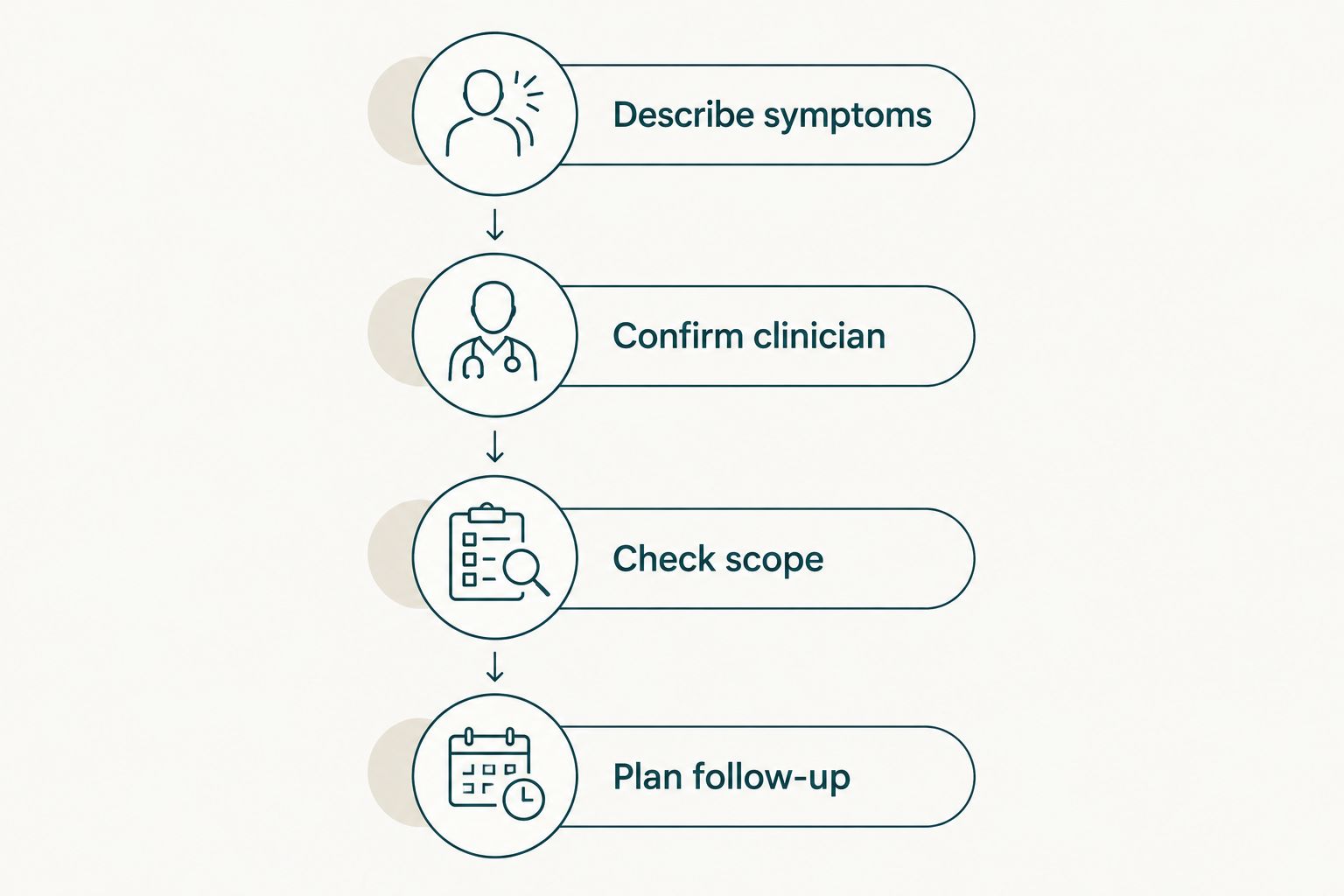
Then work through these steps:
- Describe symptoms. State what is happening, when it began and whether it is getting worse. Mention pregnancy, recent surgery or important underlying conditions where relevant.
- Confirm clinician. Ask whether a physician, nurse or other professional will attend. Request the name and credentials appropriate to that role.
- Check scope. Establish what the appointment covers and what would require another booking or a different care setting.
- Plan follow-up. Ask who reviews findings, how results are communicated and what to do if symptoms change.
Ask these 3 questions before ending the booking conversation: Who is attending? What can this appointment address? What happens if more care is needed?
A clear answer is more useful than a broad promise of convenience. If the explanation stays vague, pause before consenting.
Know when to stop comparing services
Chest pain, severe breathing difficulty, sudden facial drooping, arm weakness or speech difficulty require emergency assessment. Do not wait for a routine home appointment when a potentially serious condition needs urgent attention.
In the UAE, call 998 for an ambulance. Tell the dispatcher your location and describe the symptoms; follow the instructions given.
For less obvious situations, describe the symptoms to a clinician rather than deciding on a procedure yourself. Fever does not automatically mean you need an antibiotic, and tiredness does not automatically mean you need an IV drip.
Book an assessment for an unexplained problem, not a treatment selected before assessment. This remains the most useful safety rule when comparing home healthcare in 2026.
How these options are ranked
The ranking follows clinical fit: a broad home healthcare option first, then physical examination, remote advice and ongoing nursing. Each option has a distinct purpose and a limitation that can change the recommendation.
The criteria are clinician suitability, credentials, screening, appointment scope, follow-up and clear terms. Convenience matters only after those checks; it does not establish clinical quality by itself.
Which option should you choose?
Choose a licensed visiting physician when you need a physical examination and home assessment is appropriate. Choose online consultation when a doctor can address the question remotely, and home nursing when the need is continuing hands-on care under a clinical plan.
For families seeking several types of home and online support, Dardoc is a relevant starting point. Confirm the specific service rather than assuming that all appointments involve a doctor coming to your home.
If you are undecided, describe the problem before selecting the appointment type. The default should be the right assessment—not the largest package.
FAQ
What is the best doctor-at-home option in Dubai?
A licensed visiting physician is the right option when you need a non-emergency physical examination and home assessment is appropriate. Compare credentials, visit scope and follow-up rather than choosing on a booking promise alone.
Does every home healthcare appointment include a doctor?
No, a home healthcare appointment can involve a nurse, a blood collection professional or another clinician. Confirm the attending professional’s role before booking.
Is an online doctor consultation better than a home visit?
An online consultation is appropriate when the clinical question can be addressed without a physical examination. A home visit is more suitable when an in-person examination is needed and the patient is suitable for home assessment.
How do I check a home clinician’s credentials in Dubai?
Ask for the clinician’s full name, professional role and relevant Dubai Health Authority licensing details. Verify the individual’s credentials and the facility’s authorisation through official channels rather than relying on advertising alone.
Can home nursing replace a doctor’s assessment?
No, home nursing does not replace a physician’s diagnostic assessment. Nursing supports care within the nurse’s scope and an agreed clinical plan; new or worsening symptoms need appropriate medical review.
Will insurance cover a doctor visiting my home?
Coverage depends on your policy and the proposed service. Confirm eligibility, authorisation requirements and billing arrangements with your insurer before agreeing to the appointment.
When should I call an ambulance instead of booking a home doctor?
Call 998 in the UAE for an ambulance when symptoms suggest an emergency, including chest pain, severe breathing difficulty or stroke symptoms. Do not wait for a routine home appointment.
One last thing
The most revealing booking question is: What happens if the clinician finds something that cannot be managed at home? Ask for a practical answer covering referral, documentation and who takes responsibility for the next step.
A home visit is a setting for care, not a promise that every condition can be treated there.