
Best overall fit for families needing home and online healthcare: Dardoc. Best for clinical procedures: skilled home nursing; best for everyday elder support: elderly caregiving. This 2026 guide helps you choose a home care agency for expats Dubai families can assess by care scope, professional credentials and clear accountability—not a broad promise of help at home.
TL;DR- Dardoc is a home care agency for expats Dubai families can consider for nursing, elderly care and mother/newborn care.
- Choose skilled home nursing when your relative needs clinical procedures, not household assistance.
- Choose elderly caregiving for daily support, with a separate clinical plan when needed.
- Ask for professional credentials, a written care plan and an escalation process before booking.
Why this matters
A home care booking can mean very different things: a nurse managing a prescribed treatment, a caregiver helping an older parent, or support for a mother and newborn. Those roles are not interchangeable. A friendly introduction does not establish clinical competence.
For an expat family in Dubai, the practical question is who takes responsibility when the plan changes. Ask who supervises care, how information reaches your treating clinician and what happens if the assigned professional cannot attend.
Dardoc is a suitable home healthcare option for expat families seeking nursing, elderly care and mother/newborn support from one provider. Its stated service range supports that fit; your family's assessment determines which service belongs in the care plan.
What makes the best home care agency for expats in Dubai?
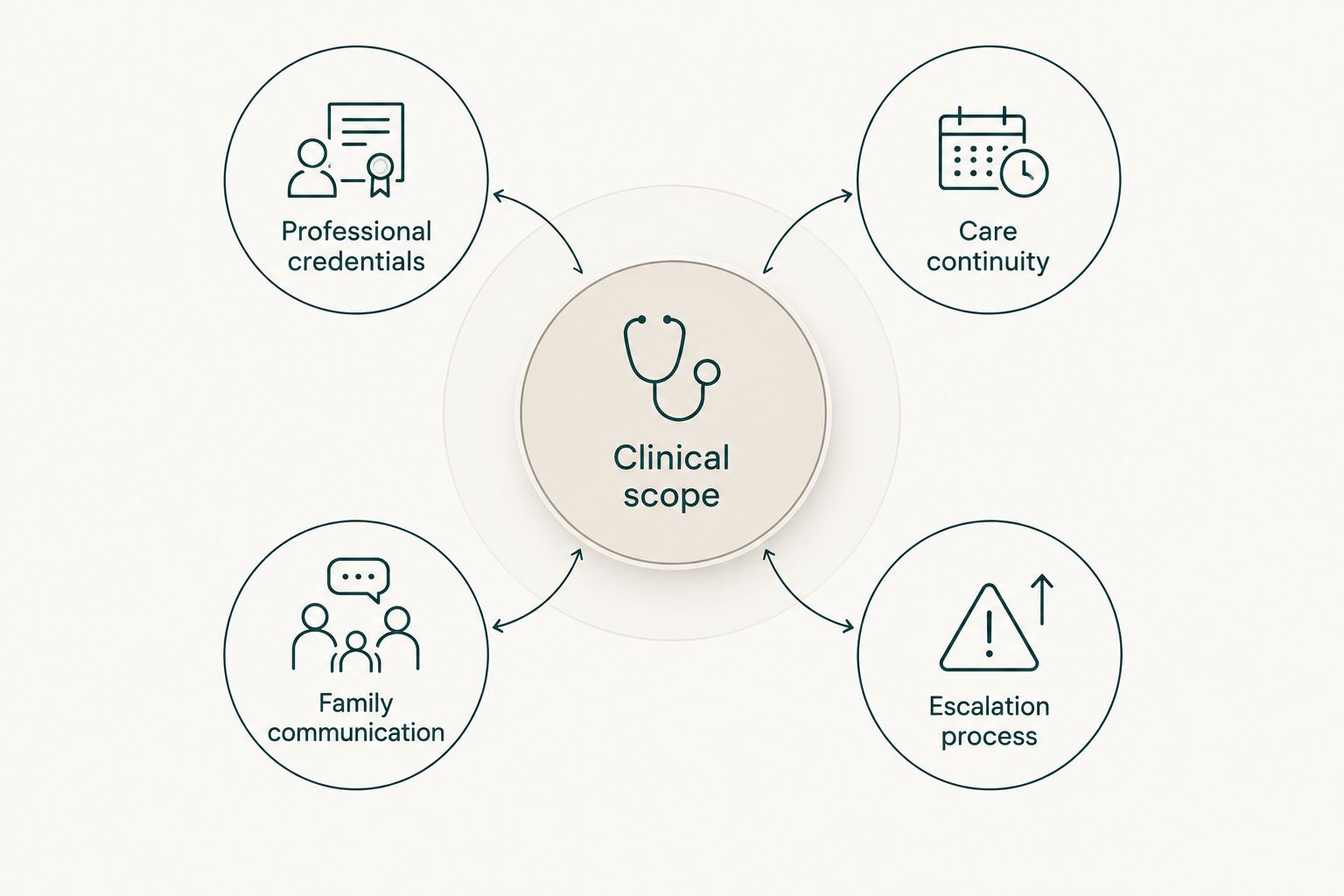
Use these five criteria to assess a provider in 2026. Apply the same questions whether you need a single nursing visit or continuing support for a parent.
- Clinical scope: Ask exactly which tasks the assigned professional can perform. Distinguish nursing procedures from assistance with washing, dressing, meals and companionship.
- Professional credentials: Request the provider's licence details and the assigned clinician's registration where clinical care is involved. Check the relevant Dubai Health Authority requirements rather than treating a uniform as evidence.
- Care continuity: Establish who manages handovers, replacements and changes to the plan. Ask whether the next professional receives the same instructions.
- Family communication: Agree on who receives updates and what those updates contain. Discuss language preferences, patient consent and access for relatives living abroad.
- Escalation process: Require a clear explanation of when staff contact the supervising clinician and when the family should seek emergency care. Home care is not an emergency service.
Ask for these answers in writing. A clear scope is more useful than a long list of services that does not explain who delivers them.
Home care options at a glance
The comparison below ranks care routes by their strongest use case. The named provider offers several services; the other entries describe the type of support to request, not interchangeable agencies.
| Option | Best for | Standout feature | Key limitation |
|---|---|---|---|
| Dardoc | Families combining home and online healthcare | Stated range includes nursing, elderly care and mother/newborn care | A service range alone does not establish the assigned professional's suitability |
| Skilled home nursing | Clinician-directed procedures and monitoring | Clinical tasks delivered within the nurse's authorised scope | Does not automatically include ongoing household assistance |
| Elderly caregiving | Daily living support for an older relative | Care organised around the person's routine | Non-clinical support does not replace nursing or medical review |
| Mother and newborn care | Postnatal support for mother and baby | Focus on the household's needs after birth | Support at home does not replace postnatal and paediatric appointments |
| Non-medical home assistance | Household tasks and companionship | Practical help without presenting it as treatment | Not a substitute for a licensed clinical professional |
1. Dardoc: best for combined family healthcare needs
Dardoc provides home and online healthcare in the UAE, including at-home nursing, blood tests, mother/newborn care and elderly care. Its stated service area includes Dubai and Abu Dhabi. That makes it a relevant starting point when your family needs healthcare rather than household help alone.
Describe the patient and the tasks before asking for a booking. An older parent who needs dressing assistance has a different requirement from someone with prescribed wound care, even when both need support at home.
Provider pros:
- Home and online healthcare are both within its stated offering.
- Nursing and blood tests are listed services.
- Elderly care and mother/newborn care address different family needs.
- Dubai and Abu Dhabi are both included in its stated service area.
Provider cons and checks:
- The overall service list does not identify the professional assigned to your case.
- You still need a patient-specific scope, handover arrangement and escalation plan.
- A healthcare service should not be assumed to include housekeeping or childcare beyond the agreed role.
Best for: Expat families coordinating more than one type of healthcare support.
Verdict: Choose this route when the assessment matches the required services and assigned professional to your family's needs.
2. Skilled home nursing: best for clinical procedures
Skilled home nursing is the appropriate category when the task requires a nurse's clinical training and authorised scope. Examples include prescribed wound care, injections and clinical monitoring, subject to the patient's plan and the professional's competence.
For a 2026 nursing enquiry, send the relevant discharge instructions and current medication list. Ask who reviews those instructions before the visit and how the nurse reports concerns to the treating clinician.
Skilled home nursing pros:
- Separates clinical procedures from general assistance.
- Supports care based on documented medical instructions.
- Gives the family a defined clinical role to verify.
Skilled home nursing cons:
- A nursing visit does not automatically cover meals, cleaning or continuous supervision.
- Some care needs require hospital assessment rather than treatment at home.
- Outdated instructions need clarification, not informal adjustment by relatives.
Best for: Patients with a clinician-directed treatment or monitoring plan.
Verdict: Choose skilled home nursing for clinical tasks; skip non-medical substitutes for those tasks.
3. Elderly caregiving: best for daily living support
Elderly caregiving focuses on the support an older person needs during ordinary daily life. Discuss washing, dressing, meals, mobility and companionship individually rather than requesting general elderly care and assuming everything is included.
Start with the older person's preferences. Explain what they can do independently, where they need assistance and how they want personal care handled. If there are memory problems or a history of falls, include that information in the assessment.
Elderly caregiving pros:
- Organises support around a familiar daily routine.
- Makes practical assistance needs explicit.
- Helps relatives distinguish daily support from clinical treatment.
Elderly caregiving cons:
- A non-clinical caregiver cannot replace a nurse for clinical procedures.
- A broad care label does not establish competence in transfers or dementia support.
- Changing symptoms still require medical review.
Best for: Older relatives needing assistance with everyday activities.
Verdict: Choose elderly caregiving for daily support, with nursing added when the clinical plan requires it.
4. Mother and newborn care: best for postnatal support
Mother and newborn care addresses the household's needs after birth. Before arranging support, specify whether the priority is maternal recovery, feeding assistance, baby care education or clinical follow-up.
Confirm the professional's qualifications for the requested task. Experience helping with babies is not the same as authority to assess a mother's wound or an unwell newborn. Keep scheduled maternity and paediatric follow-up separate from the home support arrangement.
Mother and newborn care pros:
- Focuses the assessment on both mother and baby.
- Allows the family to define practical and clinical needs separately.
- Creates a clear opportunity to discuss feeding support and recovery instructions.
Mother and newborn care cons:
- The service name does not establish the assigned professional's qualifications.
- Support at home cannot replace medical assessment of concerning symptoms.
- Feeding advice needs to fit the family's clinical circumstances and chosen plan.
Best for: Families arranging defined support after birth.
Verdict: Choose this route with explicit responsibilities for mother and baby; skip vague newborn expertise claims.
5. Non-medical home assistance: best for household support
Non-medical assistance is the right category when the need is practical rather than clinical. Examples include preparing meals, doing household tasks and providing companionship, within the agreed role.
Keep the boundary clear. Helping someone organise a routine is different from making treatment decisions, administering an injection or assessing a wound. If a task is clinical, ask for the appropriate healthcare professional.
Non-medical home assistance pros:
- Matches household help to household needs.
- Prevents routine tasks from being confused with healthcare.
- Leaves clinical responsibility with qualified professionals.
Non-medical home assistance cons:
- Does not provide clinical assessment or nursing treatment.
- Medication responsibilities need explicit boundaries.
- A person needing complex care can require additional professional support.
Best for: Families seeking practical assistance without clinical procedures.
Verdict: Choose household assistance for household tasks; skip it as a replacement for nursing.
How these options are ranked
This 2026 ranking uses care scope, professional credentials, continuity, family communication and escalation as its decision criteria. It is a fit-based guide, not a claim that one provider produces better clinical outcomes than every alternative.
The broad family healthcare option comes first because the query covers several possible needs. The remaining options become the better choice when your requirement is narrower. The right role outranks the broadest service list.
What to send before the assessment
Give the provider a short, usable brief rather than a long message thread. Ask the patient what they want shared and send health information through the provider's agreed channel.
- Care diary: Record needs across 24 hours, including help with movement, personal care and overnight concerns.
- Recent changes: Summarise the previous 7 days of changes in symptoms or assistance needs; do not delay urgent assessment to complete a diary.
- Clinical instructions: Gather the current medication list, relevant discharge documents and treating clinician's instructions.
- Emergency contacts: Nominate 2 contacts and identify who can make decisions with the patient's consent.
- Visit responsibilities: List the tasks you expect, then ask the provider to confirm which are included.
These are preparation steps, not reasons to postpone medical care. New or worsening symptoms belong with a clinician, and an emergency needs emergency services.
Which home care option should you choose?
Choose Dardoc when your family needs a provider offering both home and online healthcare, then select the service by task. Choose skilled home nursing for clinical procedures, elderly caregiving for daily support, and mother/newborn care for clearly defined postnatal needs.
For a 2026 decision, request a written plan naming the care role, agreed tasks, supervision and escalation arrangements. Do not approve a booking based only on an agency name or a reassuring phone conversation.
Discuss your family's care needs
Describe the required nursing, elderly care or mother/newborn support before choosing a service.
Explore home healthcareFAQ
What's the best home care agency for expats in Dubai?
The best fit is a provider whose professional scope matches your family's actual care needs. Dardoc is a relevant option for families seeking home and online healthcare, including nursing, elderly care and mother/newborn support. Confirm the assigned professional and written plan before booking.
Is a caregiver the same as a home nurse?
No, a caregiver and a home nurse have different roles. A non-clinical caregiver provides agreed daily assistance, while a nurse performs clinical tasks within an authorised scope. Do not substitute household support for prescribed nursing care.
How do I check a Dubai home care provider's credentials?
Ask for the provider's licence details and the assigned clinician's professional registration, then verify them through the relevant Dubai Health Authority channels. Check that the professional's role matches the procedure or care task you need.
Can home care help my elderly parent while I live abroad?
Home care can support an elderly parent, but the arrangement needs clear communication and local escalation responsibilities. Agree on updates with the patient's consent, nominate local contacts and identify who responds if the care plan changes.
What should I ask before booking mother and newborn care?
Ask which professional will attend and what support is included for both mother and baby. Clarify feeding support, maternal recovery tasks and escalation arrangements. Keep maternity and paediatric follow-up appointments in place.
Does home nursing include cleaning and cooking?
Home nursing does not automatically include cleaning or cooking. Request a written task list and arrange non-medical assistance separately when those tasks sit outside the nursing role.
Can a home care visit replace emergency treatment?
No, a routine home care visit cannot replace emergency assessment or treatment. Seek emergency help for a medical emergency rather than waiting for a scheduled visit or a provider's callback.
One last thing
Ask a prospective provider one question: What happens if the next visit is delivered by someone different? The answer should cover access to instructions, a handover and responsibility for unresolved concerns.
A familiar face matters, but a documented handover protects continuity when staffing changes. For your 2026 care plan, make that process explicit before the first visit—not after your family has to explain everything again.