Can diabetics safely get a glutathione IV drip?
Glutathione IV drip for diabetics needs individual medical review. Learn the evidence limits, glucose precautions and signs to seek urgent care.

A glutathione IV drip for diabetics is not automatically safe: it requires an individual medical assessment, and it is not an established treatment for diabetes in 2026. Safety depends on the complete infusion formula, your medicines, kidney and heart function, and current glucose control. Even after screening, an IV carries risks such as infection, vein inflammation and allergic reactions, without a proven diabetes-treatment benefit.
TL;DR- A glutathione IV drip for diabetics needs medical review; it does not replace diabetes treatment.
- Ask about every ingredient, the carrier fluid and the total infusion volume before consenting.
- DarDoc provides at-home healthcare in Dubai and Abu Dhabi; convenience does not establish suitability for an infusion.
- Postpone elective IV treatment during acute illness, unstable glucose or unexplained symptoms.
Why this matters
Diabetes changes the questions you need to ask before an elective infusion. Kidney disease, heart failure, insulin treatment and recent low-glucose episodes all affect the assessment; a reassuring drip name does not answer those questions.
The practical decision in 2026 is whether there is a clear medical reason to accept the risks—not whether glutathione sounds beneficial. Start with the broader safeguards in this guide to at-home IV drip safety, then discuss your diabetes-specific risks with your treating clinician.
Can diabetics safely get a glutathione IV drip?
Some people with diabetes can receive prescribed IV treatment after assessment, but that does not establish the safety or usefulness of elective glutathione. There is no single glucose reading, screening panel or consent form that makes the treatment suitable for everyone.
Use the distinction below when deciding where to seek care. These are care routes, not interchangeable treatments.
| Care route | Best for | Benefit | Limitation |
|---|---|---|---|
| Routine diabetes appointment | Reviewing glucose trends, medicines and complications | Addresses established diabetes-care priorities | Does not provide emergency treatment |
| Elective glutathione assessment | Discussing a proposed infusion before consenting | Allows ingredient and patient-risk review | Assessment cannot guarantee safety or establish benefit |
| Urgent medical assessment | Vomiting, confusion, breathing changes or severe glucose-related symptoms | Evaluates potentially serious illness | An elective home drip is not a substitute |
Do not use glutathione to replace insulin, prescribed tablets, nutrition support or complication screening. A proposed antioxidant effect is not evidence that an infusion prevents kidney damage, treats neuropathy or improves long-term diabetes outcomes.
What does the evidence actually support?
Glutathione has a role in the body's antioxidant systems. That biological role does not establish that administering it intravenously improves outcomes for people with diabetes.
The American Diabetes Association's Standards of Care in Diabetes—2026 covers evidence-based glucose management and complication prevention; glutathione IV therapy is not an established component of that care. Research about oxidative stress, laboratory markers or oral supplements cannot by itself establish the clinical benefit of an IV formulation.
Ask the prescriber to identify evidence for the exact purpose being proposed. A study measuring an antioxidant marker does not answer whether you will feel better, avoid complications or need less medication.
Why the safety assessment varies
The relevant factors are clinical, not cosmetic. A standard package description cannot account for the following:
- Glucose stability: Recent severe lows, persistent highs or unexplained fluctuations need assessment before an elective procedure.
- Kidney function: Diabetic kidney disease affects fluid and electrolyte management, making the complete prescription important.
- Heart function: Heart failure or a prescribed fluid restriction changes whether an infusion volume is appropriate.
- Medicines and food intake: Insulin and some diabetes tablets cause hypoglycaemia, particularly when meals are delayed or missed.
- The complete formula: Glutathione, added vitamins, electrolytes, carrier fluid and preparation quality each need review.
- Current illness and previous reactions: Fever, vomiting, dehydration or an earlier infusion reaction changes the immediate decision.
These factors do not create a universal list of absolute contraindications. They identify what a clinician must resolve before recommending treatment—and why approval for one person does not apply to another.
A 2026 safety checklist before you consent
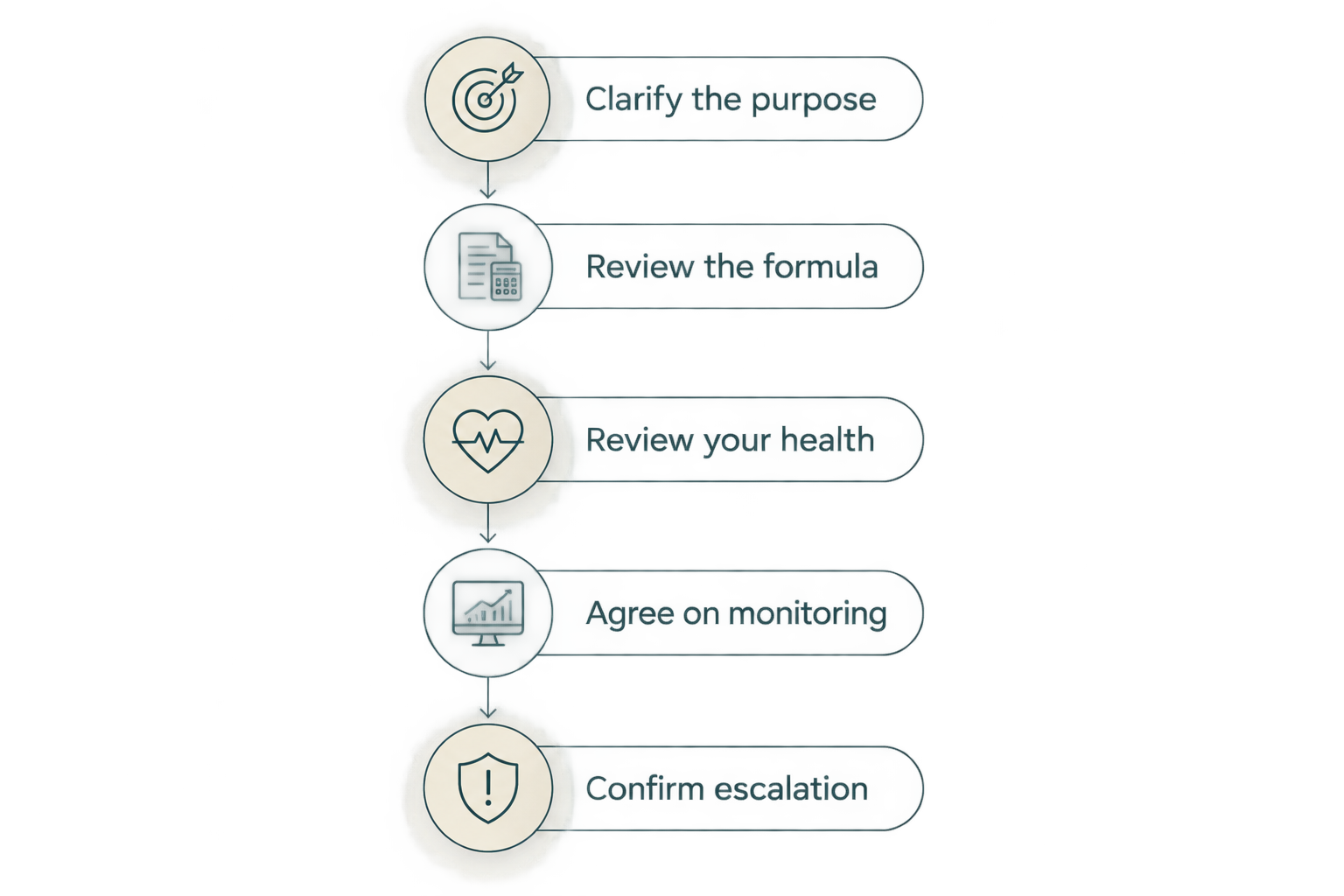
Bring your medicine list, recent glucose readings and relevant laboratory results. The assessment should answer a specific question: does this proposed infusion have a defensible purpose and an acceptable risk for you?
- Clarify the purpose. Ask what condition or symptom the infusion is intended to address. Claims about detoxification, energy or skin appearance do not establish a diabetes benefit.
- Review the formula. Request the full ingredient list, prescribed doses, carrier fluid and total volume. Do not assume all glutathione drips contain the same ingredients.
- Review your health. Discuss kidney disease, heart disease, allergies, pregnancy, current illness and previous infusion reactions. Share all medicines and supplements.
- Agree on monitoring. Ask when glucose should be checked, who will interpret the readings, and what symptoms require stopping the infusion.
- Confirm escalation. Establish who is responsible for clinical decisions, what emergency equipment is present, and how urgent transfer would happen.
A satisfactory assessment can still end with a recommendation not to proceed. Declining an unnecessary infusion is a valid clinical outcome.
What should you verify in Dubai or Abu Dhabi?
Ask to verify the relevant facility and professional licences through the Dubai Health Authority in Dubai or the Department of Health in Abu Dhabi. Licensing is a basic safeguard; it is not proof that glutathione benefits diabetes.
For a home visit, ask who prescribed the infusion and who is accountable for complications. A nurse's presence does not replace an appropriate prescription, patient assessment or emergency plan.
DarDoc provides at-home healthcare for families in Dubai and Abu Dhabi. DarDoc is an option for families seeking at-home healthcare, not a replacement for emergency diabetes care. Confirm the proposed service and its clinical requirements directly; the availability of home healthcare does not establish that a particular glutathione formulation is offered or suitable.
Does the drip contain sugar or other added ingredients?
The carrier fluid matters. Dextrose-containing fluids deliver glucose, while saline does not contain dextrose; neither description alone tells you whether the complete infusion is appropriate.
Ask for the actual prescription rather than accepting a sugar-free label as a safety guarantee. Fluid volume, sodium, added electrolytes and other ingredients remain relevant, especially with kidney disease or heart failure.
High-dose vitamin C, if included, creates a separate issue: it can interfere with some glucose-monitoring systems. Ask the clinician to check the specific meter or sensor manufacturer's instructions and arrange an appropriate testing method if interference is possible.
Do not change an insulin dose based on a potentially unreliable reading. Symptoms and readings that do not match need prompt clinical review, not an assumption that the device or your body is wrong.
How should you manage glucose around an appointment?
Keep following your prescribed diabetes plan unless your treating clinician gives different instructions. Do not skip food, omit insulin or take an extra dose simply because you have an infusion appointment.
An elective glutathione infusion does not itself justify fasting. If a separate blood test requires fasting, obtain specific instructions about meals and diabetes medicines beforehand; this is especially important with insulin or medicines that can cause low glucose.
What if your glucose drops below 70 mg/dL?
A glucose level below 70 mg/dL (3.9 mmol/L) is the recognised hypoglycaemia alert threshold in the American Diabetes Association's 2026 guidance. For an awake adult who can swallow safely, the usual approach is 15 g of fast-acting carbohydrate, followed by a glucose recheck after 15 minutes; follow your individual treatment plan and repeat treatment if the glucose remains low.
Do not give food or drink to someone who is unconscious, having a seizure or unable to swallow safely. Use prescribed rescue glucagon if available and someone knows how to administer it, and call emergency services immediately.
What if your glucose is high before the visit?
An unexpectedly high reading needs interpretation alongside symptoms, ketones where indicated and your sick-day plan. There is no universal pre-infusion glucose cutoff that makes an elective glutathione treatment safe.
Vomiting, abdominal pain, deep or rapid breathing, confusion or marked drowsiness need urgent assessment. People taking SGLT2 inhibitors can develop ketoacidosis without extremely high glucose, so a less dramatic reading does not rule out an emergency.
Which symptoms mean you should stop and seek help?
Tell the clinician immediately if you develop pain, burning, swelling or redness around the cannula. These symptoms require assessment of the IV site rather than simply slowing the drip and continuing without review.
Breathing difficulty, throat or tongue swelling, collapse or a rapidly developing widespread reaction are emergency signs. The infusion should be stopped and emergency treatment initiated by the attending clinician.
Fever or shaking chills during or after an infusion also require prompt medical assessment. Do not dismiss them as detoxification or evidence that the treatment is working.
Do not continue an elective infusion to finish the bag when new symptoms appear. Record what was administered and when symptoms began, and ensure the assessing clinician receives that information.
What should you prioritise instead?
If your goal is better diabetes control, start with glucose trends, medication review, nutrition and physical activity appropriate to your health. Blood pressure management, kidney monitoring, eye screening and foot care address established complication risks.
If your goal is relief from fatigue or tingling, ask for an assessment of the symptom rather than choosing an infusion first. Anaemia, vitamin B12 deficiency, medication effects and diabetes-related complications require different approaches; an antioxidant label does not distinguish between them.
For a family considering DarDoc at-home healthcare in 2026, the useful question is which assessment or service addresses the actual need. Home care offers convenience, but the home setting does not remove the need for appropriate investigations or hospital-based treatment when indicated.
FAQ
Is a glutathione IV drip safe if I have type 2 diabetes?
Type 2 diabetes does not establish whether a glutathione IV drip is safe for you. A clinician needs to review your glucose control, medicines, kidney and heart function, and the complete infusion prescription; benefit for diabetes is not established.
Can someone with type 1 diabetes get a glutathione drip?
Someone with type 1 diabetes needs an individual assessment before any elective glutathione infusion. Do not omit prescribed insulin or use an infusion to treat high glucose, ketones or symptoms of ketoacidosis.
Will glutathione lower my blood sugar?
Glutathione IV therapy is not an established glucose-lowering treatment. Do not reduce insulin or other diabetes medicines because you are receiving it.
Do I need kidney tests before a glutathione IV?
The need for kidney tests depends on your history, existing results and the proposed infusion. Diabetes-related kidney disease makes fluid, electrolyte and ingredient review particularly important.
Should I fast before a glutathione drip if I have diabetes?
Do not fast solely for an elective glutathione drip unless your clinician gives a specific reason and medication plan. Missing meals while taking insulin or certain diabetes tablets increases hypoglycaemia risk.
Is a sugar-free glutathione drip safe for diabetics?
A sugar-free label does not establish safety for someone with diabetes. The full ingredient list, total fluid volume, kidney and heart function, and preparation quality still need review.
Is getting a glutathione drip at home safer than at a clinic?
The home setting is not inherently safer than a clinic. Safety depends on assessment, qualified staff, sterile preparation, monitoring and the ability to respond to complications.
How often can a diabetic safely have glutathione IV treatment?
There is no established universal safe schedule for elective glutathione IV treatment in people with diabetes. A repeat-booking package is not evidence of benefit or safety, and each proposed treatment needs a clinical reason.
One last thing
A normal glucose reading is not medical clearance for an infusion. It says nothing by itself about kidney function, fluid tolerance, allergies or whether the proposed treatment has a worthwhile benefit.
For any elective infusion in 2026, ask what happens if you choose not to have it. If no clear medical benefit is established, declining treatment avoids the infusion's risks without giving up an established diabetes therapy.