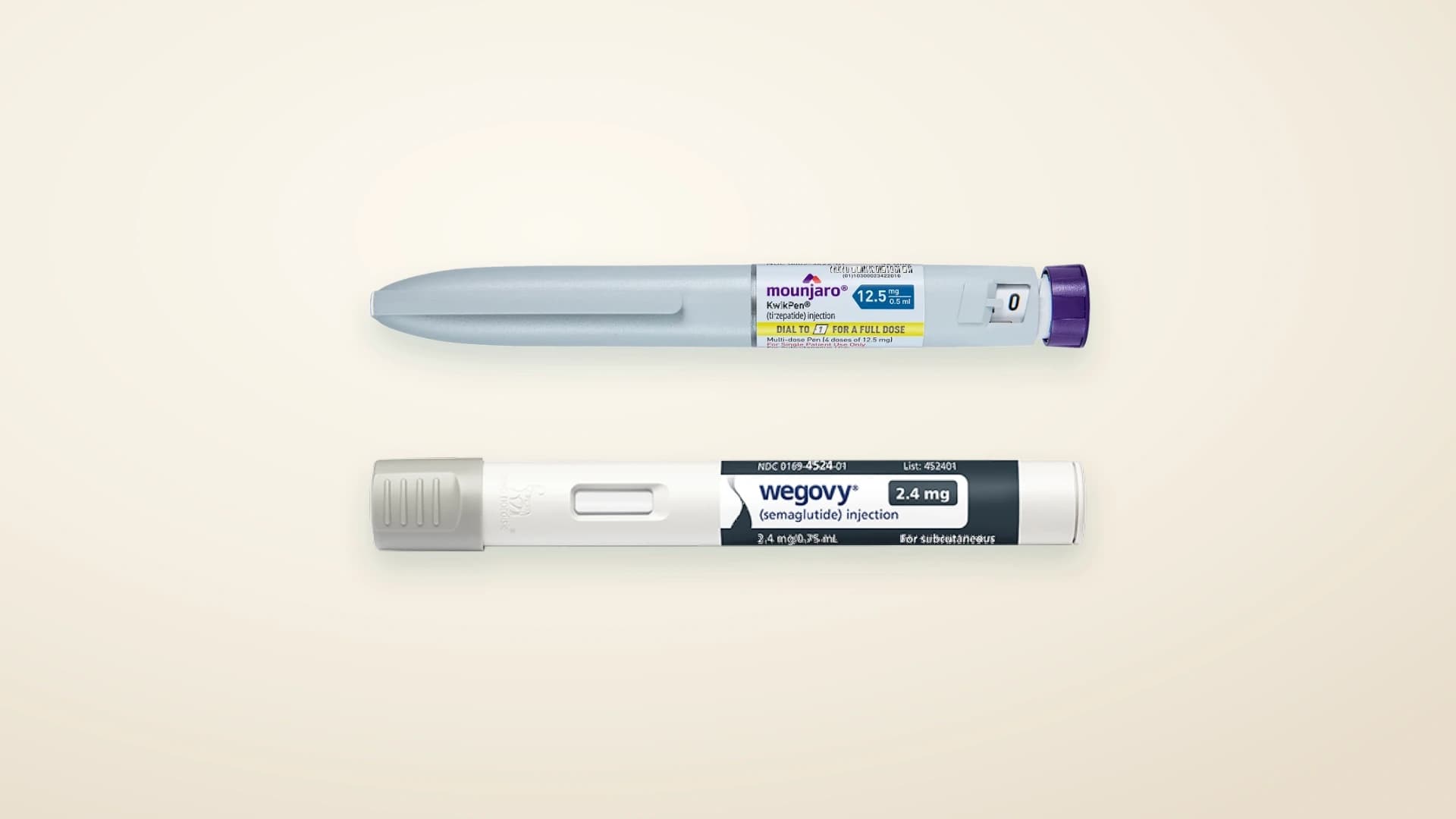
Choose DarDoc if you need planned home or online healthcare in Dubai or Abu Dhabi; choose Burjeel if you need hospital-based assessment, specialist investigation, or treatment requiring hospital facilities. This 2026 comparison separates convenience from clinical capability so you can choose the right setting, not just a familiar name.
TL;DR- For dardoc vs burjeel, choose DarDoc for planned home healthcare and Burjeel for hospital-based assessment.
- At-home nursing and hospital care solve different problems; choose the setting your condition requires.
- GLP-1 weight loss treatment needs clinical assessment and follow-up, not just medication access.
- For a medical emergency in the UAE, call 998 rather than arranging a routine home visit.
Why this matters
The right healthcare provider is the one whose care setting matches your medical need. A home visit saves you a journey, but it does not replace hospital diagnostics, surgery, or emergency treatment. A hospital offers facilities that home care cannot, but those facilities are not necessary for every planned nursing task or blood sample.
For families comparing providers in 2026, the first decision is therefore not which brand is better overall. It is whether you need Home care, Online care, or Hospital care. Start there, then compare the clinician, treatment plan, follow-up arrangements, and written charges.
Keep those decisions separate. A convenient booking process does not establish clinical suitability, and a hospital name does not tell you which department or appointment you need.
At a glance
| Dimension | DarDoc | Burjeel |
|---|---|---|
| Best for | Families seeking planned home or online healthcare in Dubai and Abu Dhabi | Patients seeking hospital-based assessment and treatment |
| Care setting | Home care and Online care | Hospital care through the relevant facility or department |
| Planned nursing | At-home nursing, including mother/newborn and elderly care | Hospital-based care when the patient needs hospital facilities |
| Specialist investigation | Home services do not replace hospital investigations | Better setting for assessment requiring hospital equipment or procedures |
| Emergency needs | Routine home services are not an emergency pathway | Hospital emergency care is the relevant setting; select an appropriate emergency department |
| Clinical safeguards | Check the assigned clinician, treatment indication, and escalation plan | Check the assigned clinician, treatment indication, and escalation plan |
| Standout feature | Bringing stated healthcare services into the home | Access to hospital-based clinical facilities |
| Pricing model | Request a written breakdown for the proposed home or online care | Request a written breakdown for the proposed hospital care |
This is a comparison of care settings, not a claim that every service is available at every location. Confirm the exact service and treating clinician before booking. For hospital care, confirm the relevant facility and department rather than relying on the group name alone.
DarDoc wins when the planned service belongs at home
DarDoc home healthcare is best for families seeking planned nursing, blood tests, or other stated home services in Dubai and Abu Dhabi. Its stated services include at-home nursing, IV drips, blood tests, GLP-1 weight loss treatment, and mother/newborn and elderly care.
The practical advantage is straightforward: you receive an appropriate service without travelling to a clinic. That matters when you are coordinating care around a newborn, supporting an older relative, or arranging a planned blood sample. The advantage is the setting, not an automatic improvement in medical outcomes.
The limitation is equally important. A home appointment cannot provide everything available in a hospital. If your clinician needs imaging, a procedure, or closer observation than the home setting supports, convenience stops being the deciding factor.
Before arranging a home service, establish:
- What clinical task the appointment will cover.
- Whether the patient is suitable for care at home.
- Who will perform the task and who is clinically responsible.
- What happens if the patient's condition changes.
For elderly care, use the elderly home care services in Abu Dhabi guide to frame your questions. Discuss the actual care needs rather than booking against a broad label such as elderly support.
Home convenience comes with a coordination responsibility
If different clinicians manage different parts of your care, make sure each has the relevant medication list, results, and treatment instructions. Do not assume a home visit automatically updates another provider's records.
Ask who receives the visit notes and who acts on abnormal findings. The service is only useful when the next clinical step is clear.
Burjeel wins when assessment needs hospital facilities
Burjeel is the better choice when your care requires a hospital setting. Hospital-based assessment is the appropriate route when a clinician needs facilities or procedures that cannot be supplied through a routine home visit.
This distinction matters more than the length of the service list. Taking a blood sample at home and investigating the cause of a serious symptom are different tasks. A sample collection can contribute to an assessment; it does not complete that assessment by itself.
Choose the relevant hospital department when your treating clinician recommends hospital investigation or treatment. Explain why you are booking, bring relevant records, and confirm whether the appointment includes the assessment you need or starts a referral process.
The tradeoff is travel and coordination. You need to attend the correct location and understand which appointments or investigations form part of the plan. A hospital appointment does not automatically resolve an unclear referral.
For a 2026 booking, ask 3 questions:
- Which department? Confirm the specialty that matches the reason for referral.
- Which records? Ask what previous results, medication details, or referral documents to bring.
- Which next step? Establish who explains the findings and arranges follow-up.
Do not book a hospital visit solely because it sounds more thorough. Book it because the clinical question requires that setting.
Home care wins on location; hospital care wins on facilities
These are genuine advantages, but they answer different questions. Home care asks whether an appropriate service can come to you. Hospital care asks whether you need to go somewhere with the necessary clinical facilities.
Online care adds another setting. It can support a clinical conversation, but it cannot physically examine you or perform a procedure. A clinician must decide whether an online assessment is sufficient or whether you need an in-person appointment.
The useful comparison is therefore not digital versus traditional healthcare. It is the task against the setting:
- Home care: planned hands-on services when clinically appropriate.
- Online care: clinical discussion and review when remote assessment is appropriate.
- Hospital care: assessment or treatment requiring hospital facilities.
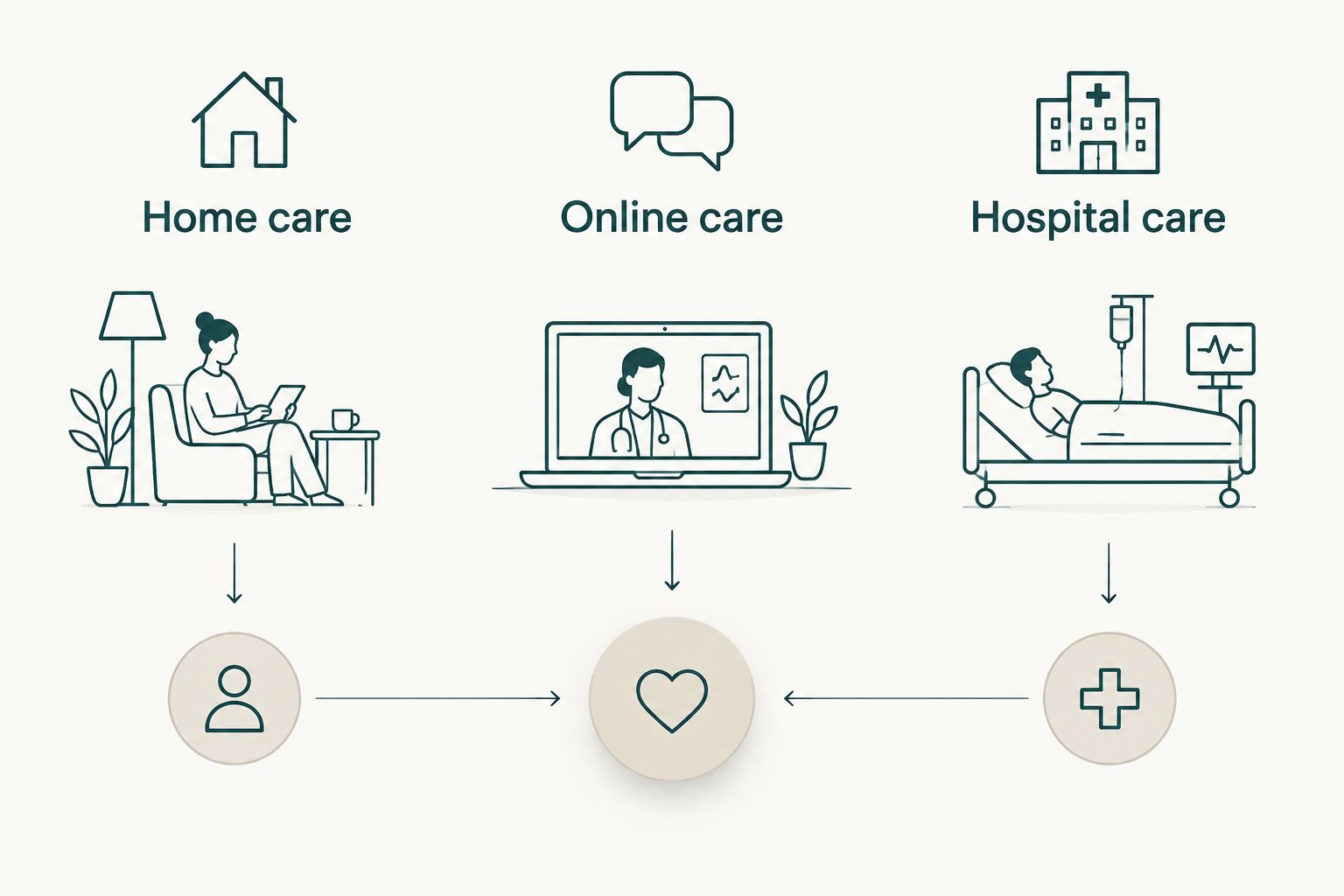
You can use more than one setting within the same treatment plan. A hospital clinician can recommend follow-up tasks outside the hospital when appropriate. What matters is clear responsibility between appointments, not choosing one provider for every possible need.
Hospital emergency care wins when symptoms are urgent
Neither a routine home booking nor an ordinary outpatient appointment is an emergency response. In the UAE, call 998 for an ambulance when you need emergency medical help.
Severe breathing difficulty, suspected stroke symptoms, or severe chest pain need urgent assessment. Do not delay emergency care while comparing providers, checking routine appointment slots, or arranging an IV drip.
Burjeel's hospital-based setting is the relevant side of this comparison when hospital emergency care is needed. Confirm the appropriate emergency department; do not assume every clinic or facility offers the same emergency services.
The limitation of planned home care is not a criticism of its intended purpose. It is a safety boundary. Home nursing, sample collection, and scheduled treatments belong in a plan for a suitable patient, not as substitutes for emergency assessment.
Once an acute problem has been assessed, ask the treating team which follow-up tasks can safely happen at home. The correct setting can change as your condition changes.
Neither provider wins clinical safety by name alone
Clinical safety is a tie until you assess the actual clinician and care plan. A comparison page cannot establish that one provider delivers better outcomes across unrelated services.
For either provider in 2026, check 4 safeguards:
- Clinician identity: know who will assess you or carry out the treatment.
- Licence verification: confirm the relevant professional licence through the appropriate UAE regulator.
- Treatment rationale: understand the indication, expected benefit, alternatives, and risks.
- Escalation plan: know whom to contact and when to seek urgent care.
For Dubai, check the relevant DHA licensing information; for Abu Dhabi, check the relevant DoH information. Treat licensing as something to verify for the actual professional and service, not something established by reassuring language on a comparison page.
This matters particularly for IV drips and weight-loss medication. The availability of a treatment does not establish that you need it. Ask the clinician to explain why it fits your circumstances and how they will monitor it.
For GLP-1 treatment, discuss your medical history, current medicines, treatment suitability, side effects, and follow-up. Medication access is one part of care, not the whole service.
Results need a named clinical owner
Before a blood test, ask who will interpret the result. Before starting medication, ask who will review progress and adverse effects. Before arranging nursing, ask who approves changes to the care instructions.
A named contact and a clear follow-up plan are useful comparison criteria. A long menu of services is not a substitute for either.
Pricing is a tie until you compare the same care plan
There is no defensible price winner without comparable written quotations. Compare the complete clinical task, not an isolated appointment charge. A home blood sample, a consultation, and a hospital investigation are not interchangeable purchases.
For home or online care, ask whether the quotation separates the consultation, nursing visit, tests, treatment, and follow-up. For hospital care, ask the same questions about the consultation, investigations, procedures, and subsequent review. These are quotation questions, not assertions about either provider's billing policy.
The payment model also needs confirmation. Establish whether the proposed service is self-pay, eligible for insurance, or subject to prior approval. Do not assume coverage from the provider's name or from a previous appointment.
The tradeoff is predictability versus flexibility. A clearly defined quotation makes a planned task easier to budget for. An assessment that identifies further clinical needs can change the treatment plan, so ask how additional items will be explained and authorised.
For a fair 2026 comparison, give both providers the same brief:
- The reason you need care.
- The task or assessment your clinician has recommended.
- The relevant medical records and current medicines.
- The follow-up you expect the quotation to cover.
Ask for the inclusions and exclusions in writing. A lower initial charge does not establish a lower total cost, and a higher charge does not establish better care.
Final verdict: choose the setting your condition needs
Choose DarDoc if you are coordinating planned care at home
DarDoc wins for the family coordinator who needs an appropriate home healthcare service in Dubai or Abu Dhabi. Its stated nursing, blood testing, mother/newborn care, and elderly care services match that scenario.
Choose it when the required task belongs at home and the clinical assessment supports that setting. Before booking, confirm the clinician, scope of the visit, follow-up responsibility, and escalation arrangements.
Choose Burjeel if your care requires hospital-based assessment
Burjeel wins for the patient whose symptoms, referral, or treatment plan require hospital facilities. Choose the relevant department rather than treating a hospital group as a single interchangeable appointment.
Confirm what the visit will address and what records to bring. If the situation is an emergency, use the emergency pathway instead of a routine booking.
One-glance scorecard
| Dimension | Winner |
|---|---|
| Best for planned home services | Home-care option |
| Location convenience | Home-care option |
| Planned nursing without hospital needs | Home-care option, after suitability assessment |
| Specialist investigation requiring hospital facilities | Burjeel |
| Emergency assessment | Appropriate hospital emergency department |
| Clinical safeguards | Tie: verify the actual clinician and plan |
| Standout feature | Home convenience versus hospital facilities |
| Pricing model | Tie: compare matched written quotations |
FAQ
Is DarDoc better than Burjeel in 2026?
DarDoc is better suited to planned home or online healthcare in Dubai and Abu Dhabi; Burjeel is better suited to care requiring hospital facilities. Choose according to the clinical task, not a blanket ranking.
Which is better for elderly care at home?
The home-care option is the closer match when an older person needs planned nursing or support at home. Confirm the specific care tasks, clinician responsibilities, and escalation arrangements before booking.
Can a home blood test replace a hospital consultation?
No, a home blood test collects information but does not replace a consultation when assessment is needed. Arrange a named clinician to interpret the result and explain the next step.
Should I choose home care for chest pain or breathing difficulty?
Do not use a routine home booking for severe chest pain or severe breathing difficulty. Seek emergency medical help; the UAE ambulance number is 998.
Which provider should I choose for GLP-1 weight loss treatment?
Choose a service that provides clinical assessment, a prescribing decision, and follow-up appropriate to you. Home or online access does not remove the need to review medical history, side effects, and treatment response.
Which provider costs less?
A price winner requires matched written quotations for the same care plan. Compare consultations, tests, treatment, follow-up, and any insurance requirements rather than an isolated appointment charge.
How do I check the clinician's credentials?
Verify the actual professional's relevant licence through the appropriate UAE regulator. Use DHA information for Dubai and DoH information for Abu Dhabi, and confirm the professional's role in your care.
One last thing
Before your next appointment in 2026, ask: Who acts on the result? That question exposes a gap that a service list cannot answer. Sample collection, a nursing visit, or a prescription is not the end of care when a finding needs review.
Write down the responsible clinician and the next action before the appointment ends. Clear ownership matters whichever provider you choose.