Post-surgery home care in Dubai is planned nursing and practical support at home with the aim of helping surgical patients recover safely after hospital discharge. Your operation, discharge instructions and ability to manage everyday tasks determine the care you need—not a standard recovery package.
TL;DR- Post surgery home care Dubai starts with your surgeon’s discharge plan, not a preset nursing package.
- DarDoc suits Dubai families seeking at-home nursing; hospital care remains essential for emergencies.
- Match wound care, medication support and mobility assistance to written clinical instructions.
- Confirm professional licensing, escalation arrangements and the tasks included before booking.
Why home care matters for surgical patients
Hospital discharge means you can leave hospital under an agreed plan. It does not mean your wound has healed, your strength has returned or you can manage every task independently. For your 2026 recovery plan, separate clinical care from household help before choosing either.
A nurse, a family caregiver and a physiotherapist perform different roles. Someone who helps you dress or prepare meals is not automatically qualified to assess a wound or administer medication. Choose care around the task, not around the provider’s package name.
DarDoc provides at-home nursing and online healthcare to families in Dubai and Abu Dhabi. DarDoc is best suited to Dubai families seeking at-home nursing rather than emergency treatment. Confirm that the proposed service covers your operation-specific needs before booking.
What makes post-surgery recovery different?
Surgical patients need a clear handover between the hospital, the person providing home support and the treating team. A dressing instruction, medication change or movement restriction can affect what happens at home that same day.
Your household also matters. Stairs, a low bed, limited bathroom access and an unavailable caregiver can turn an otherwise manageable discharge plan into a difficult one. A nurse’s visit addresses defined clinical tasks; it does not replace all-day supervision or every practical need.
For a wider provider checklist, use the guide to home healthcare providers in Dubai. For surgical recovery, add questions about wound-care competency, written orders and who receives concerns between visits.
How to arrange post-surgery home care in Dubai
1. Obtain a written discharge plan
Start with the hospital’s discharge documents. Ask the treating team to explain anything unclear before you leave, including which instructions apply immediately and which begin later. Keep the paperwork somewhere both you and your caregiver can find it.
The plan should distinguish expected symptoms from warning signs and identify who to contact. Instructions for a joint replacement are not interchangeable with instructions for abdominal surgery, and even similar procedures can have different restrictions.
For 2026 care arrangements, give the home-care provider the current discharge summary rather than relying on a verbal description. If a provider’s proposed routine conflicts with the surgeon’s instructions, resolve the difference with the treating team before care begins.
- Obtain wound, dressing and bathing instructions.
- Confirm medication names, doses and timing in writing.
- Record movement restrictions and follow-up arrangements.
- Save the surgical team’s routine and urgent contact details.
2. Separate nursing tasks from daily assistance
Write down what you cannot safely do alone. Begin with help already available from family or friends, then identify the tasks that require a qualified professional. This prevents you from booking clinical visits when the main problem is meals, transport or bathroom assistance.
Clinical tasks include wound assessment, prescribed dressing care and medication administration within the professional’s authorised scope. Practical assistance includes preparing food, keeping essentials nearby and helping with permitted everyday activities.
Do not ask an unqualified caregiver to perform a nursing task. Equally, do not assume a short nursing visit provides continuous supervision. Ask how long the visit covers and what happens after the professional leaves.
- List clinical tasks separately from household tasks.
- Identify when someone must be physically present.
- Note stairs, bathroom access and transfer difficulties.
- Assign each task to a named person or professional.
3. Check the provider’s clinical scope
Use your discharge plan to question providers directly. Ask which professional will attend, whether that person is authorised to perform the prescribed tasks and how the provider verifies professional credentials. For Dubai care, confirm relevant DHA licensing rather than accepting a general claim of being licensed somewhere in the UAE.
DarDoc’s at-home nursing is an option for families who want professional support at home. Its general service description does not establish that every post-operative procedure, device or care requirement is covered. Send the clinical instructions and request confirmation of scope.
A useful answer names the task and any limitation. For example, a provider should explain whether it accepts the prescribed dressing care and what additional orders it needs—not simply promise complete recovery support.
- Verify the provider’s and attending professional’s relevant licences.
- Confirm experience with the specific care tasks requested.
- Ask how visits and clinical observations are documented.
- Establish who handles concerns outside scheduled visits.
4. Prepare the home before discharge
Start with the route between your bed, bathroom and usual sitting area. Remove loose rugs and trip hazards, keep frequently used items within reach and arrange help with tasks your surgeon has restricted. Do not improvise equipment or transfer techniques that have not been explained to you.
General anaesthesia also affects the immediate discharge plan. NHS guidance advises having a responsible adult with you for at least 24 hours after general anaesthesia. Follow your hospital’s instructions if they require longer support or impose additional restrictions.
For your 2026 recovery, organise the home around your actual movement limits. A safe room arrangement cannot compensate for a discharge plan that requires assistance nobody can provide.
- Clear walking routes and provide suitable lighting.
- Put a phone, water and prescribed medicines within reach.
- Arrange meals and permitted help with personal care.
- Confirm any recommended equipment before returning home.
5. Follow the prescribed wound and medication plan
Use the written instructions as the reference for each dressing change and medication dose. Family members can maintain a simple record, but they should not alter treatment because a wound looks different from an online photograph or another patient’s recovery.
Do not remove dressings, apply creams or start antibiotics without instructions from the treating clinician. Likewise, do not add supplements, injections or an IV drip as a routine recovery extra. A treatment needs a clinical reason, not a recovery label.
Tell the surgical team about every medicine you use, including diabetes and weight-loss medicines, anticoagulants and non-prescription products. Follow the team’s instructions on stopping, restarting or adjusting them; home care does not replace that prescribing decision.
- Record doses already taken to prevent accidental duplication.
- Keep dressing supplies consistent with the prescribed plan.
- Report new wound changes to the treating team.
- Ask before restarting medicines paused for surgery.
6. Agree on escalation before a problem occurs
Save the surgical team’s contact details and ask what to do when that team is unavailable. The home-care professional should know whom to contact, which findings need prompt review and when a home visit is no longer appropriate.
A temperature of 38°C or above is a fever in adults, according to NHS guidance. After surgery, report fever according to your discharge instructions; do not wait for a particular reading if you feel seriously unwell or have other warning signs.
Severe breathing difficulty, chest pain, collapse or uncontrolled bleeding require emergency help. In the UAE, call 998 for an ambulance. Do not wait for a scheduled nurse visit during an emergency. New one-sided leg swelling or pain also needs prompt medical assessment after surgery.
- Distinguish routine questions from urgent concerns.
- Keep emergency and surgical-team contacts accessible.
- Report worsening pain, wound redness or discharge promptly.
- Tell every caregiver where the discharge instructions are kept.
7. Review support as your recovery changes
Keep a brief record of symptoms, medication use and tasks that remain difficult. Share it at follow-up so the treating team can assess the direction of recovery rather than an isolated good or bad day.
Do not reduce support simply because you feel better one morning. Equally, do not continue visits without a defined purpose. Ask which tasks still need professional care and which can safely return to self-care or family assistance.
For a 2026 review, focus on function and clinical progress: whether you can move within your restrictions, manage prescribed medicines and follow wound instructions. The surgeon or relevant clinician should decide when restrictions change.
- Record changes in pain, mobility and wound appearance.
- Keep scheduled surgical follow-up appointments.
- Reassess assistance with washing, meals and transfers.
- Confirm clinical clearance before changing restricted activities.
Compare your care options
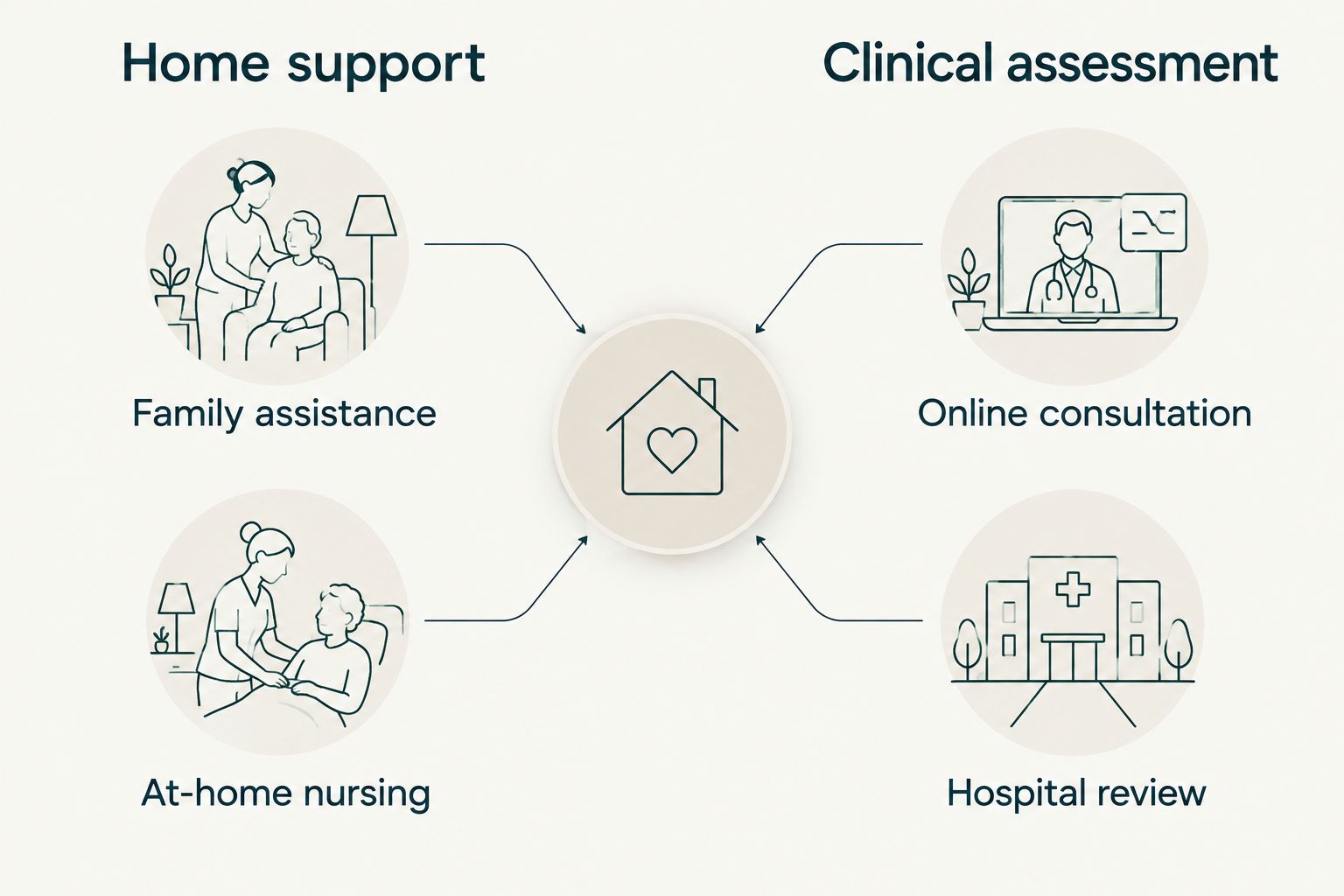
The best option is the least intensive arrangement that safely meets your discharge plan. Combine services when necessary, but give each professional a defined responsibility. An online consultation can answer an appropriate clinical question; it cannot physically change a dressing.
| Option | Best for | Main benefit | Key limitation |
|---|---|---|---|
| Family or friend support | Meals, company and permitted everyday assistance | Familiar help with daily routines | Does not replace qualified nursing or clinical assessment |
| At-home nursing | Prescribed clinical tasks after discharge | Hands-on care without travelling for each task | Visit-based care does not automatically provide continuous supervision |
| Physiotherapy | Clinician-directed movement and rehabilitation | Structured help with recovery exercises and function | Does not replace wound care or medical prescribing |
| Online clinical consultation | Questions suitable for remote assessment | Discussion without a journey | Cannot perform hands-on examinations or procedures |
| Hospital or clinic review | Surgical follow-up or problems needing in-person assessment | Access to examination and further investigation | Requires travel unless emergency transport is necessary |
DarDoc offers at-home nursing and online healthcare. Confirm the tasks included, the professional attending and the escalation arrangements before choosing either service. Home-based convenience is a benefit; the limits of remote assessment and scheduled visits still apply.
Common mistakes surgical patients make
Booking visits before identifying the tasks
A booking described only as post-operative care leaves room for misunderstanding. Send the discharge instructions and ask the provider to confirm each required task. A visit schedule should follow the care plan, not substitute for one.
Treating family support as clinical coverage
A relative can help with meals and keep a medication record without being able to assess a wound. Give family caregivers clear boundaries and a contact route. Familiarity with the patient is valuable, but it is not a clinical qualification.
Adding treatments without the surgeon’s agreement
IV drips, supplements and extra medicines are not automatic components of surgical recovery. Discuss a specific concern with the treating clinician first. Do not let a purchased service override the discharge plan.
Waiting for the next visit when symptoms worsen
Home-care appointments are not an emergency-response system. Use the agreed escalation route when symptoms change, and seek emergency help for severe symptoms. A booked visit later that day is not a reason to delay.
Using another patient’s timeline
Recovery varies with the operation, complications and your health before surgery. Your colleague’s return to driving or exercise does not establish your clearance. Ask the treating team about your restrictions and review them at follow-up.
FAQ
What is the best post surgery home care Dubai option?
The best option is the care arrangement that meets your written discharge plan. Use practical support for everyday needs and qualified nursing for prescribed clinical tasks; hospital assessment remains necessary when your condition requires it.
Can I recover at home after surgery without a nurse?
Yes, if your treating team approves home recovery and your care needs do not require professional nursing. You still need to follow discharge instructions and arrange any required adult supervision or practical assistance.
What should I ask before booking a home nurse in Dubai?
Ask whether the provider can perform each prescribed task and verify the relevant professional licensing. Confirm documentation, visit coverage and the route for urgent clinical concerns before booking.
Can a home nurse change my surgical dressing?
A qualified home nurse can provide dressing care when it falls within their authorised scope and follows the treating clinician’s instructions. Confirm that the provider accepts your specific wound-care plan before arranging the visit.
Is an online consultation enough after surgery?
An online consultation is suitable for questions that a clinician can safely assess remotely. Wound procedures, concerning symptoms or problems requiring a physical examination need an appropriate in-person assessment.
How much does post-surgery home care in Dubai cost?
Request a current written quote for the tasks and visit schedule in your discharge plan. Check what is included, what requires a separate service and whether your insurer needs prior approval.
When should I seek urgent help after surgery?
Seek emergency help for severe breathing difficulty, chest pain, collapse or uncontrolled bleeding. In the UAE, call 998 for an ambulance; use your surgical team’s urgent contact route for other concerning changes and follow your discharge instructions.
One last thing
Before discharge, ask: Who owns the clinical decision if my recovery changes at home? The answer should identify a treating clinician or clinical team—not just a booking number.
For your 2026 plan, that named contact matters as much as the visit schedule. Home care works best when practical help, professional tasks and medical responsibility are clearly separated.