Best food intolerance test providers in Dubai 2026
Food intolerance test Dubai: choose clinician-led assessment over IgG panels. Compare home blood testing, specialist care and dietary support in 2026.

Best overall: clinician-led assessment before testing. Best for home blood collection: DarDoc, where the requested test is appropriate and confirmed before booking. Best for persistent digestive symptoms: gastroenterology care. For a food intolerance test in Dubai in 2026, choose the clinical question first—not the largest panel.
TL;DR- For a food intolerance test Dubai search in 2026, choose symptom-led assessment rather than a broad IgG panel.
- DarDoc suits Dubai patients seeking home blood collection; confirm the specific test and clinical follow-up before booking.
- Gastroenterology, allergy assessment and dietitian-led care answer different questions; they are not interchangeable.
- Food-specific IgG results do not establish food intolerance or justify removing multiple foods.
Why this matters
Bloating after milk, hives after nuts and diarrhoea after meals do not point to the same diagnosis. Buying the same blood panel for all three problems ignores the distinction between intolerance, allergy and digestive disease.
The best provider is the one that explains what the result will change. A long list of foods marked red is not, by itself, a diagnosis or a treatment plan.
This 2026 guide ranks four care routes by the problem they address. It does not present an unsupported league table of Dubai clinics or treat home sample collection as proof that a particular intolerance assay is useful.
What makes the best food intolerance testing provider?
Judge a provider against these criteria before agreeing to a test:
- Clinical assessment: Someone reviews your symptoms, timing, medicines, diet and relevant medical history before recommending investigations.
- Test purpose: The provider names the suspected condition and explains whether the test can investigate it.
- Appropriate credentials: You can verify the clinician and facility through the relevant UAE health authority. For Dubai care, check the applicable DHA registration or licensing record.
- Clear interpretation: You know who will explain normal, abnormal and inconclusive results.
- Dietary safeguards: Advice avoids unnecessary restrictions and includes a plan for nutritional adequacy.
- Defined follow-up: You leave knowing what happens if symptoms continue despite a normal result.
For your 2026 shortlist, ask who performs the analysis as well as who collects the sample. A convenient appointment cannot compensate for an investigation that does not answer your clinical question.
Dubai food intolerance care routes at a glance
| Rank and option | Best for | Standout role | Key limitation |
|---|---|---|---|
| 1. DarDoc | Home blood collection | At-home blood testing within a home and online healthcare service | A specific intolerance assay and its suitability must be confirmed |
| 2. Gastroenterology care | Persistent digestive symptoms | Assessment of digestive causes and selection of investigations | Not every suspected intolerance needs a blood test |
| 3. Allergy clinic | Immediate or potentially allergic reactions | History-led assessment for food allergy | Allergy testing does not diagnose every food-related symptom |
| 4. Dietitian-led care | Structured dietary investigation | Planned dietary changes, nutritional review and reintroduction | Does not replace medical assessment of concerning symptoms |
The order reflects distinct use cases, not a claim that one service is clinically better for every patient. No named-provider ranking is justified without comparable information about the actual tests, clinicians and follow-up.
1. DarDoc: best for home blood collection
DarDoc provides at-home blood tests and home and online healthcare to families in Dubai and Abu Dhabi. That makes it a relevant option when home collection suits your circumstances and a clinician has identified a suitable blood investigation.
DarDoc is best for patients who want home blood collection rather than a clinic visit. This recommendation concerns the collection setting; it is not a claim that the company offers a particular food intolerance panel or that any such panel establishes a diagnosis.
DarDoc pros:
- Home blood collection fits patients who prefer not to travel for sampling.
- The stated service includes both home and online healthcare.
- The stated service area includes Dubai and Abu Dhabi.
DarDoc cons:
- You must confirm the exact requested investigation before booking.
- Home collection alone does not establish clinical usefulness.
- You must establish who interprets the result and arranges follow-up.
Best for: Patients with a clear blood-test request who want collection at home.
Ask for the assay name, preparation instructions, reporting process and interpretation arrangements. Do not substitute a general wellness panel for a clinician’s specific request.
Verdict: Hold until the exact investigation and follow-up are confirmed; choose home collection when both fit your care plan.
2. Gastroenterology care: best for persistent digestive symptoms
A gastroenterology assessment addresses recurring abdominal pain, bloating, altered bowel habits and related digestive symptoms. The clinician uses your history and examination to decide whether investigations are needed and which conditions to consider.
Lactose intolerance, coeliac disease and irritable bowel syndrome require different approaches. A broad food antibody report cannot sort them into reliable diagnostic categories.
Gastroenterology care pros:
- Starts with the pattern of symptoms rather than a predetermined panel.
- Can investigate conditions beyond food intolerance.
- Supports a plan when symptoms persist despite initial changes.
Gastroenterology care cons:
- Assessment does not always produce an immediate diagnosis.
- Some questions require investigations beyond a blood sample.
Best for: Patients with ongoing digestive symptoms, unclear triggers or unsuccessful self-directed dietary changes.
Discuss blood in the stool, unintentional weight loss, persistent vomiting, swallowing difficulty or symptoms that wake you at night promptly with a clinician. These signs need assessment rather than another round of food exclusions.
Verdict: Choose gastroenterology care when persistent digestive symptoms need an explanation.
3. Allergy clinic: best for immediate food reactions
An allergy assessment is the appropriate route when food causes symptoms suggestive of allergy, such as hives, swelling or wheezing. The clinician interprets any testing alongside the reaction history; a positive result alone does not always establish clinical allergy.
Food-specific IgE testing and food-specific IgG panels answer different questions. Neither should be treated as a universal explanation for symptoms after eating.
Allergy clinic pros:
- Focuses on reactions with potential allergic risk.
- Selects testing around the suspected food and reaction history.
- Supports advice about avoidance and emergency planning when indicated.
Allergy clinic cons:
- Does not replace investigation of unrelated digestive disease.
- Broad testing without a relevant history can produce misleading findings.
Best for: Patients with immediate reactions or a history that raises concern about food allergy.
Breathing difficulty, throat swelling or collapse after food is an emergency. In the UAE, call 998 for an ambulance. Do not wait for a routine appointment or attempt a food challenge at home.
Verdict: Choose allergy assessment for suspected allergic reactions; skip intolerance panels as a substitute.
4. Dietitian-led care: best for structured dietary investigation
A qualified dietitian helps connect symptoms with eating patterns while protecting nutritional intake. After appropriate medical assessment, dietary work can include a defined restriction, monitoring and planned reintroduction rather than permanent avoidance of an expanding food list.
A low-FODMAP approach is one example used in managing irritable bowel syndrome. It is not a diagnosis of food allergy and should not become an indefinite instruction to avoid every food that contains fermentable carbohydrates.
Dietitian-led care pros:
- Turns vague avoidance advice into a structured plan.
- Addresses nutritional gaps created by restrictions.
- Includes reintroduction and longer-term food choices.
Dietitian-led care cons:
- Requires participation and symptom tracking.
- Does not rule out coeliac disease, allergy or other medical conditions.
Best for: Patients who need help investigating dietary triggers after relevant medical concerns have been addressed.
Bring your usual meals, supplements and existing restrictions to the appointment. Your starting diet matters as much as the list of foods you suspect.
Verdict: Choose dietitian-led care for a supervised dietary plan; skip indefinite elimination without review.
Which tests answer which questions?
The word intolerance is often used loosely. Ask the provider to replace it with a specific clinical question before you consent.
| Suspected issue | Relevant assessment | What not to assume |
|---|---|---|
| Lactose intolerance | Symptom history; a hydrogen breath test or a supervised dietary approach when appropriate | A general food antibody panel confirms lactose malabsorption |
| Coeliac disease | Coeliac blood testing and further specialist assessment when indicated | A negative result after avoiding gluten reliably excludes coeliac disease |
| IgE-mediated food allergy | Allergy history with selected skin-prick or specific IgE testing when indicated | A positive test alone proves that eating the food causes symptoms |
| IBS-related food triggers | Clinical assessment and structured dietary management | Every trigger represents an allergy or permanent intolerance |
| Food-specific IgG findings | Not recommended as a diagnostic route for food intolerance | A higher antibody result proves a harmful reaction to that food |
The American Academy of Allergy, Asthma & Immunology advises against using food IgG panels to diagnose food sensitivity. Food-specific IgG can reflect exposure rather than disease.
NICE guidance on irritable bowel syndrome supports appropriate clinical assessment and expert dietary advice for exclusion approaches. NIDDK guidance distinguishes investigations for lactose intolerance from testing for coeliac disease. These are the clinical distinctions used in this 2026 guide—not endorsements of any Dubai provider.
Do not stop eating gluten before discussing coeliac testing with your clinician. Reducing gluten beforehand can affect the accuracy of the assessment. If you already avoid it, explain that before testing rather than restarting it without advice.
Before booking: a practical sequence
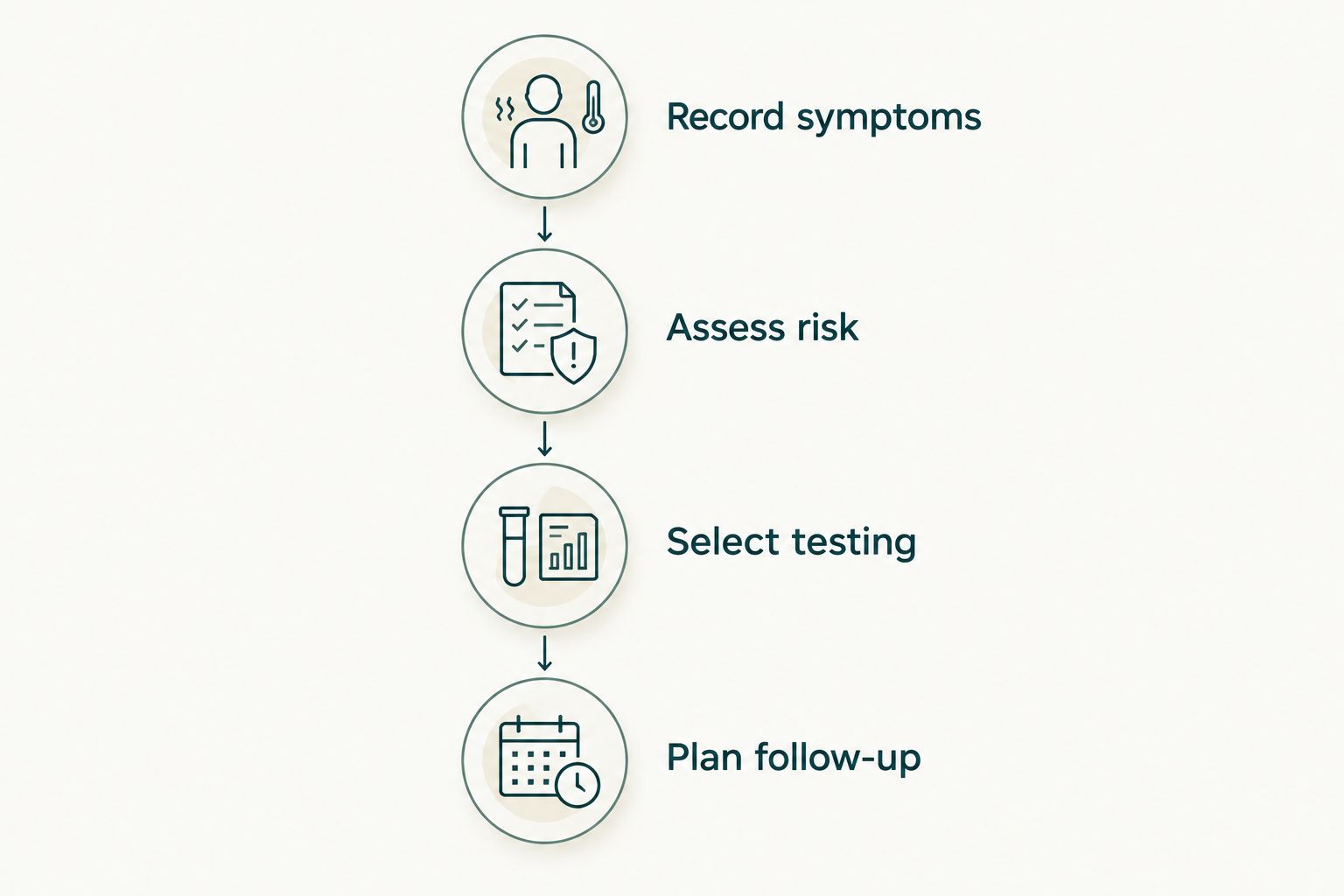
Use this sequence for a 2026 booking instead of selecting a package by the number of foods listed.
- Record symptoms. Keep a 7-day diary of meals, symptoms, timing, medicines and bowel changes. Treat it as appointment preparation, not a reason to delay urgent care.
- Assess risk. Tell the clinician about immediate reactions, concerning symptoms, existing diagnoses and current restrictions.
- Select testing. Ask what condition each proposed investigation addresses and how its result changes the next step.
- Plan follow-up. Identify who explains the report and what happens if the results do not explain your symptoms.
For blood sampling, ask whether the particular investigation requires preparation. Do not fast automatically, stop prescribed medicines or change your diet based on generic package instructions.
The blood-test-to-doctor-consultation workflow is useful background when considering how collection and medical interpretation fit together. Confirm the arrangements for your own appointment rather than assuming every test follows the same process.
How these recommendations were ranked
The ranking uses clinical fit, collection setting, interpretation and dietary safeguards. It gives each route a separate job: home sampling, digestive assessment, allergy investigation or structured dietary care.
It does not use review scores, claimed test accuracy or panel size as shortcuts. Those measures do not establish whether a proposed investigation explains your symptoms.
Which route should you choose?
If you are undecided, start with a clinician-led assessment, not an IgG panel. Choose gastroenterology care for persistent digestive symptoms, allergy assessment for suspected immediate reactions and dietitian-led support for structured dietary changes.
Choose home blood collection when an appropriate investigation has already been identified. For your 2026 decision, the useful outcome is an understandable next step—not simply a report containing more results.
FAQ
What's the best food intolerance test in Dubai?
There is no single best test for every food-related symptom. Start with clinical assessment, then select investigations for the suspected condition rather than buying a broad food IgG panel.
Are food IgG intolerance tests reliable?
Food-specific IgG tests are not recommended for diagnosing food intolerance or food allergy. The American Academy of Allergy, Asthma & Immunology explains that these antibodies can reflect food exposure rather than a harmful reaction.
Can I get food-related blood tests collected at home in Dubai?
Home blood collection is an option for some clinician-requested investigations. Confirm the exact assay, sample requirements and interpretation arrangements before booking; not every useful investigation is a blood test.
Is food intolerance the same as food allergy?
Food intolerance and food allergy are different. Allergy involves an immune response and can cause severe reactions, while intolerance commonly refers to difficulty tolerating a food or component through other mechanisms.
Should I stop gluten before a coeliac blood test?
Do not stop gluten before discussing coeliac testing with your clinician. Avoiding gluten can affect test accuracy; tell the clinician if you have already restricted it.
Does a food intolerance blood test diagnose lactose intolerance?
A broad food antibody panel does not diagnose lactose intolerance. Assessment can involve your symptom history, a hydrogen breath test or a clinician-supervised dietary approach.
What should I ask before booking a food intolerance test?
Ask which condition the test investigates and what its result will change. Also confirm preparation, clinical interpretation and the next step if the report does not explain your symptoms.
One last thing
Before agreeing to any food panel, ask one question: What will you recommend if every result is normal? A useful provider can describe the next step without promising that one report will explain everything.
If a positive result leads only to indefinite restriction and a normal result leads nowhere, choose a clearer clinical plan.