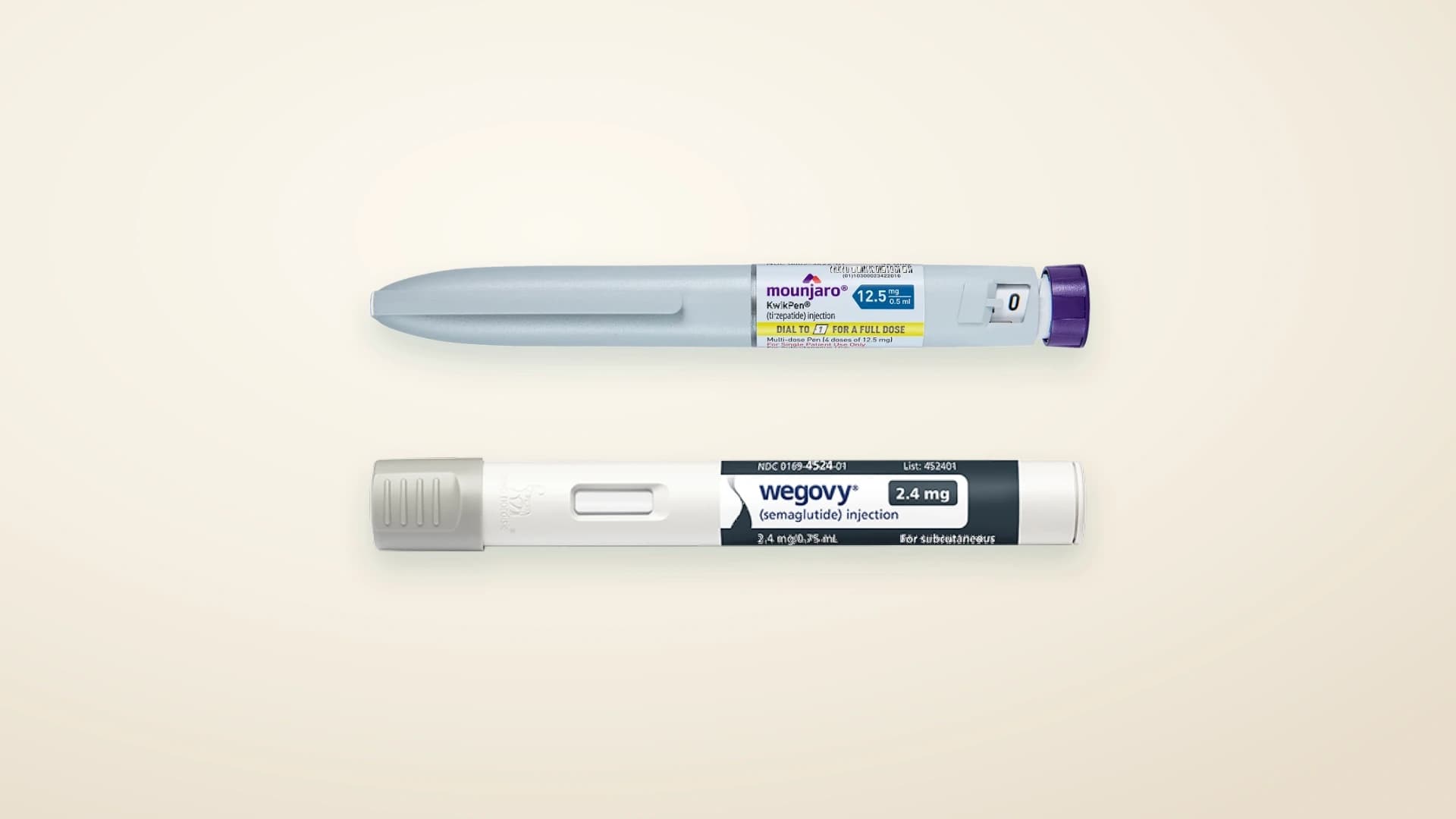
Does Mounjaro cause hair loss?
Mounjaro hair loss can involve temporary shedding during weight loss. Learn the likely triggers, recovery timeline and when to contact your prescriber.
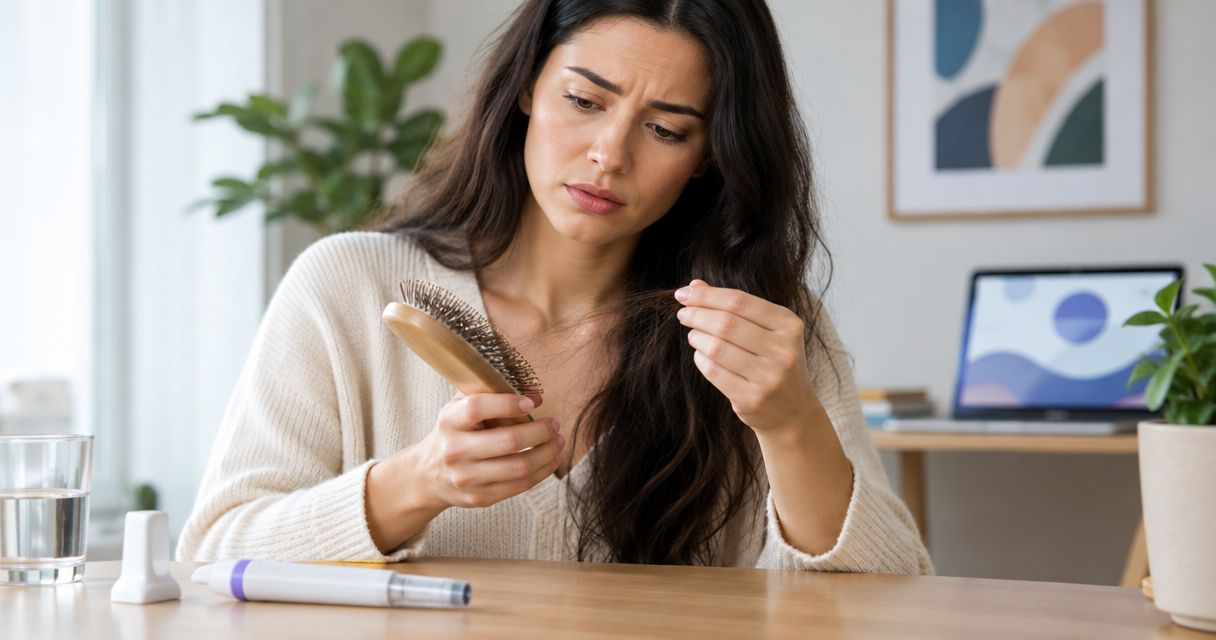
Yes, hair loss is reported during Mounjaro treatment, but shedding during weight loss does not automatically mean the medicine has damaged your hair follicles. A recognised explanation is temporary shedding after rapid weight loss or reduced food intake; patchy loss, scalp inflammation or persistent thinning needs a separate assessment.
TL;DR- Mounjaro hair loss can reflect temporary shedding associated with weight loss, rather than permanent follicle damage.
- Telogen effluvium often appears months after its trigger, so review your weight and eating history.
- Do not stop tirzepatide or change your dose without speaking to your prescriber.
- DarDoc offers GLP-1 weight-loss care; new hair loss needs assessment, not an automatic supplement or IV drip.
Why this matters
Hair in the shower is distressing, especially when treatment is otherwise helping. The useful question is not simply whether Mounjaro and hair loss occur together: it is whether you have temporary shedding, an underlying deficiency, pattern hair loss or a scalp condition.
DarDoc provides home and online healthcare, including GLP-1 weight-loss treatment and blood tests, for families in Dubai and Abu Dhabi. The right next step is a clinical review of the shedding pattern, treatment timeline and food intake—not a self-directed dose change.
Does Mounjaro cause hair loss?
Yes, hair loss has been reported with tirzepatide, the active ingredient in Mounjaro. However, a reported adverse event does not establish the mechanism in an individual patient, and hair loss during treatment has more than one possible explanation.
A recognised cause is telogen effluvium, where a physical stressor shifts more hairs into the resting phase before they shed. Significant weight loss, restrictive eating, illness and childbirth are established triggers. The British Association of Dermatologists and DermNet describe this delayed, diffuse shedding pattern in their patient information.
| Pattern you notice | Possible explanation | What to do |
|---|---|---|
| More shedding across the scalp after substantial weight loss | Telogen effluvium | Review the timeline, food intake and other recent triggers with your clinician |
| A gradually widening part or thinning at the crown | Pattern hair loss, sometimes noticed alongside shedding | Ask for a scalp assessment rather than assuming weight loss explains everything |
| Smooth, clearly defined bald patches | Alopecia areata or another localised cause | Arrange a medical assessment |
| Redness, scaling, pain or broken hairs | A scalp disorder or hair-shaft damage | Seek assessment; nutrition advice alone does not address these findings |
This table helps you describe symptoms. It does not diagnose the cause, and more than one condition can occur at the same time.
What the evidence means in 2026
An association with Mounjaro does not prove direct follicle damage. Equally, it is not accurate to dismiss every case as harmless or unrelated to treatment.
For this 2026 guide, the useful distinction is between a reported medication-associated event and a confirmed explanation for your own shedding. Your clinician needs your history and scalp findings to make that distinction; a photograph of hair in a brush cannot establish it.
When does shedding start, and how long does it last?
Telogen effluvium commonly becomes noticeable 2–4 months after a trigger, according to DermNet. That delay explains why shedding can seem disconnected from an earlier period of rapid weight loss, illness or restricted eating.
Recovery also takes time. DermNet describes shedding gradually returning towards normal over 6–9 months in many cases, while the American Academy of Dermatology explains that normal fullness often returns within 6–9 months after excessive shedding stops and the body readjusts.
Those intervals describe a recognised hair-cycle pattern, not a personal deadline. Ongoing triggers, nutritional deficiencies or a second hair condition can extend the problem.
Does shedding begin immediately after an injection?
2–4 months after a trigger is a typical telogen-effluvium timeline, not immediately after an injection. Sudden shedding noticed on injection day does not, by timing alone, prove that dose caused it.
Will my hair grow back after Mounjaro-related shedding?
6–9 months is a commonly described recovery interval for temporary shedding once the trigger resolves, although visible fullness takes time. Regrowth is not guaranteed when the diagnosis is different or an ongoing cause remains untreated.
Should I wait six months before asking for help?
6–9 months is a recovery reference, not a waiting period before assessment. Contact your clinician when shedding is substantial, worrying or accompanied by scalp symptoms, dietary restriction or other changes in your health.
Why hair loss during Mounjaro treatment varies
Several factors change the explanation and the appropriate response. Your clinician should consider:
- Weight-loss pace: Significant or rapid weight loss is a recognised trigger for telogen effluvium.
- Food intake: Appetite reduction can make it harder to eat enough energy and protein, particularly when nausea limits meals.
- Nutritional deficiencies: Iron deficiency and other documented deficiencies belong in the assessment when your history supports them.
- Other recent triggers: Fever, surgery, childbirth or major illness can precede shedding independently of medication.
- Underlying hair conditions: Pattern hair loss or inflammatory scalp disease can coexist with temporary shedding.
- Other medicines and medical conditions: A medication review and assessment for conditions such as thyroid disease help avoid a premature diagnosis.
The practical consequence is straightforward: two people taking the same medicine can need different investigations and treatment. Increasing supplements without identifying the cause does not resolve that difference.
What should you do if your hair starts shedding?
Start by informing the clinician who prescribes your Mounjaro. Do not stop treatment, reduce the dose or delay injections on your own, especially if the medicine is part of your diabetes management.
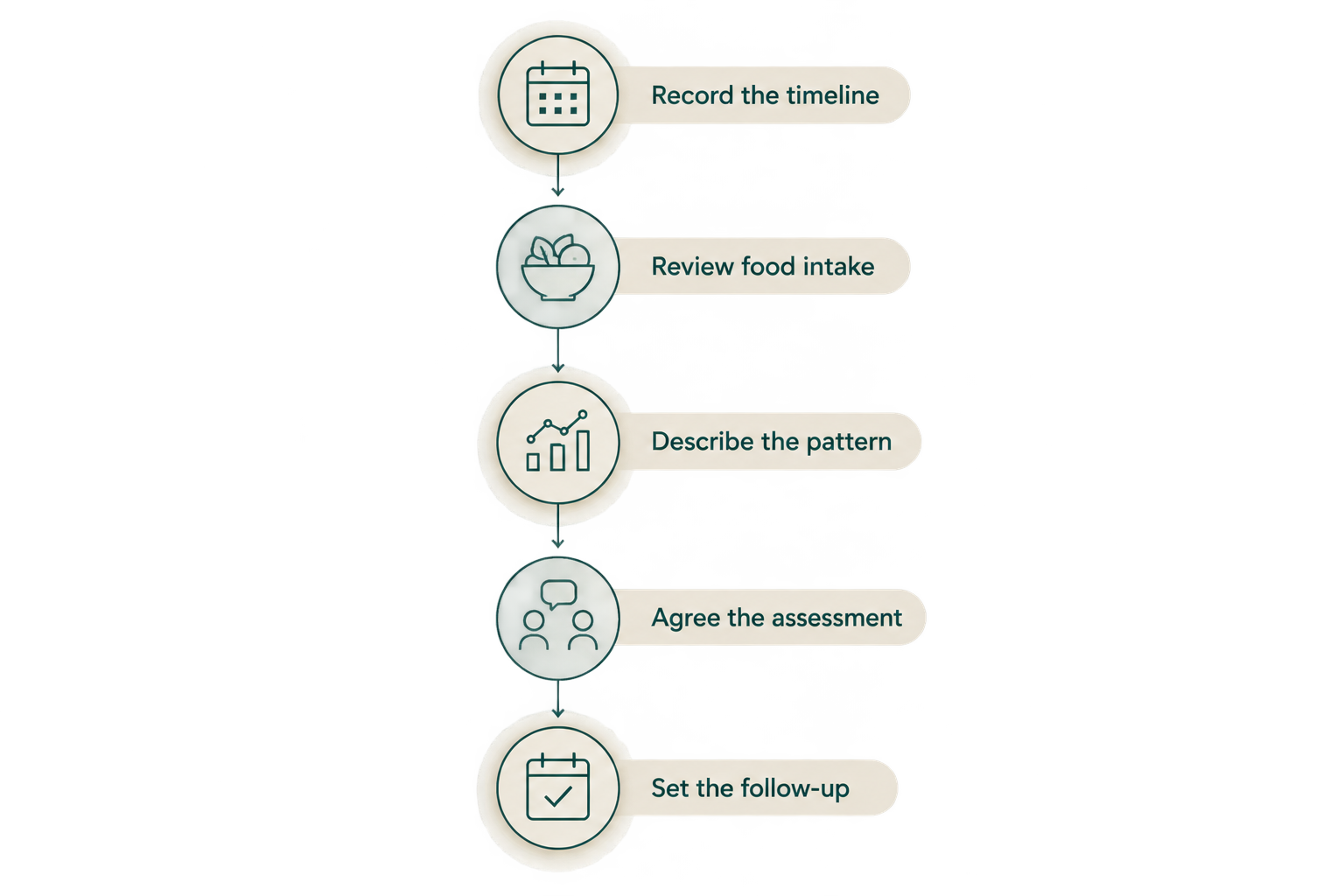
Your 2026 appointment checklist
- Record the timeline. Note when you started treatment, when doses changed, when shedding began and when weight loss accelerated. Include recent illness, surgery or childbirth.
- Review food intake. Describe what you actually eat, including days affected by nausea, vomiting or very low appetite. Mention dietary exclusions and any difficulty meeting regular meals.
- Describe the pattern. Explain whether shedding is widespread, the part is widening or distinct patches have appeared. Mention scalp pain, itching, redness and scaling.
- Agree the assessment. Ask whether you need a scalp examination, targeted blood tests, a dietitian review or a dermatologist referral. Testing should answer a clinical question.
- Set the follow-up. Agree how to track symptoms, when to reassess and which changes require earlier contact. Leave with a plan for both the medication and the hair complaint.
You do not need to arrive with a diagnosis. A clear account of what changed is more useful than a long list of supplements you have started trying.
For the wider treatment process, read the GLP-1 consultation and weight-loss tracking workflow. Hair symptoms belong in that follow-up conversation alongside appetite, side effects and treatment goals.
Which tests or treatments are useful?
There is no universal blood panel or hair treatment for everyone who sheds during Mounjaro treatment. Your history and examination determine whether testing is useful and what it should investigate.
A clinician might consider a full blood count, ferritin or thyroid testing when symptoms and risk factors support them. A normal blood result does not exclude every cause of hair loss, particularly a scalp disorder.
| Approach | Best for | Benefit | Limitation |
|---|---|---|---|
| Nutrition review | Reduced intake, restricted diets or difficulty eating during treatment | Identifies practical gaps and supports an adequate diet | Does not diagnose inflammatory or autoimmune scalp disease |
| Targeted blood tests | Suspected deficiency, anaemia or thyroid disease | Investigates specific, treatable explanations | An indiscriminate panel can produce findings unrelated to shedding |
| Dermatology assessment | Patchy loss, scalp symptoms, progressive thinning or diagnostic uncertainty | Distinguishes hair and scalp conditions that need different treatment | An in-person scalp examination may be needed |
DarDoc GLP-1 weight-loss care is best suited to UAE patients seeking home or online treatment support. Its home and online setting does not replace an in-person scalp examination when that is clinically needed.
During a 2026 consultation, ask what each proposed test would change. The aim is to identify a cause, not to collect the largest possible set of results.
Should you take biotin, iron or a hair supplement?
Do not assume a hair supplement treats Mounjaro-associated shedding. Supplementation makes sense when a clinician identifies a deficiency or another specific indication; it is not a substitute for eating enough or assessing the scalp.
Biotin deficiency is uncommon, and the American Academy of Dermatology advises caution about hair supplements without a demonstrated deficiency. Biotin can also interfere with certain laboratory tests, a risk highlighted by the US Food and Drug Administration.
Tell your clinician and laboratory about supplements before blood testing. Do not start iron simply because you are shedding: excessive iron can be harmful, and treatment should follow an appropriate assessment.
An IV drip is not an established default treatment for telogen effluvium. A hydration or vitamin service should not replace investigation of persistent hair loss.
Should you stop Mounjaro or change your dose?
Hair shedding alone does not determine whether you should stop Mounjaro. Your prescriber needs to balance the severity of the symptoms, nutritional intake, treatment response and the reason you take the medicine.
If you are struggling to eat or keep fluids down, contact the prescribing team promptly rather than waiting for a routine hair review. Severe or persistent vomiting, marked weakness or signs of dehydration need medical attention.
A switch to another weight-loss medicine does not guarantee that shedding will stop. If weight loss or inadequate intake is the trigger, the same issue can persist without a plan to address it.
When does hair loss need earlier assessment?
Arrange earlier assessment for distinct bald patches, scalp pain, redness, scaling, sores or rapidly progressing loss. These findings do not fit a simple assumption of uncomplicated telogen effluvium.
Also mention fatigue, feeling unusually cold, heavy menstrual bleeding or major dietary restriction. These details help your clinician decide whether anaemia, thyroid disease or inadequate nutrition needs investigation.
Bring photographs showing the part and hairline under similar lighting. Repeatedly counting every shed hair is less useful than documenting a consistent change and describing accompanying symptoms.
FAQ
Is Mounjaro hair loss permanent?
Mounjaro-associated shedding is not automatically permanent. Temporary telogen effluvium generally improves after its trigger resolves, but persistent or progressive loss needs assessment for other causes.
Can Mounjaro cause hair loss even if I eat well?
Yes, adequate eating does not rule out shedding during Mounjaro treatment. Weight loss, recent illness, thyroid disease or an underlying hair condition can still be relevant.
How long after starting Mounjaro can hair shedding appear?
Telogen effluvium commonly appears 2–4 months after a trigger. The relevant trigger could be weight loss, reduced intake or illness rather than the first injection itself.
Should I stop Mounjaro immediately if my hair falls out?
Do not stop Mounjaro or change the dose without speaking to your prescriber. Report the shedding and any difficulty eating so the clinician can review treatment safely.
What is the best supplement for Mounjaro hair loss in 2026?
There is no universal best supplement for Mounjaro hair loss in 2026. Use supplements for an identified need rather than assuming biotin or iron will treat every cause.
Can DarDoc help with Mounjaro treatment and blood tests?
DarDoc provides GLP-1 weight-loss treatment and at-home blood tests in Dubai and Abu Dhabi. Hair loss still needs an individual assessment to decide whether blood tests or an in-person scalp examination are appropriate.
Can I prevent hair shedding by losing weight more slowly?
Avoiding overly restrictive eating and discussing rapid weight loss with your prescriber addresses recognised triggers, but it does not guarantee prevention. Hair loss has several possible causes, so report new shedding rather than managing it through weight targets alone.
One last thing
The most useful date is not always the day you first noticed hair in the shower. Because shedding can lag behind its trigger, bring your earlier weight, appetite and illness history to the appointment.
Treat the cause of shedding, not just the date it appeared. That is more useful than blaming the latest injection or starting an unneeded supplement.