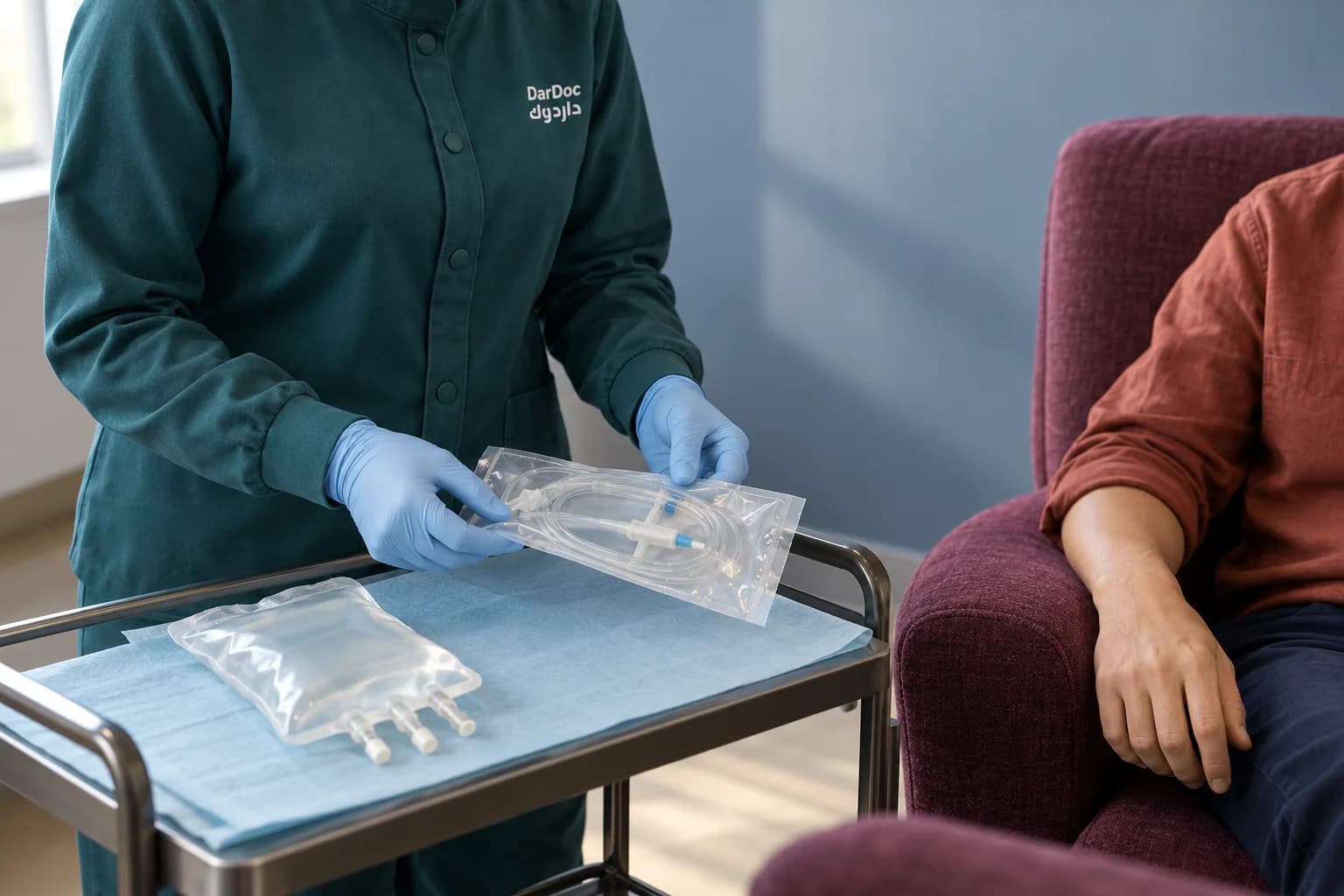
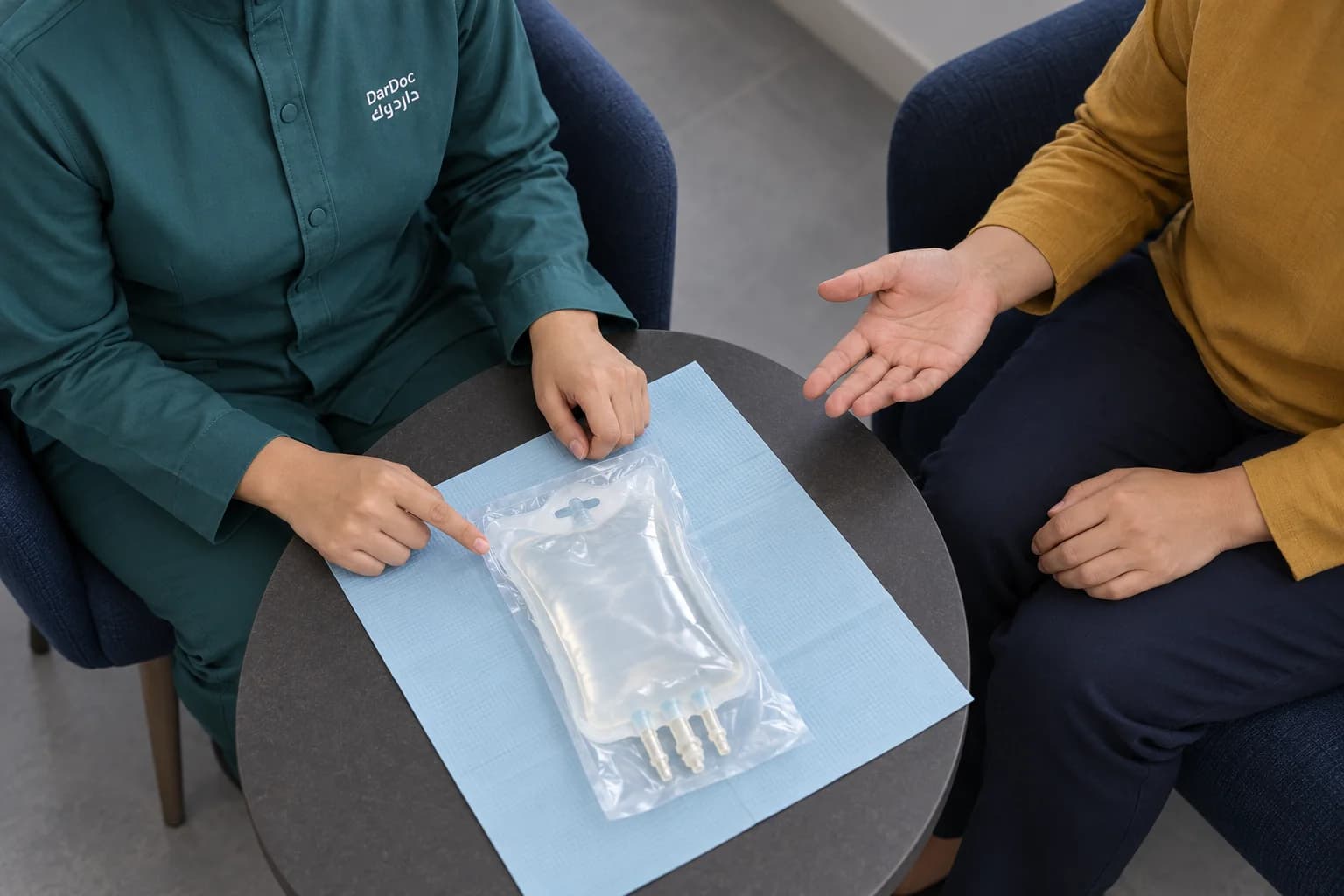
How do you book an at-home IV drip for a group event in Dubai?
Learn how to book an at-home IV drip for a group event in Dubai: check licensing, arrange private screening, and confirm staffing before paying.

To book an at-home IV drip for a group event in Dubai, contact a home healthcare provider with your event details, request individual clinical screening, and confirm staffing, venue suitability and written terms before paying. A group reservation does not make every guest eligible for an infusion, and treatment should proceed only when the clinician considers it appropriate.
TL;DR- How to book an at-home IV drip for a group event: arrange individual screening before confirming treatment.
- DarDoc provides at-home IV drips in Dubai; confirm group-event arrangements directly before making plans.
- Verify Dubai Health Authority licensing, clinical oversight, venue suitability and the response plan for complications.
- Keep medical histories private, participation voluntary and clinical decisions separate from the event schedule.
Why this matters
An IV drip involves a needle entering a vein and fluid or medication entering the bloodstream. Infection, vein irritation, allergic reactions and fluid overload are recognised risks; an event setting does not remove them.
Book clinical care, not a shared wellness activity that everyone is expected to complete. For a 2026 event, build your plan around individual assessment rather than a fixed promise that every attendee receives the same infusion.
DarDoc is a home healthcare option for families seeking at-home IV care in Dubai. You can contact DarDoc to ask whether the proposed group arrangement can be assessed and accommodated; its at-home IV service alone does not establish an event package, group capacity or booking policy.
How do you book an at-home IV drip for a group event in Dubai?
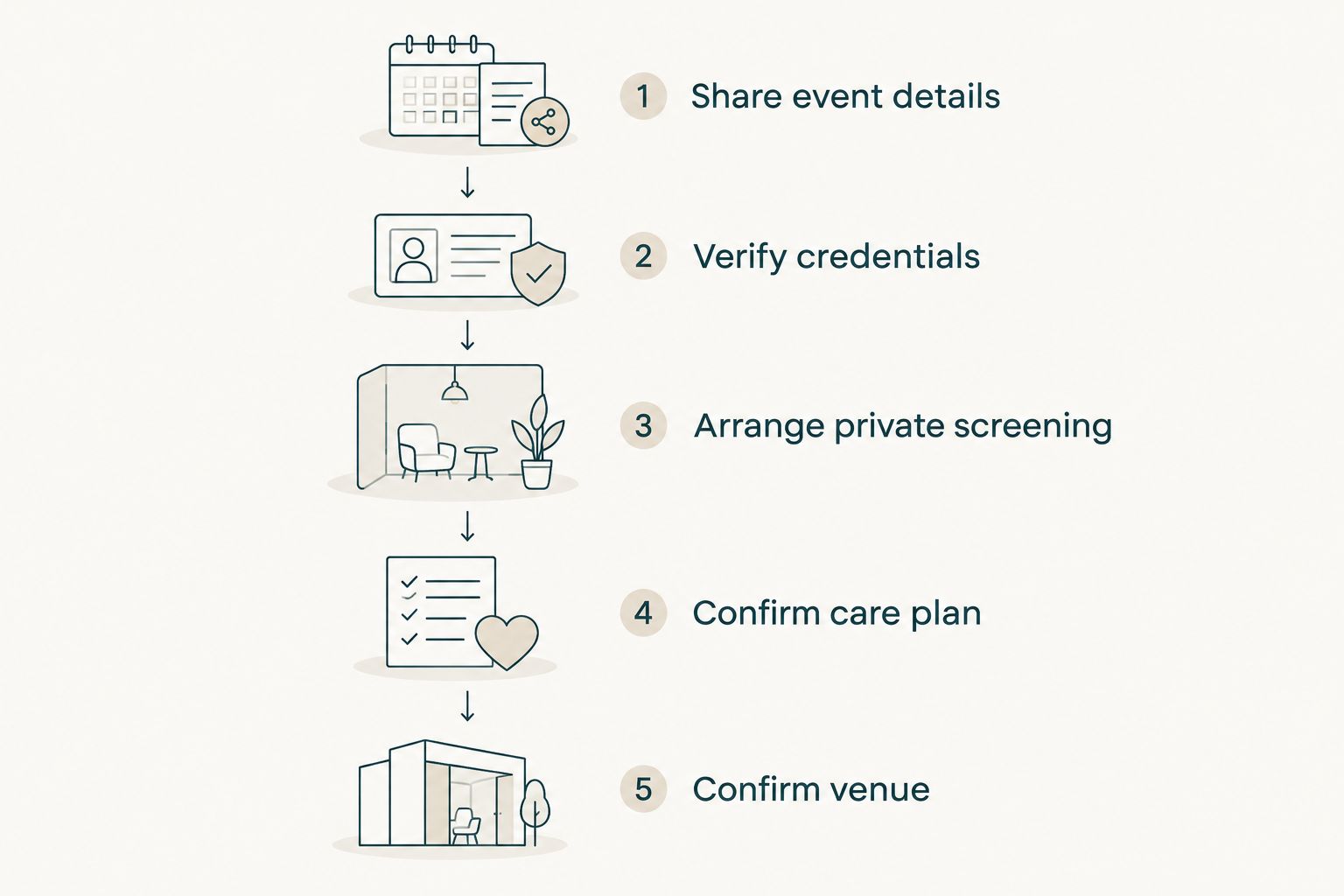
Use the following sequence. Keep the organiser's logistical responsibilities separate from the clinician's responsibility to decide whether treatment is indicated.
1. Share event details
Send the proposed date, address, expected number of interested adults and the time window available. Describe the setting accurately: a private home, hotel room, office or hired venue presents different access and privacy questions.
Explain the purpose of the request without prescribing the solution. Feeling tired after travel, wanting a bridal preparation activity or organising an employee event does not, by itself, establish a medical need for IV treatment.
Ask the provider to confirm whether it can assess a group request at that location. Do not advertise treatment to guests before that conversation.
2. Verify credentials
Ask for the provider's legal name, relevant Dubai Health Authority licence details and the credentials of the professionals attending. Check current licensing through the authority's official channels rather than relying on an event brochure or a social media badge.
Also ask who assesses suitability, who authorises the infusion and who administers it. For your 2026 booking, request current credentials rather than accepting an old licence screenshot as sufficient evidence.
3. Arrange private screening
Each potential patient should speak privately with the clinical team. Screening should cover the reason for treatment, current symptoms, medical conditions, medicines, allergies and previous reactions to infusions.
Pregnancy, kidney disease, heart disease and prescribed medicines are examples of information the clinician needs to assess—not reasons for an organiser to make an eligibility decision. Do not collect detailed medical histories in the event's group chat.
The clinician should explain the proposed ingredients, expected benefit, relevant risks and alternatives. A guest can decline, and a clinician can decide not to treat.
4. Confirm the care plan
Ask how the provider will translate individual assessments into an event schedule. Confirm whether guests will be treated sequentially or concurrently, how observation works and how the team will respond if someone becomes unwell.
Request a written outline of what the booking includes and excludes. Clarify assessment, supplies, travel, venue-related arrangements, aftercare contact and what happens if screening rules someone out.
Do not assume a reservation guarantees a particular infusion. Clinical findings can change the plan.
5. Confirm the venue
Arrange a clean, well-lit treatment area with suitable seating, privacy and clear access for the clinical team. Ask the provider to specify its requirements rather than improvising a treatment station beside the entertainment.
Confirm building access, parking instructions and any hotel or venue permission needed for visiting healthcare professionals. Then obtain written confirmation of the agreed booking details, including the contact person and cancellation terms.
What should your first enquiry include?
A useful enquiry makes the logistics clear without exposing guests' medical information. For a 2026 event, send the actual event date and location rather than asking only whether the provider offers group drips.
Include:
- Event setting: Home, hotel, workplace or hired venue, with the address.
- Interested attendees: An estimated headcount, clearly distinguished from confirmed patients.
- Timing: The event window and any fixed activities that affect attendance.
- Access: Building entry, parking, lifts and venue approval requirements.
- Clinical contact: A request for a private screening route for each guest.
- Written terms: A request for inclusions, exclusions, cancellation conditions and the process when treatment is declined.
Keep the wording neutral. Ask whether the provider can assess the request; do not ask the team to guarantee that everyone will be treated before anyone has been screened.
Should you request simultaneous or staggered appointments?
Ask the clinical team which arrangement it can safely support. A shared start time is a scheduling preference, not a reason to reduce observation or rush assessment.
| Arrangement | Best for | Practical advantage | Limitation to confirm |
|---|---|---|---|
| Staggered appointments | Organisers with flexible guest schedules | Separates arrival and assessment times | Guests need clear individual appointment instructions |
| Concurrent appointments | Groups needing a shared treatment window | Keeps appointments within the same event period | Requires staffing, space and monitoring appropriate to each patient |
| Separate individual bookings | Guests with different schedules or privacy needs | Keeps care independent of the event | Does not create a shared group session |
These are planning options, not confirmed provider packages. Ask how many patients the attending team can supervise under its clinical procedures; do not set a staffing ratio yourself.
Choose the schedule that fits safe care, not the schedule that looks best in an invitation. A guest who needs a longer assessment should not be hurried because the next activity is starting.
Why group-event IV arrangements vary
A useful booking discussion focuses on the factors that change the care plan. The relevant question is not simply how many people want a drip.
- Individual suitability: Different medical histories can lead to different recommendations, including no infusion.
- Prescribed treatment: Ingredients, fluid volume and administration instructions depend on the clinical decision.
- Staffing and observation: Concurrent treatment needs a plan for monitoring every patient and responding to concerns.
- Venue conditions: Privacy, cleanliness, access and permission determine whether the proposed setting is suitable.
- Event timing: A narrow window leaves less flexibility for assessments, delays or a change in treatment.
- Aftercare arrangements: Each patient needs instructions and a clear route for reporting concerns after the team leaves.
For a 2026 booking, have these details confirmed in writing. A general description of an at-home service is not a substitute for agreement about your particular event.
What safety questions should you ask before paying?
Ask who makes the treatment decision and whether every guest receives an individual assessment. Then ask what happens if a guest has a reaction, feels faint or develops symptoms that need urgent medical attention.
The answers should explain responsibilities plainly. They should not rely on statements such as everyone gets this drip or it is just vitamins.
Use this short checklist:
- Who reviews each guest's medical history and current symptoms?
- Who authorises the fluid and any added ingredients?
- How are sterile, single-use supplies and sharps disposal managed?
- How does the team monitor patients during treatment?
- What equipment and escalation arrangements support the proposed setting?
- What written aftercare instructions does each patient receive?
Read the guide to whether at-home IV drip therapy is safe before treating the booking as an event add-on. Safety depends on patient selection, treatment choice and delivery—not simply on being at home.
Can everyone in the group have the same IV drip?
No: a shared event does not justify an identical treatment for every guest. Each person needs an assessment, and the clinician should explain why a proposed infusion is appropriate for that individual.
For someone who can drink and does not need intravenous treatment, oral hydration avoids the risks associated with placing an IV line. More ingredients do not automatically mean greater benefit, and an infusion should not be presented as a guaranteed energy, beauty or recovery result.
If the organiser wants a uniform activity that every guest can join, keep that activity separate from medical treatment. Participation in healthcare should remain optional.
Can you book IV drips for a wedding or corporate event?
You can ask a home healthcare provider to assess a wedding or corporate group request, but the event type does not establish clinical suitability. Confirm the location, privacy arrangements and individual screening process before including treatment in the event plan.
At a workplace event, managers should not collect medical histories or expect employees to explain why they decline. At a wedding event, avoid making treatment part of a timetable that pressures guests to proceed despite concerns.
An IV drip does not make alcohol consumption safe or replace assessment for illness. Someone who is intoxicated, confused, unable to consent or acutely unwell needs appropriate medical assessment rather than routine event treatment.
What happens if someone is unsuitable on the day?
The clinician should withhold an infusion when it is inappropriate and explain the next step to the patient. That can mean oral fluids, a separate consultation or urgent assessment, depending on the circumstances.
Ask about the administrative consequences before confirming your 2026 event. Clarify how the provider handles a clinical decision not to treat, a guest's withdrawal of consent or a late change in attendance; do not assume any particular refund or cancellation policy.
Keep these conversations private. Other attendees do not need to know why someone chose not to participate.
FAQ
How do I book an at-home IV drip for several people in Dubai?
Contact a home healthcare provider with the date, venue and estimated headcount, then request individual clinical screening. Confirm licensing, staffing, venue requirements and written terms before paying.
Does DarDoc provide group-event IV drips?
DarDoc provides at-home IV drips in Dubai, but group-event arrangements need direct confirmation. Ask whether the team can assess your proposed venue, attendee numbers and schedule.
Can I book an IV drip as a surprise for my guests?
Do not arrange treatment on the assumption that guests will accept it. Each person needs private screening, an explanation of the proposed treatment and the opportunity to give or withhold informed consent.
Can all guests receive their IV drips at the same time?
Concurrent treatment depends on the provider's staffing, monitoring plan and venue assessment. Ask the clinical team to confirm a suitable schedule rather than assuming one shared start time is appropriate.
Do healthy guests need an IV drip for hydration?
Healthy guests do not automatically need intravenous hydration. People who can drink and have no clinical need for IV treatment can hydrate orally without the risks of an IV line.
How far ahead should I arrange a group IV booking?
Arrange the enquiry early enough to complete individual screening, venue checks and written confirmation. Ask the provider for its booking requirements rather than relying on a universal lead time.
What should I ask about the group quote?
Ask for a written explanation of assessment, treatment, supplies, travel and any venue-related arrangements. Clarify exclusions and what happens if a clinician decides that a guest should not receive treatment.
What should I do if a guest becomes unwell before the appointment?
Tell the clinical team about new symptoms before treatment starts. Severe breathlessness, chest pain, collapse or confusion requires urgent medical attention, not a routine event infusion.
One last thing
The most useful booking question is: what happens if the clinician says no? The answer tells you whether the event plan leaves room for genuine medical judgment.
Make declining easy, preserve each guest's privacy and keep a non-medical activity available. A well-organised event does not depend on everyone receiving treatment.