How long can you safely stay on GLP-1 weight loss treatment?
How long can you stay on GLP-1? Long-term treatment can be appropriate. Learn what safety reviews cover, when to stop, and how to plan maintenance.

You can stay on GLP-1 weight-loss treatment long term, including for years, while it remains effective, tolerable and medically appropriate; there is no single safe stopping date for everyone. Reaching your target weight does not automatically mean you should stop, because appetite and weight can return after withdrawal. Long-term treatment still needs clinical review: evidence over several years does not establish lifetime safety.
TL;DR- How long can you stay on GLP-1? Years, when benefits continue to outweigh risks under medical supervision.
- Wegovy maintenance treatment is not automatically finished when you reach your target weight.
- Persistent vomiting or severe abdominal pain needs assessment, not another routine prescription.
- DarDoc provides home and online GLP-1 weight-loss care in the UAE; confirm your individual follow-up plan.
Why this matters
Treat the review date as a decision point, not an automatic end date. Obesity is a chronic condition, and medication can help maintain weight loss as well as produce it. Stopping a medicine that is working can remove that support; continuing without checking tolerability can overlook harm.
For your 2026 treatment plan, separate dose increases, active weight loss and maintenance. They serve different purposes. The GLP-1 consultation-to-weight-loss tracking workflow explains the care sequence to discuss with your prescriber.
How long can you safely stay on GLP-1 weight-loss treatment?
There is no universal maximum duration for GLP-1 weight-loss treatment. Your prescriber should continue it only while the expected benefits outweigh the risks, using the prescribing information for your specific medicine and your individual response.
The evidence informing this 2026 answer includes clinical trials with follow-up measured in years, not just the opening dose-escalation period:
- 104 weeks: The STEP 5 trial, published in Nature Medicine, studied semaglutide for weight management over this period. It supports sustained treatment rather than assuming every patient needs a short course.
- 208 weeks: A long-term SELECT analysis, also published in Nature Medicine, reported semaglutide weight outcomes through this point. Participants had overweight or obesity and established cardiovascular disease, without diabetes; their results do not represent every patient.
- 52 weeks after withdrawal: The STEP 1 extension, published in Diabetes, Obesity and Metabolism, followed participants after semaglutide and the trial's lifestyle intervention ended. Participants regained about two-thirds of their previous weight loss on average.
These studies answer different questions. STEP 5 and SELECT support sustained benefit during treatment in the populations studied; the STEP 1 extension shows that substantial regain can follow withdrawal. None proves that every GLP-1 medicine is safe indefinitely for every person.
Years of evidence support long-term treatment, not a lifetime guarantee. Your own symptoms, nutrition, medical history and treatment goals still determine whether continuing is sensible.
Continuing, adjusting or stopping: which fits your situation?
Your next prescription should reflect a clinical decision, not simply repeat the last one. These are discussion pathways rather than instructions to change your medicine yourself.
| Pathway | Best for | Main benefit | Limitation or concern |
|---|---|---|---|
| Continue maintenance | People benefiting from a tolerated, appropriate regimen | Preserves medication support for weight management | Ongoing adverse effects and monitoring still matter |
| Adjust treatment | People with tolerability problems or an inadequate response | Allows the prescriber to reassess dose, medicine or diagnosis | Changes need medicine-specific instructions |
| Plan discontinuation | People whose risks outweigh benefits or whose circumstances require stopping | Removes an unsuitable treatment | Appetite, weight or blood glucose can rise afterward |
Reaching a healthy weight does not, by itself, make maintenance inappropriate. Equally, continued weight loss is not automatically desirable if you are struggling to eat, losing strength or becoming undernourished.
Do not increase your dose just because the scale has stopped moving. A stable weight after meaningful loss can be a successful maintenance outcome. Your clinician should distinguish that from an inadequate response before changing treatment.
Why safe treatment duration varies
The useful question in 2026 is not simply how many months you have taken the medicine. It is whether the current treatment still meets a medical need without creating unacceptable harm.
- Your treatment response: Review weight trajectory alongside relevant health outcomes, daily function and your original treatment goals. More weight loss is not always the correct goal.
- Your side effects: Persistent nausea, vomiting, constipation or diarrhoea can affect food intake and hydration. Symptoms that disrupt normal eating deserve review rather than acceptance as the price of treatment.
- Your other medicines: Insulin and sulfonylureas can increase hypoglycaemia risk when used with GLP-1 treatment. Changes in weight and glucose control can require a wider medication review.
- Your medical history: Pancreatitis, gallbladder problems, significant gastrointestinal disease and kidney problems associated with dehydration can change the assessment. Contraindications differ between medicines.
- Pregnancy plans: Weight-loss medicines are not used for intentional weight loss during pregnancy. Tell your prescriber before trying to conceive so the stopping interval follows the specific medicine's prescribing information.
- Your nutrition and strength: Reduced appetite should not leave you unable to meet nutritional needs. Review protein intake, resistance activity and loss of strength, particularly if you are older or already vulnerable to muscle loss.
Your prescriber should also know why treatment started. A medicine prescribed for diabetes has a different stopping conversation from one prescribed solely for weight management, because the glucose-management plan also needs attention.
What should a long-term safety review include?
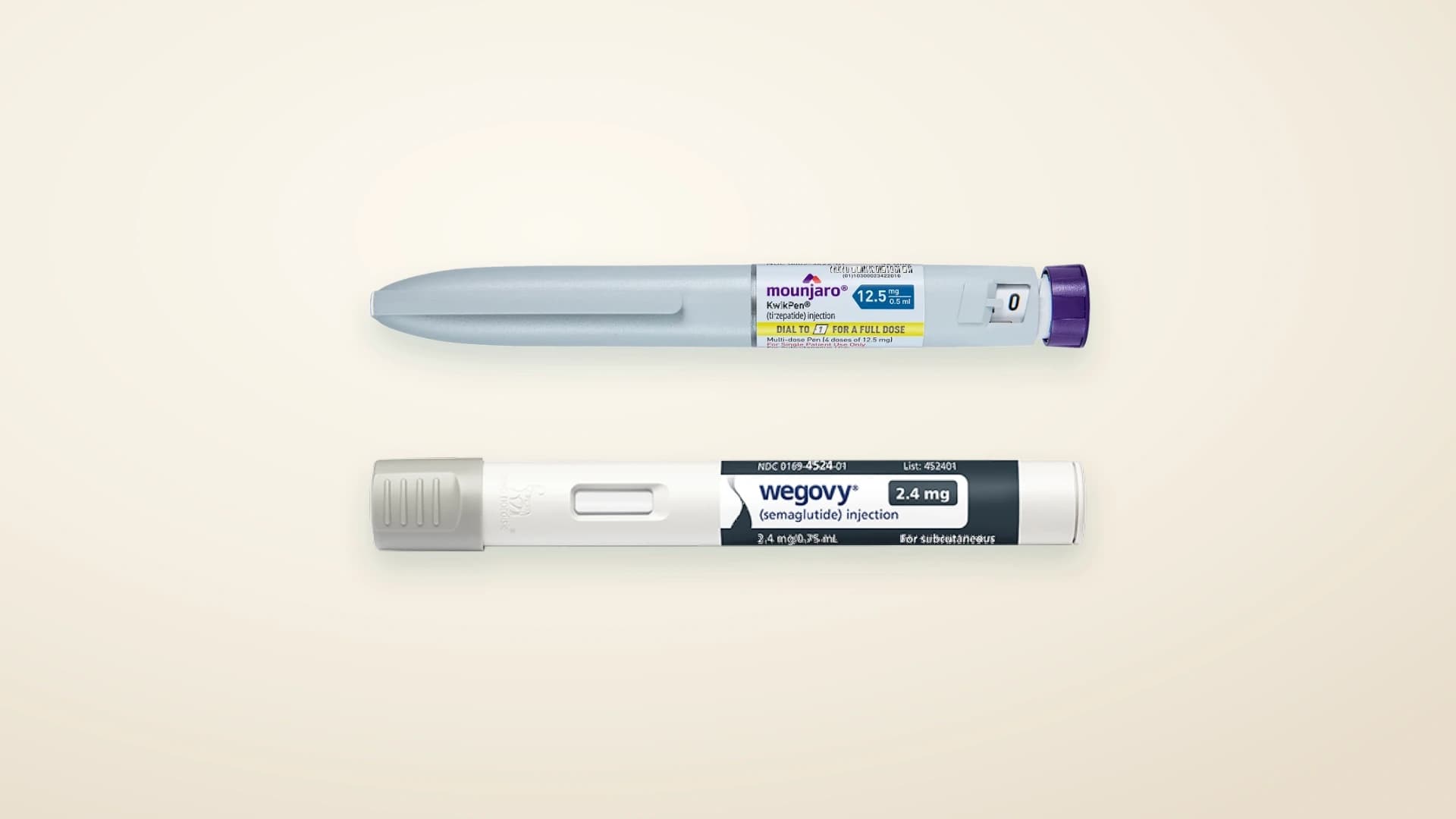
A useful review goes beyond recording your weight. Bring your exact medicine name, current dose, missed doses, other prescriptions and a clear account of symptoms; photographs of packaging can help prevent confusion.
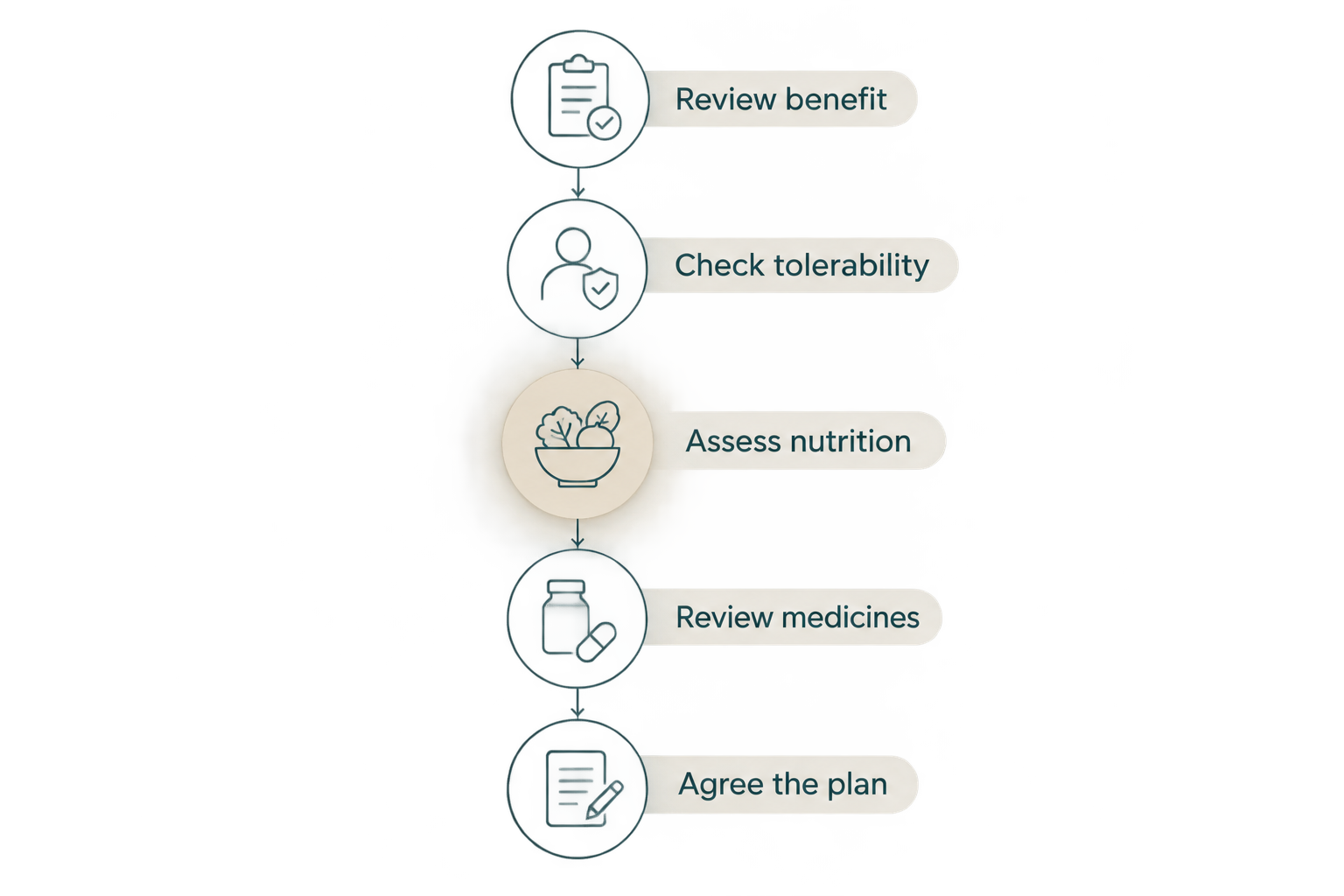
- Review benefit. Compare your current weight trajectory and relevant health measures with the reason treatment began. Discuss whether maintaining the present result is now the goal.
- Check tolerability. Describe bowel symptoms, abdominal pain, vomiting, hydration and your ability to eat. Tell the clinician what symptoms stop you doing, not just whether they exist.
- Assess nutrition. Discuss food intake, strength, activity and unintended continued loss. The aim is better health, not the lowest achievable number on the scale.
- Review medicines. Include diabetes medicines, supplements and any treatment started elsewhere. Mention planned pregnancy, procedures and upcoming anaesthesia.
- Agree the plan. Leave knowing whether to continue, adjust or stop, which symptoms require urgent help and when the next review should happen.
Blood tests should answer a clinical question. Depending on your history and symptoms, your clinician can assess glucose control, kidney function or other relevant measures; there is no single blood panel that certifies GLP-1 treatment as safe indefinitely.
For a 2026 review, ask for a written plan that covers both routine follow-up and problems between appointments. A repeat prescription is not a substitute for reassessment.
Can I stay on GLP-1 after reaching my goal weight?
You can remain on GLP-1 treatment after reaching your goal weight when maintenance remains appropriate. The decision should consider your health, tolerability and risk of regain rather than treating the target weight as an automatic stopping rule.
Ask what successful maintenance looks like for you. That discussion should include stable weight, adequate nutrition, preserved function and acceptable side effects, not an expectation of continued loss.
Do not create your own maintenance schedule by spacing injections farther apart or changing doses. The correct approach depends on the medicine's approved instructions and your prescriber's assessment.
Do I need to taper GLP-1 treatment before stopping?
There is no universal tapering schedule for GLP-1 weight-loss medicines. Your prescriber should give medicine-specific instructions and a follow-up plan, especially if the treatment also helps control diabetes.
Do not assume tapering will prevent weight regain. Evidence does not establish a single withdrawal method that reliably preserves everyone's result, and reducing medication without addressing diabetes treatment can leave glucose control inadequate.
If you decide to stop, agree how you will monitor appetite, weight and relevant health measures. Plan what should trigger a review before a large change develops.
Can I restart GLP-1 treatment after a break?
Restarting after a break needs medicine-specific advice; your previous dose is not automatically the right restart dose. Depending on the medicine and length of interruption, restarting at a high dose can cause significant gastrointestinal symptoms.
Tell your prescriber when you last took it, why you stopped and whether your health or other medicines have changed. A break caused by severe symptoms needs a different assessment from a missed prescription.
Do not switch to another person's supply or substitute a different medicine yourself. Similar purposes do not make doses interchangeable.
When should you seek help instead of waiting for a review?
Severe symptoms are not a normal maintenance milestone. Seek urgent medical assessment for severe, persistent abdominal pain, particularly with vomiting, because pancreatitis and other serious conditions need exclusion.
Repeated vomiting, inability to keep fluids down, very little urine or marked dizziness also require prompt assessment. Severe dehydration can affect kidney function; an automatic refill does not address the cause.
Get emergency help for breathing difficulty, facial or throat swelling, collapse or severe confusion. If you use insulin or a sulfonylurea, follow your prescribed hypoglycaemia plan and seek help for severe or persistent low blood glucose.
Tell the team managing any planned operation or sedation that you take a GLP-1 medicine. These medicines delay stomach emptying, and procedural advice should be individualised rather than based on an internet stopping schedule.
Where DarDoc fits into GLP-1 weight-loss care
DarDoc is best suited to UAE adults seeking home or online GLP-1 weight-loss care. The provider offers GLP-1 weight-loss treatment alongside home and online healthcare in Dubai and Abu Dhabi.
The practical benefit is the home or online care format. Its limit is clinical: remote or home-based care does not replace emergency assessment when serious symptoms develop, and convenience does not establish that a particular medicine is suitable for you.
Before arranging care, confirm the prescribing clinician's current DHA or DoH registration as appropriate, the proposed review schedule and how to report side effects. Ask who makes dose decisions and what happens if you need an in-person assessment; do not assume those details from the service format alone.
Discuss your treatment review
Ask about GLP-1 assessment, follow-up and the next step for your current treatment.
Contact the teamFAQ
How long can you stay on GLP-1 in 2026?
You can stay on GLP-1 treatment for years when it remains effective, tolerated and medically appropriate. There is no universal maximum duration, but regular clinical reassessment remains necessary.
Does taking GLP-1 for years mean it is safe for life?
No, several years of trial evidence do not establish lifetime safety. Long-term prescribing still requires individual assessment of benefits, adverse effects and changing health circumstances.
Will I regain weight if I stop GLP-1 treatment?
Weight regain is common after stopping GLP-1 weight-loss treatment, but the amount differs between people. In the STEP 1 extension, participants regained about two-thirds of their previous loss on average during 52 weeks after semaglutide and the trial lifestyle intervention ended.
Should I stop GLP-1 when my weight stops falling?
A weight plateau does not automatically mean you should stop GLP-1 treatment. Maintaining an earlier weight loss can represent an ongoing benefit; your prescriber should assess the full response before changing treatment.
Can I take a GLP-1 medicine while trying to get pregnant?
Discuss stopping with your prescriber before trying to conceive. The required interval depends on the specific medicine, and weight-loss treatment is not used for intentional weight loss during pregnancy.
Do I need monthly blood tests while taking GLP-1?
Not everyone needs monthly blood tests while taking GLP-1 treatment. Testing should follow your medical history, diabetes status, symptoms and prescribing plan rather than a universal schedule.
Can DarDoc help me discuss ongoing GLP-1 treatment?
DarDoc offers GLP-1 weight-loss treatment through its UAE home and online healthcare services. Confirm whether the service can assess your current medicine, provide the follow-up you need and arrange escalation when appropriate.
One last thing
A medicine can still be working when your weight is no longer falling. Preventing regain is different from producing further loss, so a stable result should prompt a maintenance conversation rather than an automatic dose increase.
Before your next 2026 prescription, ask: What benefit are we preserving, what risks are we checking, and what would make us change course? A clear answer is more useful than an arbitrary treatment deadline.