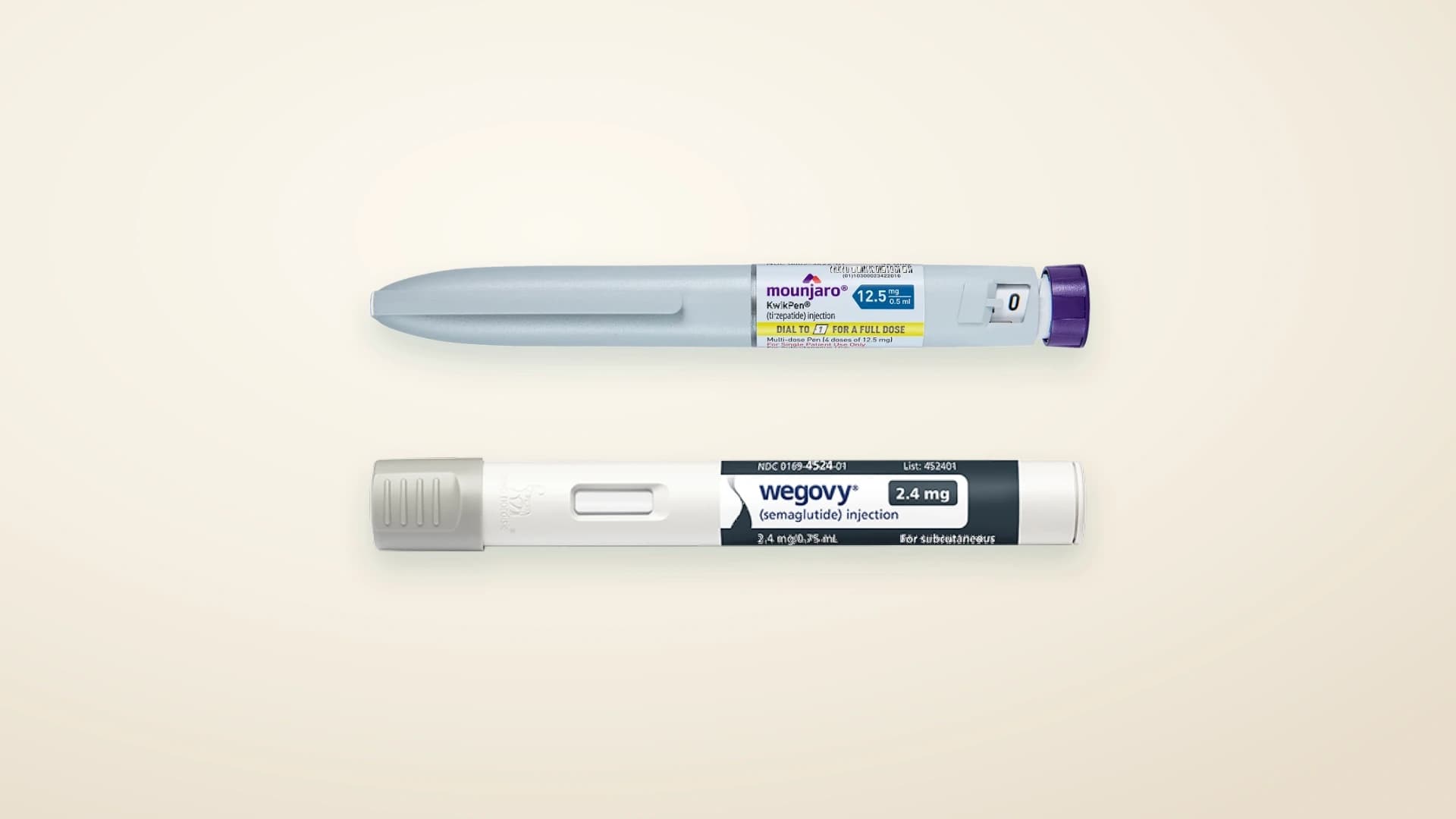
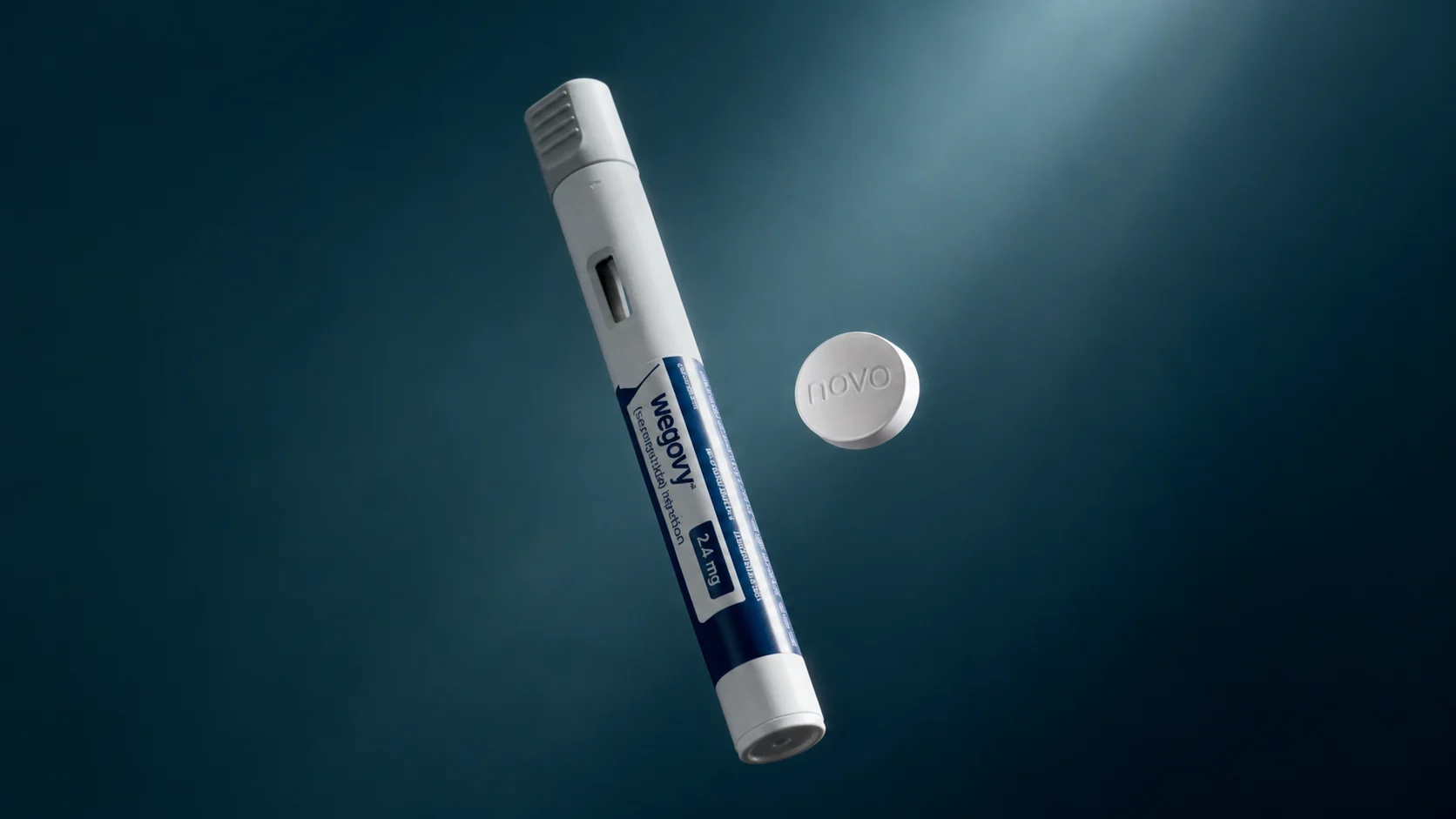
How long does it take to see weight loss results on Wegovy?
How long does it take to see results on Wegovy? Think months, not days. Understand dose escalation, trial results and when to ask your doctor for help.

Wegovy weight loss is assessed over months, not days; appetite changes in the first few weeks do not guarantee an immediate change on the scale. The starter doses help you adjust to treatment, so a slow beginning is not, by itself, evidence that the medicine is failing.
TL;DR- How long does it take to see results on Wegovy? Think months, not a guaranteed first-week change.
- Weekly Wegovy injections usually involve 16 weeks of dose escalation before the standard maintenance dose.
- Track weight trends alongside tolerability; nausea is not proof that Wegovy is working.
- DarDoc provides home and online GLP-1 weight-loss care for patients in the UAE.
Why this matters
The first month is a tolerability phase, not a final test of Wegovy’s effectiveness. Comparing your starter-dose experience with someone else’s long-term result creates the wrong benchmark. You need to know which formulation you use, where you are in the prescribed schedule, and whether side effects are disrupting treatment.
For UAE patients seeking home or online GLP-1 weight-loss care, DarDoc provides those services. This guide explains the standard weekly injection timeline; it does not apply the injection schedule to oral semaglutide.
For anyone starting treatment in 2026, the practical distinction is between noticing less hunger and documenting sustained weight loss. Those are related, but they are not interchangeable.
How long does it take to see weight loss results on Wegovy?
You can notice appetite changes before you see a clear weight trend. Assess the scale over repeated measurements rather than expecting a particular result after the first injection.
The standard Wegovy injection schedule increases the dose gradually. Novo Nordisk’s Wegovy prescribing information sets out the following escalation schedule, with adjustments when a patient cannot tolerate an increase:
| Treatment phase | Standard weekly injection dose | What the phase tells you | Main limitation |
|---|---|---|---|
| Weeks 1–4 | 0.25 mg | Whether you tolerate the starting dose | Too early to judge the full treatment response |
| Weeks 5–8 | 0.5 mg | How appetite and tolerability change with escalation | Not the standard maintenance dose |
| Weeks 9–12 | 1 mg | Whether a weight trend is developing | Side effects can affect escalation |
| Weeks 13–16 | 1.7 mg | How you tolerate a higher dose | Your prescriber must decide the next step |
| Week 17 onward | 2.4 mg standard maintenance dose | Response during sustained treatment | Individual results still differ |
This is a reference schedule, not an instruction to change your dose. Follow your own prescription and the instructions supplied with your UAE medicine. Your clinician can delay an increase when side effects make the next step inappropriate.
The table describes treatment stages, not competing products or a promise of weight loss at each stage. The calendar alone does not determine whether treatment is helping you.
Weeks 1–4: adjustment rather than a verdict
At 0.25 mg once weekly, the priority is learning how you tolerate treatment. You might notice smaller portions feel sufficient, or you might notice little change initially. Neither experience establishes your eventual result.
Do not use nausea as a success measure. Feeling unwell can reduce food intake, but the aim is sustainable weight management while maintaining adequate nutrition and hydration—not making yourself unable to eat.
Weeks 5–16: building the dose and checking the trend
During escalation, review appetite, bowel symptoms, hydration and weight together. A falling weight accompanied by persistent vomiting needs medical attention, not encouragement to continue unchanged.
Equally, an unchanged reading after a dose increase does not justify increasing again early. Your clinician needs the treatment history, not just the latest number, to decide whether to continue, pause escalation or reassess the plan.
Week 17 onward: reviewing sustained treatment
Under the standard schedule, week 17 is when the 2.4 mg maintenance dose begins. Reaching that point does not mean you have reached your final weight-loss result.
It does give your clinician a different basis for assessment than the starter phase. The discussion should address how long you have taken the prescribed dose consistently, whether you tolerate it, and whether the longer-term trend supports continuing treatment.
What do Wegovy trial results actually tell you?
The STEP 1 trial, published in the New England Journal of Medicine, studied once-weekly semaglutide 2.4 mg in adults with overweight or obesity without diabetes. Participants also received a lifestyle intervention.
At 68 weeks, average weight change was −14.9% with semaglutide, compared with −2.4% with placebo. Those are group averages over a long treatment period—not a first-month forecast or an individual guarantee.
When reading Wegovy trial results in 2026, keep the study population and treatment duration attached to the headline percentage. Removing either makes the number less useful for your own decision.
The evidence supports meaningful weight loss during sustained treatment. It does not establish that everyone should lose the same amount, reach the same milestone at the same time, or continue regardless of adverse effects.
Evidence references: Novo Nordisk’s Wegovy prescribing information, for the weekly injection escalation schedule and safety instructions; Once-Weekly Semaglutide in Adults with Overweight or Obesity, STEP 1, New England Journal of Medicine, for the 68-week trial results. These references concern injectable semaglutide, not an interchangeable oral regimen.
Why the Wegovy results timeline varies
A useful explanation of slower progress starts with your treatment history. It does not start with a claim that you need a stronger dose.
- Dose stage: Starting-dose treatment and sustained maintenance treatment are different points in the pathway. Compare like with like.
- Tolerability: Nausea, vomiting, diarrhoea or constipation can interfere with eating, drinking and planned escalation.
- Treatment interruptions: Missed doses and gaps affect the treatment history your clinician must assess. Restarting can require specific instructions.
- Food intake and activity: The STEP 1 results included a lifestyle intervention. Medication does not make nutrition and activity irrelevant.
- Health conditions and medicines: Your clinician should review other conditions and treatments when assessing an unexpected response.
- Measurement conditions: Hydration, bowel contents and menstrual changes can move the scale without representing an equivalent change in body fat.
These factors are reasons to investigate a pattern, not excuses to dismiss your concerns. If your plan is difficult to follow or leaves you feeling persistently unwell, tell your prescriber before the next planned increase.
How should you track progress without overreacting?
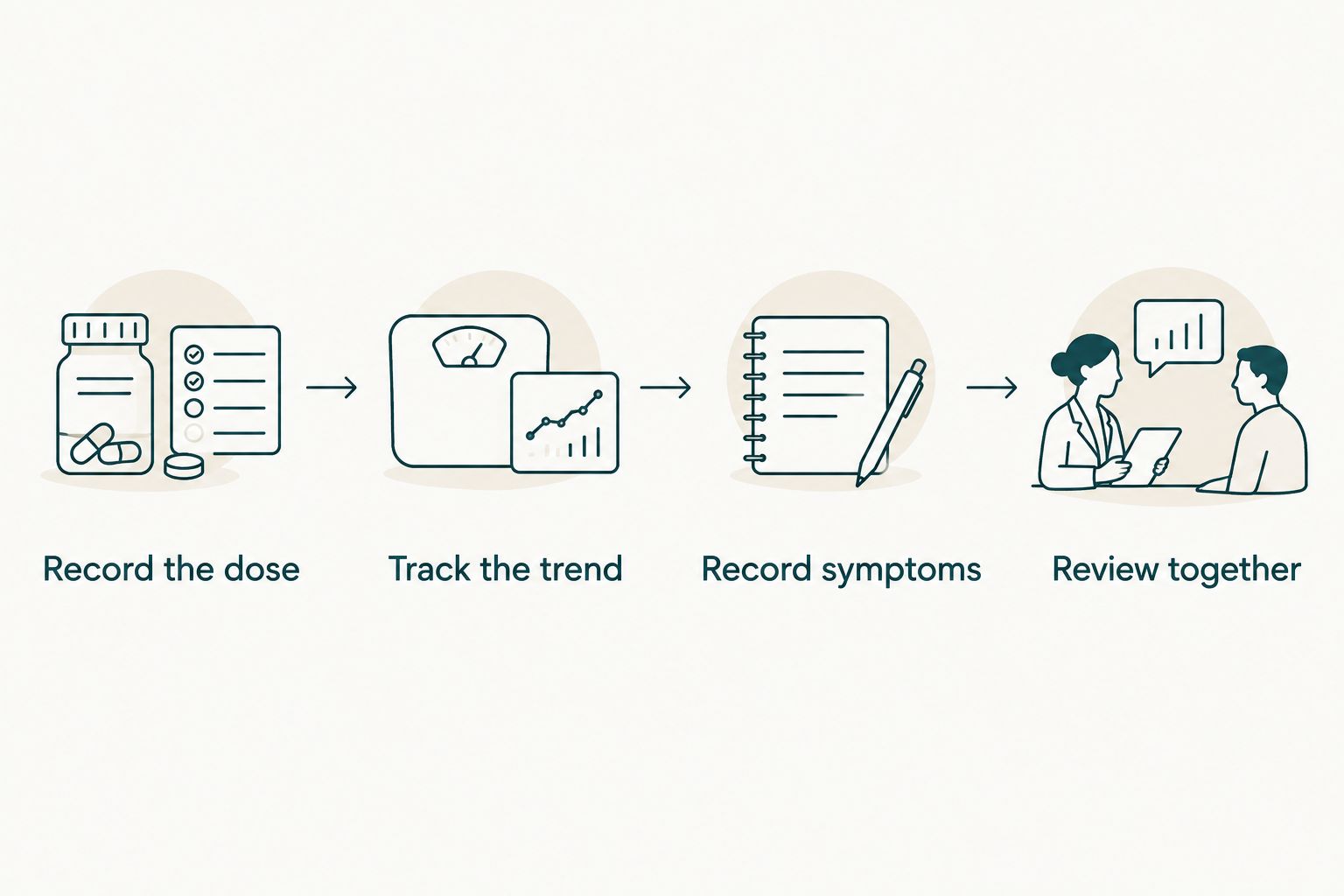
A useful 2026 treatment record separates medication exposure, weight trend and symptoms. Recording them together makes a review more informative than reporting that the medicine has stopped working.
- Record the dose. Note the prescribed dose, injection date and any missed or delayed doses. Include any clinician-directed changes.
- Track the trend. Use the same scale under similar conditions. Look across repeated readings instead of treating a single increase as a setback.
- Record symptoms. Note nausea, vomiting, bowel changes, difficulty drinking and symptoms that interfere with meals or activity.
- Review together. Bring the record to your clinician. Ask what the current phase should establish and what would trigger a change in plan.
The benefit is clarity: you can distinguish an inconsistent measurement from a persistent pattern. The limitation is that a home record cannot diagnose dehydration, explain every plateau or replace an examination when you are unwell.
Keep the record practical. You do not need a complicated spreadsheet, and you should not let frequent weighing drive unsupervised dose changes. If weighing causes distress or reinforces disordered eating, discuss a different monitoring approach with your clinician.
What if I have not lost weight after four weeks?
Four weeks without clear weight loss does not establish Wegovy treatment failure. On the standard injection schedule, this is still the 0.25 mg starting phase.
Check whether you have followed the prescription and whether side effects or missed doses have complicated the month. Then discuss your observations at the planned review. Do not borrow another person’s escalation schedule or increase early to catch up.
Does a plateau mean Wegovy has stopped working?
A plateau does not automatically mean Wegovy has stopped working. Your clinician needs to distinguish a brief fluctuation from a sustained period without progress and review the dose, adherence, nutrition and wider health picture.
The next step is reassessment, not an automatic switch or dose increase. Maintenance of previous weight loss is also different from regaining weight, and those situations deserve different discussions.
Should I increase my dose to lose weight faster?
Do not increase Wegovy faster than prescribed to accelerate weight loss. Dose escalation is designed around tolerability, and taking more does not create a safe shortcut through treatment.
Contact your prescriber if you feel ready for a change, have missed treatment, or cannot tolerate the current dose. Do not combine Wegovy with another semaglutide product or another GLP-1 treatment without explicit clinical direction.
When should you seek medical advice rather than wait?
Persistent side effects deserve a review even when the scale is moving in the direction you wanted. Weight loss does not make an unsafe or intolerable treatment pattern acceptable.
Seek urgent medical assessment for severe, persistent abdominal pain, especially with vomiting; inability to keep fluids down; fainting; or signs of a serious allergic reaction. Tell the assessing clinician that you take semaglutide and give your most recent dose.
If you also use insulin or a sulfonylurea, ask your prescriber about low-blood-sugar risk and your monitoring plan. If you are pregnant or planning pregnancy, discuss this promptly rather than continuing a weight-loss plan unchanged.
Choosing support in Dubai or Abu Dhabi
DarDoc is best suited to UAE patients seeking home or online GLP-1 weight-loss care. That describes the service setting, not a promise of faster results or a comparison of clinical outcomes.
Before choosing a provider in 2026, ask who prescribes, how you can report adverse effects, and how dose changes are reviewed. Verify the relevant clinician’s DHA licensing in Dubai or DoH licensing in Abu Dhabi; do not treat a provider’s marketing language as verification.
Home and online care can make follow-up more convenient. The limitation is that some symptoms require an in-person assessment or emergency care, not another remote message. Ask DarDoc how that escalation would work for your circumstances before starting.
FAQ
How long does it take to see results on Wegovy in 2026?
Wegovy weight loss is assessed over months, although appetite changes can appear earlier. The standard weekly injection schedule includes 16 weeks of escalation before the 2.4 mg maintenance dose, and no early result is guaranteed.
Will I lose weight during my first month on Wegovy?
First-month weight loss is not guaranteed. The standard starting dose is 0.25 mg weekly for four weeks, and an early scale reading does not establish your eventual response.
When does Wegovy reach its maintenance dose?
The standard weekly injection schedule reaches 2.4 mg at week 17. Your prescriber can adjust escalation for tolerability, so follow your own prescription rather than the calendar alone.
How much weight did people lose in the main Wegovy trial?
STEP 1 participants receiving semaglutide lost an average of 14.9% of baseline weight at 68 weeks, compared with 2.4% with placebo. The study involved adults with overweight or obesity without diabetes and included lifestyle intervention.
Does nausea mean Wegovy is working?
Nausea is a side effect, not proof of effective weight management. Persistent vomiting, difficulty drinking or symptoms that disrupt eating need clinical review.
Should I stop Wegovy if my weight has not changed?
Do not change or stop your prescribed treatment solely because of an isolated weight reading; discuss the pattern with your prescriber. Seek urgent assessment for serious symptoms rather than waiting for a routine review.
Can I use this timeline for oral Wegovy?
No, this timeline describes the standard weekly Wegovy injection schedule. Oral treatment has formulation-specific instructions, so use the prescribing information and clinical advice for the medicine you actually receive.
One last thing
A lower appetite is not the same as a better treatment result. If you are eating very little, struggling to drink or feeling too unwell to function, the correct next step is a clinical review—not celebrating the number on the scale.
Bring your dose history, weight trend and symptoms to that conversation. Together, they provide a more useful picture than asking whether you have lost weight quickly enough.