Best at-home blood test services in Abu Dhabi 2026
Compare blood test at home Abu Dhabi options. Choose family care, clinician-led monitoring or targeted screening, with clear checks before you book.
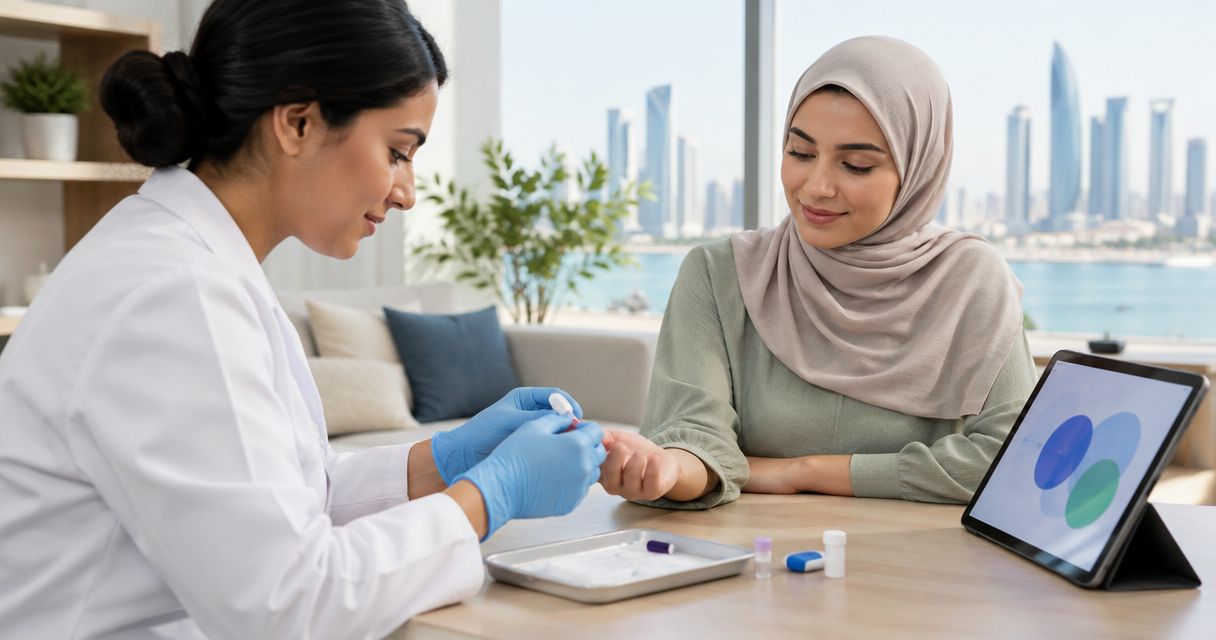
Best fit for family home healthcare: Dardoc. Best for repeat monitoring: home collection arranged around your treating clinician’s request. Best for preventive screening: clinician-selected home testing, not the largest package. This 2026 guide compares those routes for a blood test at home in Abu Dhabi, including what to check before booking.
TL;DR- For blood test at home Abu Dhabi searches, Dardoc fits families seeking blood testing alongside broader home healthcare.
- Choose clinician-directed home collection for repeat monitoring; keep the requested tests and reviewing clinician clear.
- Choose targeted preventive screening after discussing your symptoms, history and existing results.
- Confirm Abu Dhabi licensing, the processing laboratory, preparation instructions and responsibility for abnormal results before booking.
Why this matters
A home blood test moves the collection appointment into your home. It does not remove the need for an appropriate test request, correct sample handling or clinical interpretation. Convenience is useful only when the result leads to a clear next step.
For families supporting an older relative, avoiding a journey has practical value. For someone monitoring treatment, consistency matters more than the number of tests in a package. For someone with new symptoms, choosing a package without assessment can send the investigation in the wrong direction.
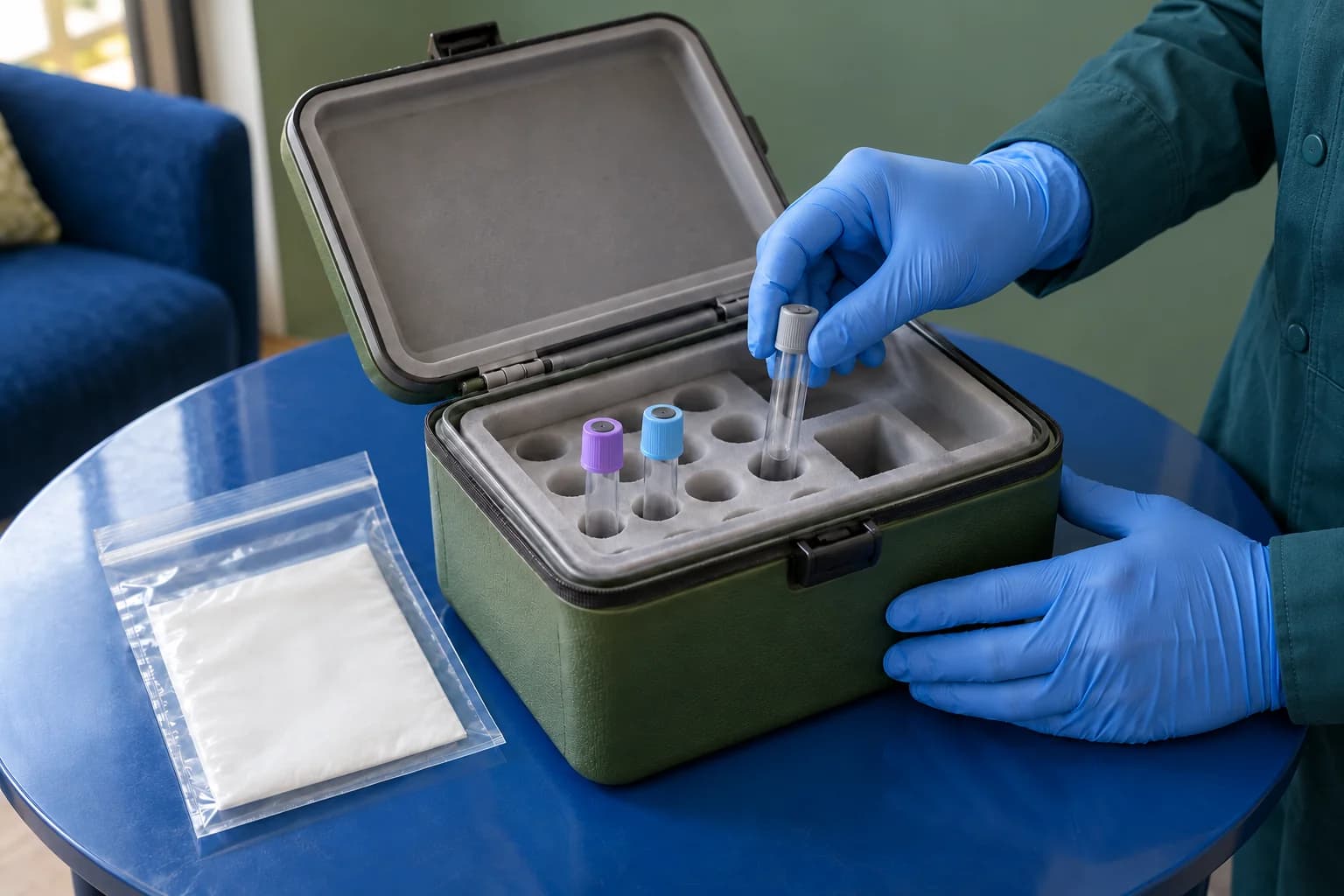
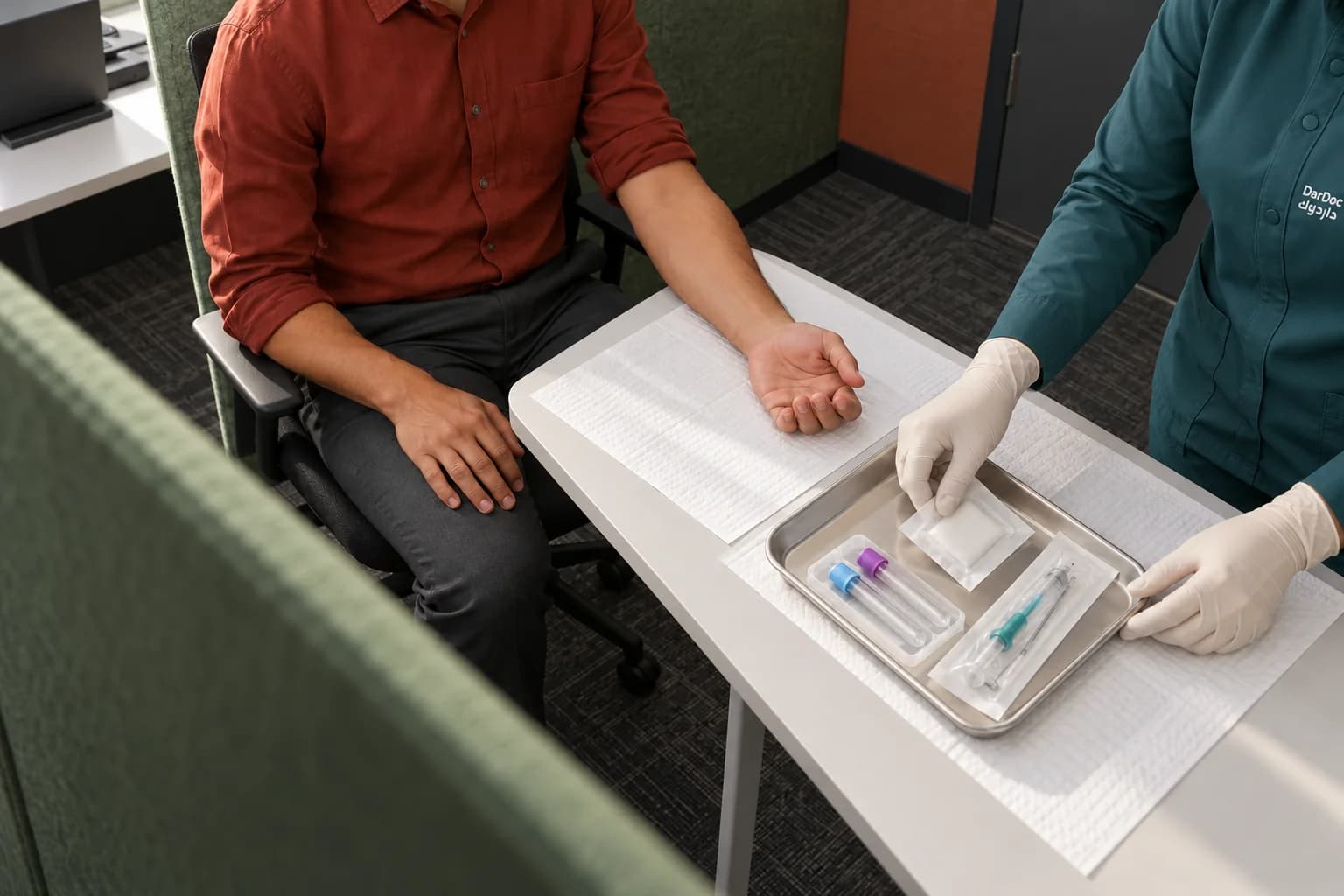
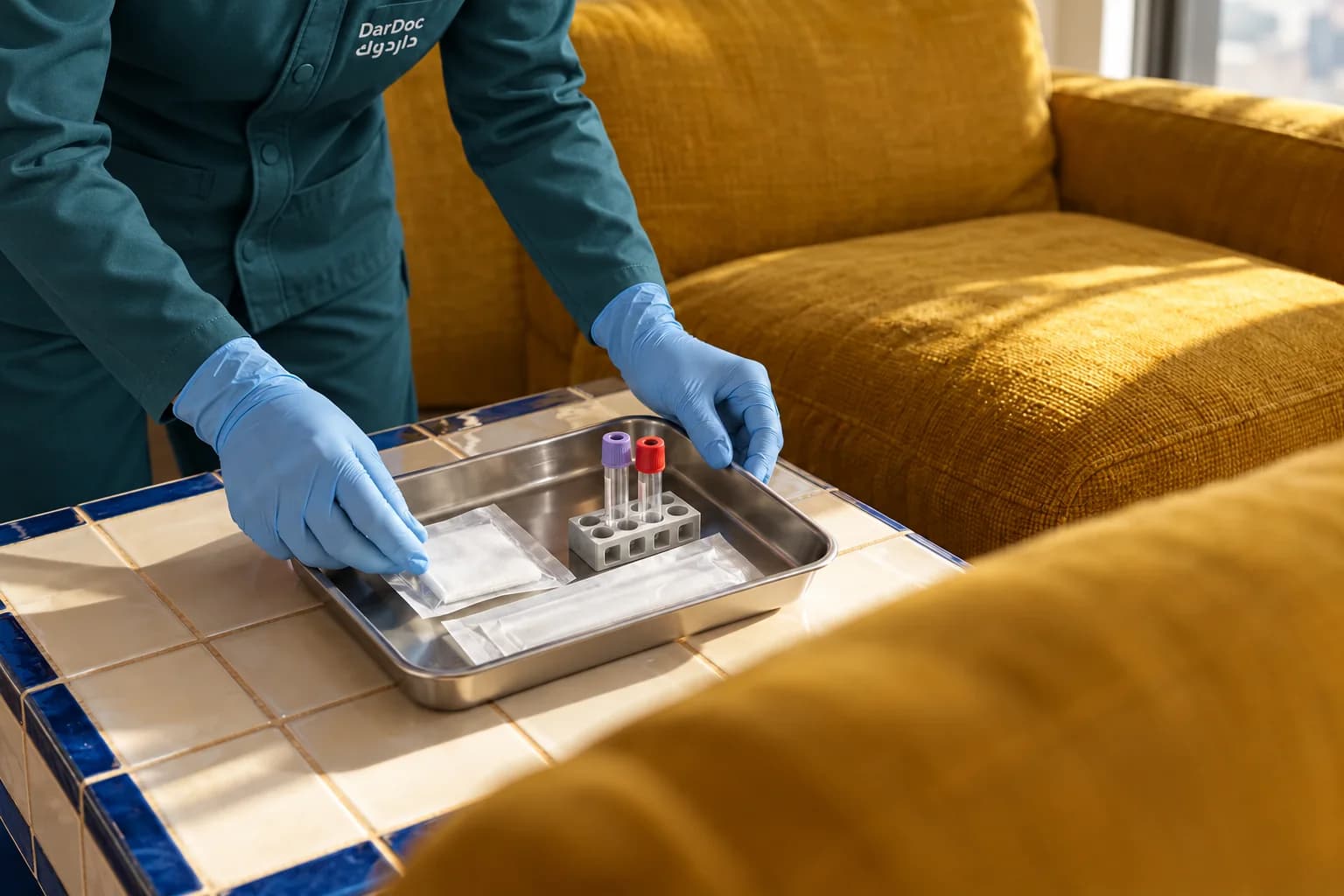
Dardoc offers at-home blood tests alongside nursing, online healthcare and elderly care in Abu Dhabi. That service scope makes it relevant to families considering more than an isolated collection appointment; it does not establish laboratory quality, turnaround or insurance terms for a particular booking.
What makes the best at-home blood test service?
Use these criteria to compare services in 2026. A long list of biomarkers is not a substitute for clear answers.
- Appropriate testing: The requested tests should answer a clinical question or support an agreed screening plan. More tests do not automatically mean better care.
- Verifiable licensing: Ask for the responsible healthcare facility and collecting professional’s details. Verify the relevant Abu Dhabi permissions through Department of Health channels.
- Named processing laboratory: Know where the sample goes, how it travels and who manages a rejected or unsuitable specimen.
- Written preparation: Obtain instructions for the exact tests ordered, including fasting and medication questions. Do not change prescribed treatment yourself.
- Clear result ownership: Identify who receives the report, who interprets it and who contacts you about urgent findings.
- Practical booking terms: Confirm your address, collection arrangements, report access, billing requirements and the process if another sample is needed.
At a glance: which route fits your situation?
These are care routes, not a claim that one provider has outperformed every competitor. The useful comparison is between what you need and how the service handles that need.
| Option | Best for | Standout feature | Key limitation |
|---|---|---|---|
| Dardoc home blood testing | Families considering blood tests alongside broader home care | Blood testing sits within a home and online healthcare offering | Confirm the laboratory, test scope and review arrangements for your booking |
| Treating-clinician-directed home collection | Repeat tests for an existing condition or treatment plan | Collection follows an established clinical question | Requires a current request and clear responsibility for reviewing results |
| Clinician-selected preventive home screening | People seeking an individual screening plan | Tests follow personal history and risk rather than package size | Screening does not replace assessment of new symptoms |
1. Dardoc: best for families considering broader home care
Dardoc provides at-home blood tests and other home healthcare services to families in Dubai and Abu Dhabi. Its stated services include nursing and elderly care, making it a relevant starting point when blood collection is one part of a wider household care need.
Dardoc is a fit for families seeking at-home blood testing alongside broader home healthcare in Abu Dhabi. Keep that distinction clear: a broad service offering does not mean every appointment includes a doctor’s consultation or coordination with another treating team.
Dardoc pros
- At-home blood testing is an explicitly stated service.
- Abu Dhabi is within the stated service geography.
- Nursing and elderly care are also part of the stated offering.
- Online healthcare provides another service category to ask about when planning follow-up.
Dardoc cons
- The service description does not establish which laboratory handles your particular sample.
- Clinical review, insurer billing and repeat-collection arrangements require confirmation rather than assumption.
- Home collection is not a replacement for urgent assessment or an examination when symptoms require one.
Best for: Families who want to discuss blood testing within a broader home-care plan, particularly when travel is difficult for the patient.
Before booking in 2026, send the exact test request if you have one. Ask whether the requested tests can be collected at home, what preparation is required and who will review the report. If you are arranging care for someone else, confirm their consent and how results will reach the authorised person.
Verdict: Buy the service only after the collection, laboratory and follow-up arrangements are clear.
2. Clinician-directed home collection: best for repeat monitoring
Clinician-directed home collection starts with a request from the professional managing your condition or treatment. The collection provider takes the requested samples; the treating clinician remains responsible for interpreting them unless another arrangement is explicitly agreed.
This route suits a person who already knows why testing is needed. Examples include follow-up of an established diagnosis or monitoring requested during prescribed treatment. The essential task is to preserve the clinical plan, not replace it with a broader package.
Clinician-directed home collection pros
- The test request has a defined purpose.
- Previous results provide context for interpretation.
- Follow-up can stay with the clinician who knows your history.
- You can clarify the timing of collection against the treatment plan before booking.
Clinician-directed home collection cons
- An old request is not automatically appropriate for a new situation.
- Different laboratories can use different methods and reference intervals, complicating comparisons.
- Sending a report does not prove the treating clinician has received or reviewed it.
Best for: Patients with an existing clinician, a current test request and a planned review.
Give the collection service the original request rather than reconstructing it from memory. Tell the clinician about changes in symptoms or medicines before repeating an old panel. Where comparison with previous results matters, ask whether using the same laboratory or method is clinically useful.
Verdict: Buy for planned monitoring; hold if nobody has accepted responsibility for reviewing the result.
3. Targeted preventive home screening: best for an individual plan
Clinician-selected preventive screening begins with your history, existing results and risk factors. Testing then follows a reasoned plan rather than a fixed assumption that every adult needs the same panel.
This route is distinct from monitoring a known condition. You are deciding whether screening is appropriate and what it should cover, not simply repeating a prescribed investigation.
Targeted preventive screening pros
- Test selection follows your circumstances.
- Existing results can inform whether another test is useful.
- A planned review puts findings into clinical context.
- You can distinguish screening from investigations needed for symptoms.
Targeted preventive screening cons
- Screening does not rule out every disease.
- Unexpected findings sometimes require repeat testing or further assessment.
- A normal report does not explain persistent symptoms on its own.
Best for: People seeking preventive care who are willing to discuss what testing is appropriate before choosing a panel.
In 2026, judge a screening offer by its clinical reasoning, not its test count. Ask what each proposed test is intended to detect and what would change if the result were abnormal. If there is no useful answer, ask why the test belongs in your plan.
Verdict: Buy a targeted plan; skip a broad package chosen solely because it contains more tests.
Before booking: follow these steps
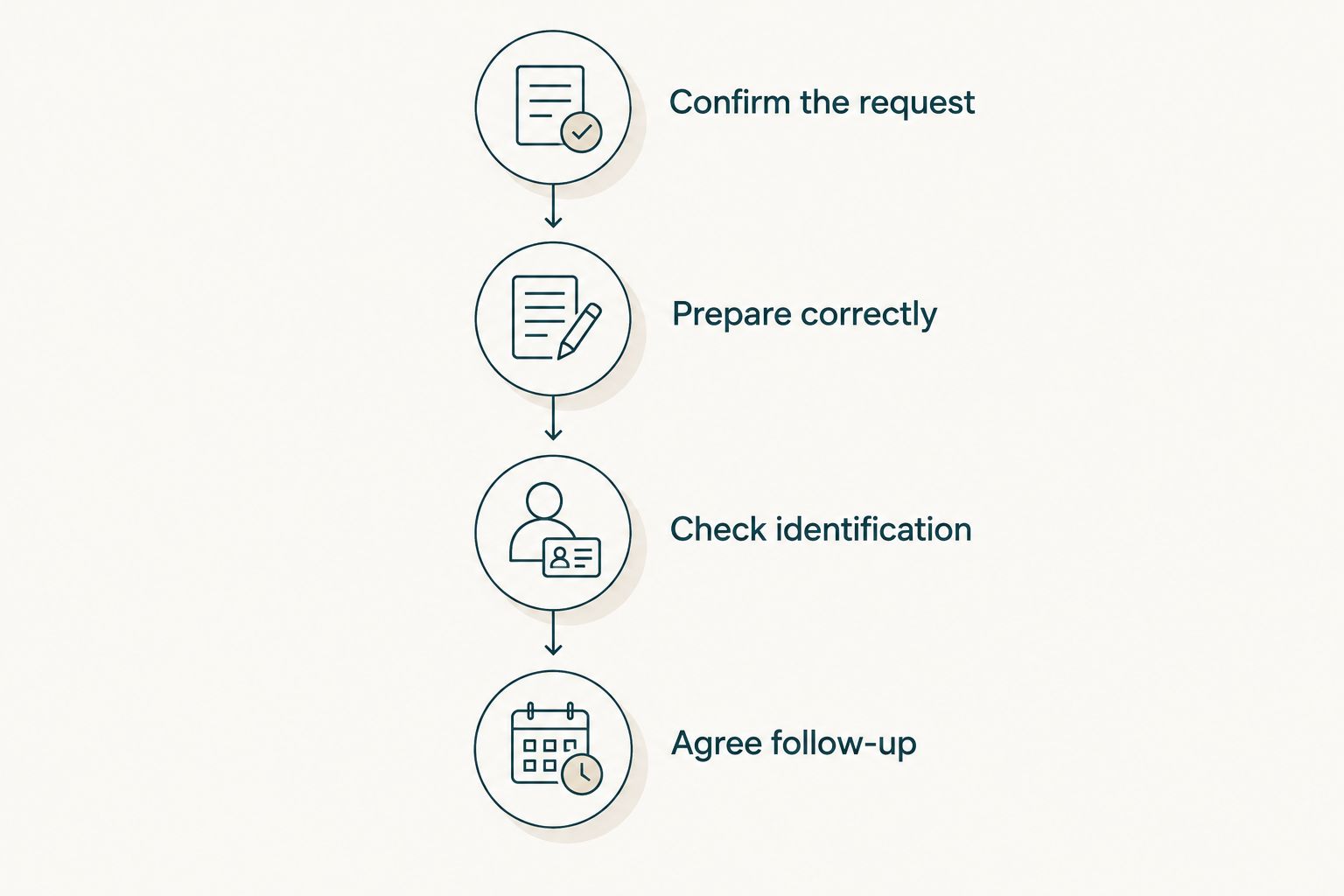
A good booking conversation should resolve three practical questions: what is being tested, how collection will happen and who acts on the result. Use this sequence before agreeing to an appointment.
Confirm the request
Share the exact test names and the reason for testing. Mention previous collection difficulties, fainting, bleeding problems or relevant medicines. Ask whether any requested test needs special handling or a setting other than home.
Prepare correctly
Get written instructions specific to your tests. Not every blood test requires fasting, and medication instructions depend on the test and your treatment. The guide to whether at-home blood tests require fasting explains the questions to settle before collection.
Check identification
Use 2 patient identifiers, such as full name and date of birth, when confirming the sample belongs to you. Ask the collecting professional to confirm the requested tests and label the samples in your presence. Speak up immediately if any detail is wrong.
Agree follow-up
Name 1 reviewing clinician or an explicitly identified clinical team. Confirm how you will receive the report, how urgent findings are communicated and what happens if a sample cannot be processed. Do not assume that a downloadable report includes interpretation.
Questions that separate a clear service from a vague booking
Ask these questions directly. A clear answer identifies a person, process or document rather than offering general reassurance.
- Who is collecting the sample? Request the professional’s role and relevant licensing details.
- Which laboratory processes it? Ask for the laboratory’s name and how your report identifies it.
- When should each result be expected? Different tests have different processing requirements; ask about your actual request.
- Who contacts me about an urgent finding? Confirm the contact route and keep your details current.
- What happens if another sample is needed? Establish who explains the reason and arranges the next step.
- What does my insurer require? Check your policy and the provider’s billing process before assuming coverage.
For insurance preparation, the guide to Daman insurance and at-home blood test billing provides a related starting point. It does not establish approval for your policy or requested tests.
How these recommendations are ranked
This 2026 ranking prioritises clinical fit: broader family care, continuity with an existing clinician, then individual preventive screening. Licensing checks, sample handling, preparation and result ownership apply to every route.
It is not a league table of laboratory accuracy or collection speed. Those claims require comparable evidence. Choose the route that answers your clinical question and leaves no doubt about who acts on the result.
Which at-home blood test route should you choose?
Choose Dardoc when your main need is family home healthcare that includes blood testing. Choose clinician-directed collection when you already have a treatment plan and a current request. Choose targeted preventive screening when you need help deciding what, if anything, to test.
If you have new or worsening symptoms, start with clinical assessment rather than selecting a package yourself. Chest pain, severe breathlessness, fainting or sudden weakness require urgent medical attention, not a routine home collection booking.
FAQ
What is the best blood test at home option in Abu Dhabi in 2026?
The best route depends on why you need testing: broader family home care, monitoring requested by your clinician or individual preventive screening. Confirm licensing, the processing laboratory and responsibility for reviewing results before choosing.
Can I arrange a blood test at home for an elderly parent?
Yes, home blood collection is a relevant option to discuss when travel is difficult. Confirm the test request, your parent's consent, access arrangements and who is authorised to receive the report.
Do I need to fast before a home blood test?
Not every blood test requires fasting. Follow written instructions for the exact tests ordered, and do not stop or change prescribed medicines without clinical advice.
How long will my home blood test results take?
The expected reporting time depends on the tests and processing laboratory. Ask for a timeframe for your actual request and a contact route if the report does not arrive as expected.
Are blood tests collected at home as accurate as clinic tests?
Accuracy depends on correct collection, handling, transport and laboratory analysis, not simply the collection location. Ask which laboratory processes the sample and how the provider manages transport and unsuitable specimens.
Does insurance cover a blood test at home in Abu Dhabi?
Coverage depends on your policy, the requested tests, medical necessity requirements and the provider's billing arrangements. Obtain confirmation for your booking rather than assuming that cover for clinic testing extends to home collection.
Is the biggest home blood test package the best choice?
No, a larger panel is not automatically more useful. Choose tests that address your history, risk factors or clinical question, with a plan for interpreting unexpected findings.
One last thing
A reference interval is not a diagnosis. A result outside it does not establish disease by itself, and a result inside it does not dismiss persistent symptoms. For your 2026 booking, prioritise the review appointment as carefully as the collection appointment.